Working with plexiglass (a tough, transparent acrylic plastic often used in place of glass) rewards patience and the right blade. A wrong pick turns a clean edge into a chipped, cracked mess within seconds. The seven options below cover every stage of a project, from raw sheets ready to size down to router bits and clamps that hold your work steady. Each entry pairs well with the others, so you can build a complete cutting setup from scratch or fill a gap in your existing kit.
The Leading Options At A Glance

YFTOOL O Flute Upcut Router Bit 1/4 Shank

Source One 3/8″ Thick Acrylic Plexiglass Sheet (Metal Holder)
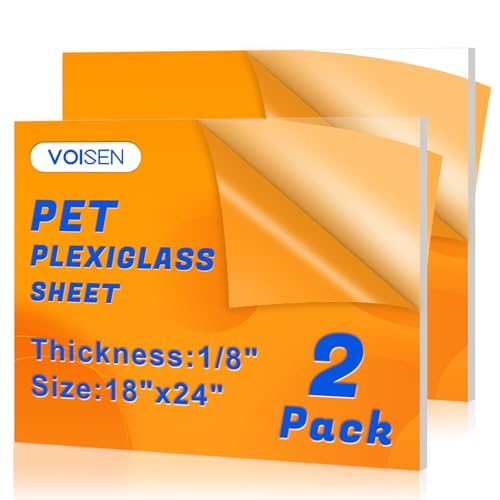
VOISEN 2 Pack Plexiglass Sheets 1/8″ Thick 18″x24″
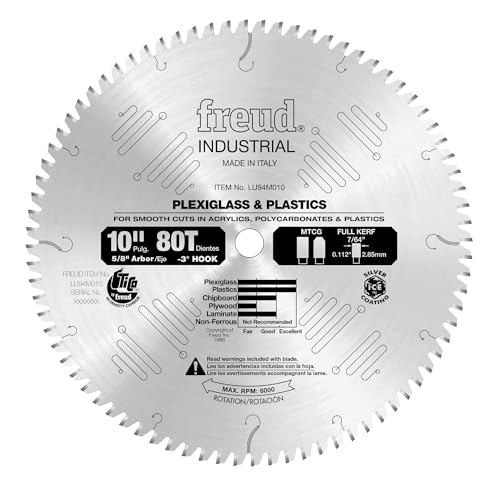
Freud LU94M010 10″ Plastic Blade
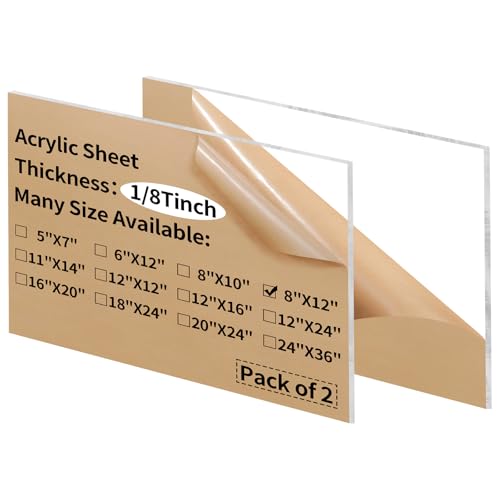
Gdhwxcl 8×12″ Clear Acrylic Sheets 1/8″ Thick (2 Pack)

ALCCIFI Red Acrylic Sheet 12″x16″ 1/8″ Thick (2 Pack)

Jhanw 2 Pack Heavy Duty C Clamp & Desk Clamp
Meet The Standout Selections
Routing plexiglass takes a bit with enough backbone to clear chips without melting the edge. The YFTOOL O Flute Upcut Router Bit uses an ultrafine K20 carbide (a hard cutting material that holds an edge far longer than standard steel) and a 1/4″ shank that fits most common routers and CNC setups. Its single-flute upcut design pulls chips upward out of the cut, which helps keep the work area visible and reduces the chance of recutting dust.
Shops running batch production or extended cutting sessions get the most from this bit. Hobbyists tackling one signage project can also rely on it, but a 1/4″ shank router with variable RPM control is a real asset, since dialing back speed prevents heat build-up in thinner sheets.
Reasons It Performs
- Carbide construction supports long continuous runs before re-sharpening becomes a concern.
- Upcut flute geometry clears chips efficiently, keeping the cutting line clean.
- Standard 1/4″ shank fits a wide range of routers and CNC machines.
- Works across acrylic, soft metals, HDPE, and PVC, so it pulls double duty in mixed-material shops.
Honest Caveats
- A single-flute bit removes material more slowly than multi-flute options, so deep cuts may need multiple shallow passes.
- Without proper dust extraction, fine acrylic chips can settle on the workpiece, so cleaning between passes is part of the workflow.
Who It Suits Best
Shops and serious hobbyists running extended acrylic cutting sessions on a router or CNC will find this bit reliable and long-lasting.
Consider Something Else When
The Freud LU94M010 10″ Plastic Blade makes more sense for anyone needing long, straight cuts on a table saw rather than detailed routed profiles.
Not every plexiglass project starts thin. The Source One sheet arrives at 3/8″ thick, which is roughly three times the depth of standard 1/8″ craft stock and far less likely to flex or crack under load. Bundled metal holders add a mounting solution right out of the box, turning raw material into a near-ready display or barrier component.
Most fabricators appreciate the structural integrity this thickness offers. It machines, drills, and cuts cleanly with standard tools, though heavier feed rates and slower spindle speeds help keep heat down. Anyone building sneeze guards, shop windows, or protective dividers benefits from stock this rigid.
What Makes Sense
- 3/8″ thickness provides genuine rigidity for load-bearing or barrier applications.
- Included metal holders shorten the path from raw sheet to finished display.
- Acrylic cuts, drills, and shapes predictably with standard woodworking tools.
- Compact 1.68″ x 3.75″ x 2.80″ dimensions suit signage and small barrier projects.
Points To Note
- Cutting 3/8″ stock cleanly usually requires a fine-tooth blade or router; standard jigsaw blades can chip the edge.
- Heavier sheets need solid clamping, so pairing with a stable workholding setup like the Jhanw C Clamps pays off.
Best Suited To
Fabricators and small-shop owners building dividers, barriers, or thick signage will appreciate the rigidity and bundled hardware.
A Better Fit Elsewhere
For lightweight craft applications, the Gdhwxcl 8×12″ Clear Acrylic Sheets are easier to cut by hand and far less wasteful for small projects.
Two sheets at 18″ x 24″ give hobbyists and small fabricators enough material to plan, scrap, and still finish a project. VOISEN ships each panel with a protective film on both sides, which is a real plus since bare acrylic scratches the moment it meets a workbench. The 1/8″ thickness hits the sweet spot for laser cutting, scrolling, and scoring-and-snap techniques.
Available in multiple size variants (6″x12″, 12″x24″, 20″x24″, 24″x36″), the same product family covers tiny crafts and oversized signs without changing brands. For anyone weighing how much scrap to expect on a first project, the two-pack format reduces the stress of miscalculation.
The Practical Payoff
- Two sheets per pack means a backup panel when a cut goes wrong.
- Protective film on both faces prevents surface scratches during handling.
- 1/8″ thickness works with hand tools, scrollsaws, and laser cutters alike.
- Multiple size options let you pick a panel that matches your project footprint.
Worth Noting
- 1/8″ acrylic is flexible enough that long unsupported cuts can flex and bind the blade.
- The protective film leaves adhesive residue if left on in direct sun for long stretches, so peeling just before use helps.
Who Should Grab It
First-time cutters and intermediate DIYers will find the dual-sheet format forgiving and the size range adaptable.
Look Elsewhere When
If you want a ready-to-cut thick barrier right out of the box, the Source One 3/8″ Acrylic Plexiglass Sheet offers more rigidity per inch.
A standard wood-cutting blade melts acrylic before it finishes the cut, leaving a gummy, fused edge. The Freud LU94M010 is built around a Modified Triple Chip Grind (a tooth geometry that pairs a flat raker tooth with a trapezoidal cutter, designed specifically for brittle or heat-sensitive sheet goods) and a negative -3° hook angle (the angle at which the tooth leans backward from the direction of rotation; negative hook means the tooth sits more upright, preventing aggressive grabbing). Together those features keep the cut cool and prevent the blade from snatching the sheet.
With 80 teeth and a 10″ diameter, this blade shines on a table saw or large miter saw. The 5/8″ arbor fits standard saws, and a Silver Ice coating resists corrosion, so storage in a humid shop or garage is less of a worry. Anyone breaking down full sheets into smaller pieces benefits from a blade this purpose-built.
The Value In It
- Modified Triple Chip Grind tooth pattern handles plastic without melting or chipping.
- Negative hook angle prevents grabbing, which protects both the sheet and the operator.
- 10″ diameter and 80 teeth deliver smooth edges on long, straight cuts.
- Silver Ice coating helps the blade resist corrosion in humid shop environments.
Small Caveats
- Arbor size is 5/8″, so saws with a 1/2″ arbor will need a bushing or a different blade.
- Fine plastic dust builds up in the gullet (the curved space between teeth where chips collect); clearing the blade after heavy use is part of routine care.
The Right Fit
Woodworkers and fabrication shops breaking down full sheets of acrylic on a table saw will get clean, repeatable results with this blade.
Swap It Out When
For detailed routed profiles rather than long straight cuts, the YFTOOL O Flute Upcut Router Bit is the better tool.
An 8″ x 12″ sheet is small enough to fit on a kitchen table yet large enough to build a small display case or two. The Gdhwxcl sheets come as a two-pack of 1/8″ cast acrylic, with surfaces packed carefully to avoid chipped corners during shipping. The smaller format also means less waste when sizing down to a project footprint.
These panels work well for hobbyists using hand tools, scrollsaws, or laser cutters. Cast acrylic (acrylic made by pouring liquid monomer into a mold, which produces a more uniform internal structure than extruded sheet) tends to machine and engrave cleanly. For crafters who value predictable cuts and minimal leftover material, the dimensions and packaging are a thoughtful fit.
A Favorable Mix
- Small panel size reduces waste for craft-scale projects.
- 1/8″ thickness cuts easily with hand tools, scrollsaws, and laser cutters.
- Cast acrylic holds engraving detail better than extruded alternatives.
- Two-pack format gives a backup panel for practice cuts.
Things To Consider
- Sheets this small leave little room for error on large-scale builds.
- Cast acrylic can develop internal stress cracks if clamped too tightly, so gentle pressure during workholding matters.
Perfect Match For
Home crafters building small displays, signs, or shadow boxes will find the panel size manageable and the cut behavior predictable.
Reach For A Different Pick When
For larger signage, the VOISEN 2 Pack Plexiglass Sheets 18″x24″ provide much more working area per panel.
Clear acrylic is the default, but bold projects call for bold color. The ALCCIFI Red Acrylic Sheet is a 1/8″ cast panel in opaque, glossy red, available in 12″ x 16″ sheets sold as a pair. Color is cast all the way through, so any edge cut still shows red, with no white core peeking through the way some printed or coated sheets do.
Laser cutting and engraving both work on this material, and the opaque finish means engravings can be read clearly without backlighting. For shop signs, safety markings, or display pieces that need visibility, this color choice removes a step.
Noteworthy Benefits
- Opaque color-through casting means edges show red after cutting, with no exposed white core.
- 1/8″ thickness handles laser, scrollsaw, and CNC work without flexing.
- Two-pack format supports larger signs or matching pairs of pieces.
- Glossy surface wipes clean with a damp cloth, useful for high-touch signs.
Trade Offs
- Opaque color hides any backlight, so backlit signage projects need a different material.
- Deep red tones show scratches and dust more visibly than clear acrylic, so a clean work area helps the final result.
Whose Shelf It Belongs On
Sign makers and crafters who want ready-to-engrave colored material without painting or laminating will appreciate the color-through construction.
Another Choice May Suit
For a transparent, paintable base, the Gdhwxcl 8×12″ Clear Acrylic Sheets give you a blank canvas instead of a fixed color.
Cutting plexiglass is half blade, half workholding. A slipping sheet catches the blade and cracks along a stress line, so solid clamping matters as much as the saw. The Jhanw C Clamp set pairs a traditional C clamp with a desk-style clamp, each with a wide jaw that adjusts from roughly 0.23″ up to about 2.04″.
The 3 mm reinforced steel body holds up to 200 lb of clamping force, plenty for sheet goods, and a textured coating resists rust in damp basements or garages. Two clamps per pack let you secure both ends of a sheet without over-tightening either side.
What Stands Out
- Wide jaw range covers thin craft sheets and thicker 1/8″ or 3/8″ stock alike.
- Reinforced steel frame delivers enough clamping force to prevent sheet movement during cuts.
- Textured, rust-resistant coating extends service life in humid shop environments.
- Two clamps per pack let you hold both ends of a workpiece at once.
Soft Spots
- Wide jaws can leave a faint impression on softer acrylic, so adding a scrap-wood pad between clamp and sheet is wise.
- The included coating can wear at the swivel points after heavy use, so a drop of thread locker on the adjustment screw helps long-term reliability.
Made For
Anyone cutting sheet goods on a workbench or saw table will find these clamps versatile enough to handle acrylic, plywood, and panel work.
Where A Sibling Pick Shines
For projects that need more than two hold-down points, adding a second pair of Jhanw clamps or building a full workbench setup may be the right call.
What To Weigh Before Picking Your Plexiglass Setup
The right tool depends on the cut you need and the equipment you already own. Start with the cut type, then match the tool to your saw.
Cut Style Drives The Tool Choice
Score-and-snap (drawing a deep scratch line with a utility blade, then bending the sheet to break it cleanly) is the go-to method for straight cuts on 1/8″ or thinner acrylic. A utility knife with several light passes beats power tools here, since there’s no heat to worry about. Scrollsaws and jigsaws handle curves on thin stock, while table saws with a plastic-specific blade like the Freud LU94M010 deliver long, straight, melt-free cuts on full sheets. Routers carve edges and profiles, and a proper upcut bit keeps acrylic dust moving away from the cut line.
Blade Geometry Matters More Than Tooth Count
Plenty of teeth is a good start, but the grind and hook angle are what stop a sheet from melting. Triple Chip Grind teeth pair a flat raker with a chamfered cutter, shearing brittle materials like plastic without rubbing. A negative or zero hook angle keeps the blade from grabbing, which is critical on a slippery sheet. Wood blades almost always have a positive hook, and that aggression is exactly what melts acrylic.
Material Thickness Sets The Lower Limit
Thin sheets (under 1/8″) flex under pressure, so they need full backing during cuts. A sheet of plywood underneath the workpiece prevents the saw from snapping the acrylic mid-cut. Thick sheets (3/8″ and up) resist flex but demand slower feed rates and sharper tools, since each tooth has more material to remove. The Source One 3/8″ sheet is a good example: rigid enough to skip the backing, but heavy enough that you want a stable, well-clamped table.
Workholding Is The Unsung Half Of A Clean Cut
A blade does its job only when the sheet stays put. C clamps with wide jaws, like the Jhanw set, hold sheet stock against a workbench or sacrificial surface. Non-marring clamp pads (soft inserts that prevent the clamp from denting the workpiece) keep polished surfaces from picking up pressure marks, and double-sided tape on a foam board offers another low-movement option for thinner sheets.
Spotting Real Value In Plexiglass Cutting Tools
Mistakes Worth Dodging
The most common error is grabbing a wood blade for acrylic. Standard wood blades have a positive hook angle and a tooth geometry designed for fiber, not plastic, and the resulting heat fuses acrylic back into the kerf (the narrow slot the blade cuts), ruining both the cut and the workpiece. Another pitfall is skipping the protective film on raw sheets, then wondering why the final piece is scratched. Always leave the film on until the cut and edge work are done, and use a fresh, fine-tooth blade for acrylic instead of a dull one shared with wood.
Where The Extra Money Goes
A purpose-built plastic blade costs more than a basic wood blade because the carbide blend, tooth grind, and coating are tuned to a specific material. The Freud LU94M010 is a good example of a premium plastic blade: the Modified Triple Chip Grind, negative hook, and Silver Ice coating justify the cost for shops that cut acrylic regularly. Similarly, a carbide router bit with ultrafine grain like the YFTOOL O Flute outlasts generic high-speed steel alternatives and stays sharper across long runs. For occasional hobby use, a mid-tier blade is fine, but anyone cutting acrylic weekly feels the difference in edge life and finish quality.
Frequently Asked Questions
What is the best blade for cutting plexiglass?
A blade with a Triple Chip Grind and a zero or negative hook angle, like the Freud LU94M010, cuts plexiglass cleanly without melting or chipping the edge.
Can I cut plexiglass with a utility knife?
Yes, on sheets 1/8″ thick or thinner, scoring several times with a sharp utility knife and snapping along the score line gives a clean straight edge without power tools.
Why does my plexiglass melt when I cut it?
The blade is likely too dull, has too few teeth, or has a positive hook angle that creates friction and heat. Switching to a plastic-specific blade with more teeth and a zero or negative hook solves the problem.
Do I need to clamp plexiglass before cutting?
Always, even on thin sheets. Unclamped acrylic flexes under the blade and can crack, and slipping sheets lead to chips, wandering cuts, and ruined workpieces.
How do I keep the protective film from getting in the way?
Leave the film on during cutting and most edge work, then peel it away just before final installation. This protects the surface from scratches through the messiest part of the project.