Vinyl plank flooring rewards patience and the right blade. Anyone tackling a weekend room refresh or a full-home install knows that a clean cut on rigid planks separates a professional-looking floor from one that catches the eye at every seam. A good cutting tool also means no power cords, no sawdust drifting into adjacent rooms, and far less noise to upset the rest of the household. The picks below span the two main tool families: precision utility knives for trimming and detail work, and manual floor cutters that shear through planks in a single stroke. Each one earns its place for a specific kind of project and skill level.
A Quick View Of The Lineup

OLFA 18mm Heavy-Duty Utility Knife L-2

NAACOO 13″ Heavy Laminate Floor Cutter

WORKPRO Premium Utility Knife All-Metal

Pink Box Cutter Retractable Two-Pack
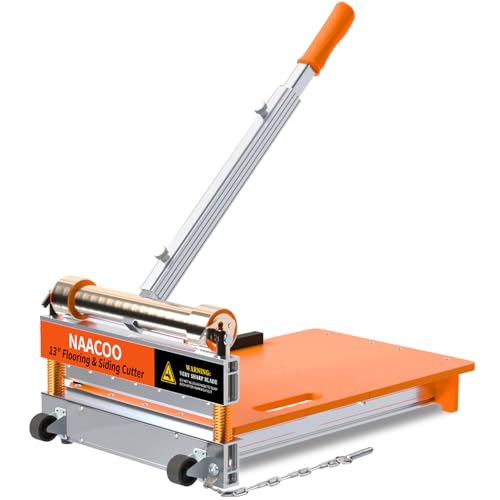
NAACOO 17mm Heavy Laminate Floor Cutter

NAACOO 13″ Laminate Floor Cutter
MANTISTOL 8.8″ Pro Vinyl Floor Cutter

MANTISTOL 13″ Pro Rigid Core Vinyl Cutter
Taking A Closer Look At The Options
The OLFA 18mm Heavy-Duty Utility Knife L-2 anchors any vinyl installer’s kit with one feature that has kept the brand in trade bags for decades: a snap-off blade system that exposes a fresh edge in seconds. The 18mm width strikes a useful middle ground, wide enough to ride a straight edge for long score lines across planks, narrow enough to follow detailed cuts around door jambs.
For most room-scale vinyl projects, this knife handles the trimming and detail work that a guillotine cutter cannot reach. The rubber inset along the spine gives your thumb a confident grip, and the high-impact ABS handle (a tough, rigid plastic commonly used in tool bodies) absorbs the downward pressure of repeated scoring without flexing. Compared to the WORKPRO model covered later, this one favors lighter weight and a thinner profile over all-metal ruggedness.
Positive Points
- Snap-off segments let you reset to a sharp edge without changing the whole blade, which matters during long scoring sessions on abrasive vinyl wear layers.
- The 18mm width rides a straight edge cleanly, producing the kind of long, straight score line that thinner utility knives tend to wander off.
- The rubber inset and keychain-friendly hole make it a comfortable daily-carry option for installers who wear the tool on a lanyard.
- Stainless steel channel holds the blade steady even under heavy thumb pressure, reducing the slight wobble that cheap utility knives develop over time.
Things To Consider
- The plastic body will not survive a hard drop onto concrete the way a metal-bodied knife will, so it pays to set it down gently on jobsites.
- Replacement OLFA blades are widely available but cost more per pack than generic utility blades, which can add up across multi-room projects.
Who It Suits Best
DIYers installing vinyl in one or two rooms who want a reliable, well-balanced knife for scoring and trimming without the weight of an all-metal body.
Consider Something Else When
The WORKPRO Premium Utility Knife suits you better if your project involves cutting cardboard, strapping, and packaging all day and you want an all-metal frame to handle the abuse.
The NAACOO 13″ Heavy Laminate Floor Cutter operates on a simple mechanical principle: a long handle drives a sharpened blade down through the plank in a single shearing motion, the same way a paper guillotine works. No electricity, no spinning blade, no dust cloud in the next room. For anyone living in a shared space or a downstairs neighbor situation, the silence alone is worth the setup.
The cutter’s upgraded square base panel gives the frame real lateral rigidity, so the body does not shift sideways as you push the handle through. Maximum cutting width sits at 13 inches and maximum cutting thickness at 13mm, which covers most standard luxury vinyl planks on the market. Compared to the OLFA knife above, this tool trades finesse for speed: where the knife scores a line and snaps a plank, this one cuts the entire width in a single stroke.
The Case For It
- Multi-angle settings at 0°, 15°, 30°, and 45° cover the typical range of room corners, transitions, and diagonal layouts without a separate miter setup.
- Aluminum alloy and HDPE (high-density polyethylene, a tough, slick plastic) construction keeps the cutter light enough to carry to a second-floor room yet rigid enough to resist flex during a cut.
- The single-stroke shearing action leaves a clean factory-like edge on the cut end, which is helpful when that edge ends up visible at a doorway transition.
- No power means no cord to trip over and no sawdust to vacuum from adjacent rooms, a quiet convenience that matters on occupied job sites.
Worth Noting
- At 13mm maximum thickness, the cutter will not handle the thickest rigid-core planks, so check your plank spec before committing to this model.
- Owners commonly report that the base needs to be clamped to a workbench or a sturdy table for repeated cuts, otherwise the unit can walk across the surface mid-stroke.
- Angle cuts require a small setup step, so very quick straight cuts are faster than angled ones on this tool.
Key Specs
Right Fit For
DIYers and pros installing mid-thickness vinyl plank in occupied homes who value a quiet, dust-free cutting experience over speed.
Look Elsewhere When
The NAACOO 17mm Heavy Laminate Floor Cutter is the better match when your planks exceed 13mm in thickness and you need the same one-stroke shearing on rigid-core material.
The WORKPRO Premium Utility Knife earns its place in the kit by refusing to flex under thumb pressure. The all-aluminum body and rust-free powder-coat finish give it a reassuring weight in the hand, the kind that makes long scoring sessions on rigid vinyl plank less tiring. It arrives with ten extra SK5 blades (a high-carbon tool steel that holds an edge well), so the first project is not held hostage by a missing blade pack.
For installers who treat a utility knife as a daily tool rather than a one-job item, the metal construction pays off in longevity. The 3.2 oz weight is light enough for overhead trim cuts but heavy enough to feel like a serious tool. Compared to the OLFA L-2 above, this one trades snap-off convenience for tool-free quick blade change and a frame that will outlast several plastic handles.
Where It Helps
- Aluminum alloy frame and powder-coat finish resist corrosion in damp basement and garage environments where vinyl installs often happen.
- Quick-change mechanism swaps blades without tools, so a dull edge never costs more than a few seconds mid-project.
- Three-position retractable blade lets you set a shallow depth for scoring vinyl wear layers and a longer depth for opening packaging.
- Ten included SK5 blades cover the first several rooms of a project without a separate supply run.
Honest Caveats
- The all-metal body runs heavier than plastic-handled knives, which can wear on your grip during long overhead sessions above shoulder height.
- At around 3.2 oz, it sits at the heavier end of the retractable category, and some users find the balance front-heavy during delicate detail work.
Best Suited To
Contractors and serious DIYers running multi-room vinyl projects who want a knife that survives drops, dampness, and daily pocket carry for years.
A Better Fit Elsewhere
The Pink Box Cutter Two-Pack is the better match when lighter weight, a softer grip, and a second backup knife matter more than metal-frame rigidity.
The Pink Box Cutter Retractable Two-Pack from Home Planet Gear flips the usual value equation: instead of one premium knife, you get two ergonomic utility knives with a soft TPR (thermoplastic rubber) grip and a starter set of five replacement blades. The TPR handle wraps the body in a high-friction surface that keeps the knife planted in your hand even when your grip is sweaty or you’re wearing thin work gloves.
For homeowners tackling a single-room vinyl project, two knives offer a quiet benefit: one stays in the workshop for scoring and trimming, the other rides a tool belt for opening boxes and breaking down packaging. The pink color is highly visible against subfloor dust and sawdust, which sounds trivial until you spend twenty minutes hunting for a dropped utility knife under a workbench.
The Practical Payoff
- Soft TPR grip reduces hand fatigue during extended scoring sessions, a real advantage for anyone with arthritic hands or reduced grip strength.
- Two-knife pack means one stays sharp in the workshop while the other handles packaging and prep work.
- Bright pink finish shows up against typical jobsite clutter, cutting down the time spent searching for a misplaced knife.
- Five included replacement blades cover small-to-medium projects without a separate blade order.
Points To Note
- Plastic internal frame will not match the long-term durability of the WORKPRO’s all-metal body for daily contractor use.
- Retraction mechanism uses a simple slider rather than a ratcheting lock, so depth settings are coarser than the OLFA’s.
Who Will Love This
First-time vinyl installers and homeowners who want a comfortable, forgiving grip and the comfort of having a backup knife within reach.
Swap It Out When
The WORKPRO Premium Utility Knife is the better match for full-time trade work where an all-metal frame and a finer ratchet lock handle daily abuse.
The NAACOO 17mm Heavy Laminate Floor Cutter addresses the most common limit of mid-range guillotine cutters: the inability to shear through thick rigid-core planks in a single stroke. At 17mm of maximum cutting thickness, this tool handles the dense SPC (stone plastic composite) and WPC (wood plastic composite) planks that have taken over the higher end of the vinyl flooring market.
The aluminum alloy frame and base are built to absorb the heavier force required to shear 17mm of rigid material without flexing or walking across the workbench. Maximum cutting width holds at 13 inches, the same as the 13mm model, so the upgrade here is depth rather than reach. Compared to the MANTISTOL 13″ Pro covered later, this NAACOO trades accessory complexity for raw shearing power.
A Few Strong Suits
- 17mm cutting depth handles the thickest rigid-core planks, including SPC and WPC varieties that defeat thinner cutters.
- Same 0°, 15°, 30°, 45° angle range as the smaller NAACOO, so you do not sacrifice layout flexibility for cutting depth.
- Reinforced square base resists flex during heavier strokes, which is the difference between a clean cut and a partial one on dense material.
- Manual operation keeps the job dust-free and quiet, which matters when you are cutting in a finished room adjacent to living space.
Possible Compromises
- Heavier frame than the 13mm NAACOO, so it earns a permanent spot on the workbench rather than traveling between rooms.
- Closer to overkill for thinner LVP projects, so the upgrade pays off only when your planks are on the thick side.
Feature Snapshot
Made For
Installers and homeowners working with thick rigid-core planks above 13mm who want the same quiet, dust-free cutting on heavier material.
Reach For A Different Pick When
The NAACOO 13″ Heavy Laminate Floor Cutter is the better value for standard LVP under 13mm, since you would not need the extra depth on thinner planks.
The NAACOO 13″ Laminate Floor Cutter is the smaller sibling of the 13″ Heavy model and the original template for this NAACOO line. The 13mm maximum thickness covers the bulk of standard luxury vinyl plank sold at retail, the kind that installs in a single afternoon over a weekend. The 13-inch width handles the same plank-on-plank format, and the 0° to 45° angle range covers typical room layouts.
For a first-time installer working in a single bedroom, den, or hallway, this tool offers the cleanest path from full plank to finished edge without dragging a miter saw into the house. The aluminum alloy and HDPE body keeps the weight manageable, and the one-step angle and length adjustment cuts setup time between cuts. Compared to the MANTISTOL 8.8″ model, this NAACOO trades portability for a wider cutting bed.
Strong Points
- Light enough at this size to set on a folding workbench and reposition as the room shape demands.
- One-step angle and length adjustment means less fiddling between cuts, which adds up across a full room of planks.
- Reusable blade design avoids the consumable cost that wears down cheaper cutters over a long project.
- Quiet enough to run in an upstairs room without disturbing a home office on the floor below, depending on subfloor construction.
Soft Spots
- 13mm thickness ceiling rules out the rigid-core plank categories that have grown in popularity for basements and high-traffic areas.
- Owners commonly report that the unit benefits from being clamped down for very long cutting sessions to prevent walking.
Perfect Match For
DIYers installing a single room of standard LVP who want a quiet, no-dust tool that lives in a closet between projects.
Where A Sibling Pick Shines
The MANTISTOL 13″ Pro Rigid Core Vinyl Cutter is the stronger choice when your install involves lots of notching and contour cuts around door jambs and irregular corners.
The MANTISTOL 8.8″ Pro Vinyl Floor Cutter is built for the awkward cuts that swallow time on any vinyl install: the L-shaped notch around a door jamb, the parallel slice for a heat register, the angled corner that has to mate with a baseboard. The 8.8-inch cutting bed trades the long straight reach of the NAACOO cutters for a smaller footprint that fits inside a closet and travels between rooms without a second trip.
What sets this tool apart is the movable blade, which lets you attack irregular corners, column wraps, and wall junctions by repositioning the cutting edge rather than wrestling the plank into the cutter. The patented design covers LVP, SPC, RVP, LVT, VCT, PVC, and WPC formats, so format compatibility is rarely the issue. Compared to the MANTISTOL 13″ Pro covered next, this model leans toward portability over capacity.
Real Benefits
- Movable blade design handles irregular corners, column cuts, and door edge details that fixed-blade cutters cannot reach cleanly.
- Cuts across the full alphabet of vinyl plank formats, so you do not need a second tool if your project mixes LVP and LVT.
- Compact 8.8-inch body lives in a closet or under a workbench between projects, ideal for apartment dwellers and small workshops.
- Manual operation means no power outlet or extension cord required in a room that is mid-construction.
Trade-Offs
- The 8.8-inch width is shorter than standard plank length, so very long rip cuts still call for a utility knife and straight edge.
- Smaller base means less built-in stability, so clamping or anchoring to a workbench becomes more important during heavy use.
Key Product Details
Built With In Mind
Detail-focused installers and DIYers whose projects involve lots of notching, column wraps, and door jamb work in a small space.
Not Your Match When
The MANTISTOL 13″ Pro Rigid Core Vinyl Cutter is the better fit when you want extra notching accessories and a wider cutting bed for larger plank formats.
The MANTISTOL 13″ Pro Rigid Core Vinyl Cutter arrives as a complete cutting kit rather than a bare tool. The package includes a replacement main blade, three slotting blades at 0.5″, 1″, and 1.3″ widths, and a 10-inch contour gauge for transferring the profile of an irregular surface onto a plank. For an installer walking onto a job with unfamiliar trim profiles, that contour gauge alone saves an hour of trial cuts.
The cutting bed spans 12.9 inches wide by 3/8 inch deep, which covers most rigid-core planks without choking on the thicker formats. The “no chipping” claim tracks with how the blade meets the plank: a shearing motion rather than a sawing one, which leaves the cut edge factory-clean. Compared to the 8.8″ MANTISTOL covered earlier, this model adds capacity and the slotting kit, the difference between a portable detail tool and a full-project setup.
The Helpful Details
- Contour gauge included in the box transfers complex profiles from door jambs and uneven trim onto the plank for accurate matching cuts.
- Three slotting blade widths handle plumbing penetrations and small-format notches without switching to a different tool.
- Shearing action produces a chip-free edge on rigid-core planks, a real time-saver since chips around cut ends show at every transition.
- Wide enough 12.9-inch bed covers standard plank widths, so most cuts finish in a single stroke rather than two passes.
Practical Considerations
- Kitted accessories raise the entry cost, so this tool makes more sense for full-room projects than for a single repair patch.
- Replacement slotting blades are specialized, so spares are worth sourcing upfront to avoid downtime mid-project.
Who Should Grab It
Professional installers and serious DIYers running whole-home projects that involve lots of notching, plumbing penetrations, and irregular corner cuts.
Skip It When
The MANTISTOL 8.8″ Pro Vinyl Floor Cutter is the better fit for smaller, detail-heavy projects where a compact body and lower entry cost matter more than the full kit.
What To Weigh Before Choosing Your Cutter
Cutting method: score-and-snap versus guillotine
Vinyl plank falls into two cutting families, and the right tool depends on which one matches your workflow. A utility knife scores the surface deeply, then the plank snaps cleanly along the line. It is inexpensive, very precise, and quiet, but slow on long straight runs. A guillotine cutter shears the entire plank in one stroke, which is faster and dust-free but heavier and limited to a maximum plank thickness. For small rooms with many notches, a sharp utility knife often wins. For large open layouts with dozens of identical cuts, a guillotine saves real time.
Plank thickness and format
Plank thickness varies more than the marketing suggests, and the same tool does not cover the whole range. Standard LVP (luxury vinyl plank) often runs 4mm to 8mm and cuts easily with a utility knife. SPC rigid core runs 5mm to 8mm in budget lines but climbs to 12mm or more in premium products, and WPC (wood-plastic composite) often sits in the 6mm to 10mm range. Always check the manufacturer’s listed thickness before buying a guillotine cutter, since exceeding the rated depth produces a partial cut or a chipped edge.
Blade type and replacement cost
A snap-off utility blade (the kind on the OLFA L-2) refreshes its edge in seconds, which matters because vinyl plank wear layers dull a blade faster than wood does. Fixed-blade utility knives need a full swap when dull, and replacement SK5 or stainless steel blades vary widely in price. For a multi-room project, the cost of replacement blades adds up faster than the cost of the knife itself, so factor that into the decision rather than buying on the tool’s sticker price alone.
Portability versus stability
A lightweight utility knife goes in a pocket and travels between rooms without a second thought. A guillotine cutter stays on a workbench, and lighter models can walk across the benchtop during a hard stroke. For upstairs rooms or apartments with limited workspace, a clamp or a non-slip mat under the cutter’s base earns its keep. For a dedicated workshop where the tool never moves, heavier frame rigidity matters more than portability.
Common Buying Traps And Worthwhile Upgrades
Pitfalls Shoppers Hit
The most common mistake is buying a cutter rated for thinner planks than the project actually requires. A 13mm cutter will not cleanly shear a 14mm rigid core plank, and the resulting partial cut forces a utility knife finish that doubles your setup time. The second trap is ignoring replacement blade availability: a specialty blade that takes two weeks to arrive will stall a project that should finish in a weekend. Always confirm the cutter’s rated depth matches the thickest plank in your stack, and check that replacement blades ship without a long lead time.
When Paying More Pays Off
The gap between a budget cutter and a premium one shows up in three places: frame rigidity, blade change speed, and accessory kits. A reinforced aluminum base resists flex under heavy strokes, which translates to cleaner edges and fewer partial cuts. Quick-change blade mechanisms save time across a full room of cuts, and an included contour gauge or slotting blades add capability that would otherwise require a second tool. For a one-room project, the budget tier is often enough. For a whole-home install, the upgrade pays back in time and clean edges long before the tool reaches retirement age.
Frequently Asked Questions
What is the easiest way to cut vinyl plank flooring for a beginner?
A sharp utility knife and a straight edge is the most forgiving starting point. Score the plank deeply along a metal straight edge, then snap it over a table edge or a scrap 2×4. The method is quiet, dust-free, and lets you back up and re-score if the line drifts.
Can I cut vinyl flooring without power tools?
Yes. Manual guillotine cutters shear planks in a single stroke with no electricity, and a utility knife handles detail cuts without any tools at all. The only catch is plank thickness, since very thick rigid core material may need a powered saw.
What blade works best for vinyl plank?
A standard utility knife blade handles most LVP, and a heavier 18mm snap-off blade gives better control on long straight scores. For rigid core planks, a guillotine-style shear blade is gentler on the cut edge than a toothed saw blade.
How thick of vinyl plank can a manual cutter handle?
Most mid-range manual cutters cap at 13mm, which covers most LVP and many rigid core planks. Premium models like the 17mm NAACOO handle the densest SPC and WPC planks, but always verify the cutter’s rating against your specific plank spec.
Do I need a special tool for notching around door jambs?
A movable-blade guillotine cutter or a contour gauge and utility knife combination handles notches well. The contour gauge transfers the trim profile onto the plank, and a sharp knife follows the traced line. Some installers still prefer a jigsaw for very tight notches.