HVAC work punishes gear that wasn’t designed for it. Crawlspaces, rooftops, condensers dripping in July, freeze-ups in February, the same hand tools dragged in and out of the truck four times a day. The right tool bag, wire tool, and specialty kit quietly save hours every week, while the wrong one means lost parts and sore wrists. This list rounds up nine workhorse items that cover what a real service call actually demands, from stripping thermostat wire and swaging copper lines to keeping everything organized on the way to the next job.
A Side-By-Side Look
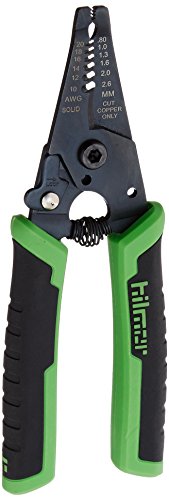
hilmor 1885427 WS6 Wire Stripper, 6″

Veto TP-XL Extra Large Tool Pouch

Klein Tools 32581 4-in-1 Electronics Screwdriver Set

Hilmor HT 1839078 HVAC Tool Bag, 27 Pockets, 13″

AASTT 13″ Portable Tool Bag, Grey

Hilmor Compact Swage Tool Kit with Case
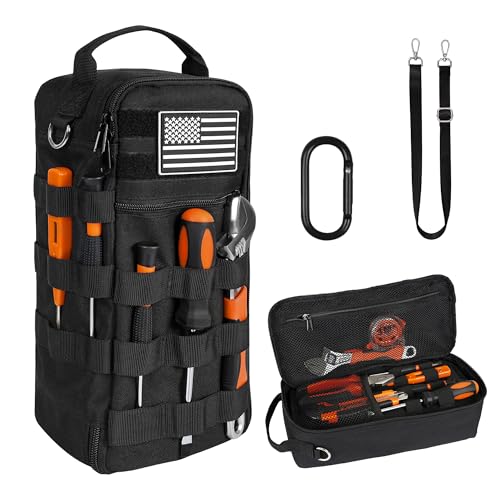
AASTT 13″ Portable Tool Bag, Black

AASTT 13″ Portable Tool Bag, Brown
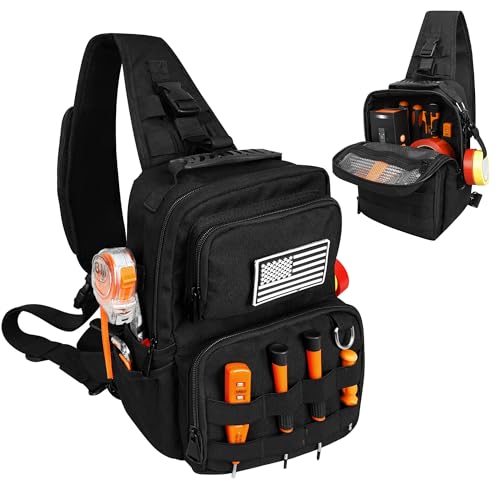
AASTT Small Tactical Sling Tool Bag, 12″
A Breakdown Of The Leading Choices
Most thermostat and control wire you’ll touch in a typical residential call falls in the 18-22 gauge range (AWG measures American Wire Gauge, where smaller numbers mean thicker wire). The hilmor WS6 is built precisely for that middle territory, and the over-molded grips make a real difference when you’re leaning into a hot air handler with one hand on a flashlight.
It’s compact enough to ride on a belt clip or roll into a pouch like the Veto TP-XL without taking up valuable real estate, and the size markings on the jaw are easy to read even in low light. For techs who strip the same 18/5 or 18/7 cable fifty times a week, the WS6 earns its slot.
Key Advantages
- Over-molded handles stay planted in sweaty or gloved hands during long runs of stripping.
- Covers the 10-20 AWG range most service work actually demands.
- Cuts and strips in one motion, saving time at the thermostat plate.
- Jaws show size markings clearly, reducing the guesswork on unfamiliar wire.
Things To Consider
- Handle grips are not rated for shock protection, so live wire work still calls for proper PPE.
- Best suited to lower-voltage control runs rather than thicker line-voltage cable.
Key Specs
Whose Shelf It Belongs On
Residential and light commercial techs who run control wire daily and want a stripper that disappears in a pouch until they need it.
Where Another Pick Suits Better
For precision control-board work where bit tips matter more than full wire gauge, the Klein Tools 32581 4-in-1 Electronics Screwdriver Set fits the bill better.
Pouches tend to either over-promise pockets or fall apart at the seam within a season. The Veto TP-XL sits in a different category altogether, with 30 pockets, a magnetic screw catcher, a meter pocket, bit extension slots, and a T-bar tape chain all on a polypropylene base that’s built to shrug off wet ground.
What makes it sing on a service call is the tablet pocket on the back, which means your schematics, gauges, and work orders stay in one place without flipping through a binder on the customer’s porch. For techs hauling a digital manifold, a multimeter, and a handful of drivers at the same time, the layout just works.
The Practical Payoff
- Thirty dedicated pockets keep meters, drivers, bits, and wire nuts separated.
- YKK zippers (an industry-standard heavy-duty zipper brand) are noticeably sturdier than the hardware on most budget pouches.
- Magnetic screw catcher saves dropped fasteners over floor grates and in tight return plenums.
- Backside tablet pocket holds diagnostic screens without a separate case.
Trade Offs
- Heavier than a soft tote, which may feel bulky on a harness during long rooftop runs.
- Higher upfront cost than the AASTT pouches further down this list.
Made For
Service techs who need one pouch that holds meters, tablets, and a full hand-tool set on residential and commercial routes.
Look Elsewhere When
If you prefer a wider-mouth open tote for bulky gear like gauges and recovery machines, the Hilmor HT 1839078 HVAC Tool Bag is the better call.
Modern HVAC control boards live and die by their terminal screws, and a slipping bit will either chew up a brand-new $200 board or leave a tech stranded on a Sunday service call. The Klein Tools 32581 swaps between four precision-machined tips with a single barrel, so the right bit is always one click away.
The rotating cap and Klein’s cushioned grip make fine pressure control genuinely easier, especially when seating a small terminal in a dimly lit furnace vestibule. For control-board replacement, thermostat swaps, and ignition module diagnostics, it’s a thoughtful upgrade from the dollar-store drivers most people grew up using.
What It Does Well
- Swivel cap keeps the heel of your hand planted for delicate torque.
- Four precision-machined bits handle most small slotted and Phillips fasteners on modern boards.
- Cushion-Grip handle is comfortable across long diagnostic sessions.
Points To Note
- Bit tips are precision-sized, so they’re not the right tool for sheet-metal screws or cabinet work.
- Smaller profile means it can vanish inside a deep pouch if you don’t dedicate a slot to it.
Feature Snapshot
Right Fit For
Techs handling control board swaps, thermostat replacements, and ignition module diagnostics on a regular basis.
Reach For A Different Pick When
For heavier line-voltage work where you need a full-size driver set, the Veto TP-XL Extra Large Tool Pouch carries a broader driver kit and leaves the precision work to this Klein.
The Hilmor HT 1839078 was designed from the ground up for HVAC/R work, and it shows in the small choices: 27 pockets split across 13 interior and 14 exterior slots, plus 18 elastic bands and clips for anything that wants to roll around. The water-resistant body and reinforced rivets mean setting it on a damp crawlspace floor is no longer a gamble.
Where the Veto TP-XL is built for techs who carry a tablet everywhere, the Hilmor 13″ tote leans toward a wider-mouth open layout. A shoulder strap and tape loop make it easy to grab and walk to the next unit, and for service trucks bouncing over potholes, the rugged shell earns its keep.
A Few Highlights
- Twenty-seven pockets plus 18 elastic bands handle a full hand-tool kit without cramming.
- Water-resistant material and reinforced rivets extend the bag’s life in wet environments.
- Shoulder strap eases long walks from the truck to a rooftop unit.
- Key clip and tape loop keep small essentials visible and accessible.
Honest Caveats
- Open-top design means small parts can spill if the bag tips over in a truck bed.
- Bulkier than a sling-style option for ladder climbs.
Core Details
Who It Suits Best
Techs who want a single rugged open-top bag for everything from manifold gauges to pipe wrenches on commercial routes.
Skip It When
For tighter, on-body carry during frequent ladder climbs, the AASTT Small Tactical Sling Tool Bag, 12″ stays out of the way better.
Not every call needs a 30-pocket Veto or a full Hilmor HVAC tote. For light service runs, warranty visits, and quick thermostat swaps, the AASTT 13″ portable tool bag in grey covers the basics without weighing down the shoulder.
The 900D Oxford fabric is the kind of dense, tightly-woven textile that holds up to daily abrasion, and the layout splits into a screwdriver and pliers compartment alongside deeper pockets for a tape measure, fasteners, and a smartphone. It’s the right size for a new tech still building out a kit.
Bright Spots
- Compact size fits easily in a truck’s passenger footwell.
- Two-compartment pouch and hammer loop keep go-to tools at hand.
- External D-ring clip and shoulder strap free up both hands for ladders.
Potential Drawbacks
- Limited capacity for larger diagnostic equipment or full manifold gauge sets.
- Fewer dedicated slots than a dedicated HVAC bag like the Hilmor HT 1839078.
Best Suited To
Apprentices, residential-only techs, or anyone running a smaller daily tool inventory.
Not Your Match When
If your bag needs to swallow a digital manifold, recovery cylinder adapters, and a full driver set every day, the Hilmor HT 1839078 HVAC Tool Bag is the more capable pick.
Swaging copper refrigerant lines, which means flaring the end of a tube to mate with a fitting, is one of those jobs where the wrong tool cracks the tubing and the right one saves a service call. The Hilmor Compact Swage Tool Kit covers tube sizes from 5/16″ all the way up to 1-5/8″, so the same kit handles residential line sets and larger commercial runs.
What makes it special is the hydraulic mechanism that lets you swage with a single hand, which is a quiet revelation when you’re on a ladder or bracing a line set against a wall. The carrying case keeps the swage heads organized, and the 8.5 lb weight is reasonable for the work it does.
Everyday Wins
- Single-hand pistol-grip operation reduces fatigue on long install days.
- Wide 5/16″ to 1-5/8″ range covers most residential and light commercial line sets.
- Hydraulic release provides consistent swage depth without cracking copper.
Less Ideal Details
- Heavier than manual swage tools, which can wear on all-day roof jobs.
- Overkill for techs who never touch line sets larger than 7/8″.
Who Will Love This
Refrigeration and line-set installers who want a hydraulic swage they can trust on copper of every common size.
A Better Fit Elsewhere
If you mostly do residential furnace and AC swaps without much line work, the AASTT 13″ Portable Tool Bag, Black, paired with a hand swage, covers the basics more affordably.
The black version of the AASTT 13″ tote trades the grey’s softer look for the kind of low-glare finish that disappears on a job site, which is exactly what most techs actually want. Functionally it shares the same 900D Oxford shell, hammer loop, and shoulder strap, so you’re getting the same storage layout in a more work-friendly color.
For techs who bounce between residential and light commercial work and want a single bag that handles pliers, drivers, a multimeter, and a smartphone without complaint, this version feels like the default choice among the three AASTT colorways.
What Works In Its Favor
- Water-resistant 900D Oxford fabric holds up to daily truck-bed abuse.
- External D-ring clip is handy for hanging the bag on a ladder or pipe.
- Two interior compartments and external pockets organize the everyday kit well.
Where It May Fall Short
- 13-inch body is a tight fit for recovery machines and large gauge sets.
- Soft construction offers less drop protection than a hard-bottom bag like the Veto TP-XL.
Who Should Grab It
Working techs who want a rugged, no-nonsense black tote that doesn’t scream for attention on a quiet residential call.
Swap It Out When
For a polished, organized layout with room for a tablet and meter, the Veto TP-XL Extra Large Tool Pouch is the upgrade move.
The brown AASTT 13″ tote is the same bag as the black and grey versions, just in a finish that looks closer to traditional leather tool gear. It blends better inside a finished basement or a customer’s living room, which can matter more than most techs want to admit during high-end residential work.
For someone outfitting a small service business and trying to look sharp on every call, the brown finish offers a welcome break from the usual sea of black nylon totes without sacrificing the same 900D Oxford durability.
What Earns Its Place
- Brown finish reads as more professional in client-facing environments.
- Same 900D Oxford build as the other AASTT colorways for matched durability.
- Shoulder strap and hammer loop keep go-to tools within reach.
Soft Spots
- Same 13-inch capacity limits large diagnostic gear.
- Lighter color may show grease and grime sooner than the black version.
Built With In Mind
Techs serving upscale residential customers who care about a clean, coordinated look on every visit.
Another Choice May Suit
For heavier daily use where scuffs and stains are inevitable, the AASTT 13″ Portable Tool Bag, Black hides wear better over the long haul.
Roof work, attic crawls, and ladder climbs punish the shoulders when a heavy tote is bouncing around. The AASTT Small Tactical Sling Tool Bag is sized at 12 x 8.46 x 6.1 inches, which keeps the load close to the body, and the sling design lets you swing it around to the front without setting it down.
The MOLLE webbing (the rows of stitched loops originally developed for military gear that let you clip on extra pouches) and multiple zippered compartments make it more versatile than a standard open tote, especially for techs who want a small EDC-style option for quick residential calls and inspections.
Reasons It Performs
- Sling profile keeps weight centered and easy to rotate on ladders.
- MOLLE webbing accepts add-on pouches for meters or fasteners.
- Multiple zippered compartments separate small parts from main tools.
A Few Limitations
- Small footprint can’t replace a primary HVAC tool bag for full service work.
- Sling strap can dig into the shoulder on long walks from the truck.
Perfect Match For
Techs handling rooftop units, attic inspections, or quick service visits who need a compact, body-hugging carry.
Consider Something Else When
For full-day service calls that demand a complete tool kit on hand, the Hilmor HT 1839078 HVAC Tool Bag is a more comprehensive solution.
Choosing Gear That Survives Real Service Work
The most useful tools for HVAC work share a few quiet traits that aren’t always obvious on a spec sheet. A wire stripper that’s comfortable in the hand matters more than one that covers a slightly broader gauge range you’ll never touch. A tool bag that keeps weight close to the body on a ladder beats a giant tote that holds everything but ruins your back by 3 PM. And a single-hand swage tool can quietly save an entire install when you’re working over a basement ceiling.
Field-tested tools tend to share three things: durable materials like tempered steel, treated grip surfaces, and dense Oxford or ballistic-style fabric that shrugs off daily abuse. The right pick also fits the way you actually work, not just the way the marketing photos show. Rooftop and attic techs need a sling or compact bag. Truck-based service techs benefit more from a structured open tote. Control-board specialists live and die by a quality precision driver.
For new techs, building a small kit around a reliable bag, a precision screwdriver, and a mid-range wire stripper covers the majority of residential calls without overspending. Seasoned pros often add specialty tools like a hydraulic swage once their daily routes justify the investment.
Key Considerations Across These Picks
Common Shopping Slip Ups
The biggest mistake is choosing a bag that’s too big. A bulky tote might hold every tool you own, but on a ladder or in a tight attic it becomes a liability. Most techs end up using only a third of their bag’s capacity on a typical call, so a smaller, more organized option usually wins. The other common trap is buying a wire stripper or screwdriver that doesn’t actually match the gauge or bit sizes you touch every day. Check the AWG range and bit types against your most common fasteners before committing.
Where The Extra Money Goes
Higher-tier picks in this category, like the Veto TP-XL or the Hilmor Compact Swage Kit, earn their price through three quiet upgrades: better materials, smarter layouts, and longer service life. YKK zippers and reinforced rivets don’t sound exciting until your third winter of use. A hydraulic swage mechanism pays for itself by avoiding cracked copper and the callback that comes with it. For full-time HVAC work, the upgrade typically pays back in saved time and fewer replacements, though smaller operations may not need every premium feature to get the job done.
Frequently Asked Questions
What size tool bag works for most HVAC service calls?
A 13-inch open tote or pouch is a solid middle ground for everyday residential and light commercial work. Techs handling larger diagnostic equipment often move up to 16-inch or larger bags, while rooftop and attic specialists usually prefer a compact sling.
How often should a wire stripper be replaced?
A quality wire stripper like the hilmor WS6 typically lasts for years of regular use. Owners commonly replace strippers when the jaws lose their precise edge or when the grips finally wear smooth. Routine cleaning and avoiding live wire use extends the tool’s working life.
Do HVAC techs really need a precision screwdriver set?
Yes, modern control boards and thermostat terminals use small screws that a standard driver can easily strip. A precision-machined set like the Klein Tools 32581 makes a meaningful difference on delicate fasteners and is well worth the modest investment.
Is a hydraulic swage tool worth it over a manual one?
A hydraulic swage is a clear upgrade for techs who regularly work with copper line sets, especially larger diameters. For occasional residential line work, a manual swage can still do the job, but a hydraulic model reduces fatigue and improves consistency.
What should you look for in a weather-resistant tool bag?
Dense Oxford or treated fabric, reinforced stitching, and a water-resistant base are the main features to check. A bag with a structured bottom resists moisture from wet pavement and keeps tools cleaner over the long run.