Sanding trim rewards patience, but the right tool turns hours of hand-sanding into minutes of cleaner work. Crown molding, baseboards, and window casings all have tight profiles, inside corners, and fine details that frustrate big sanders. A trim-focused setup pairs compact, controllable power with abrasive variety, so you can move from rough removal to a paint-ready finish without switching systems. The picks below cover rotary tools, oscillating blades, and purpose-built detail sanders, each with a real use case around molding and trim.
A Snapshot Of The Selections
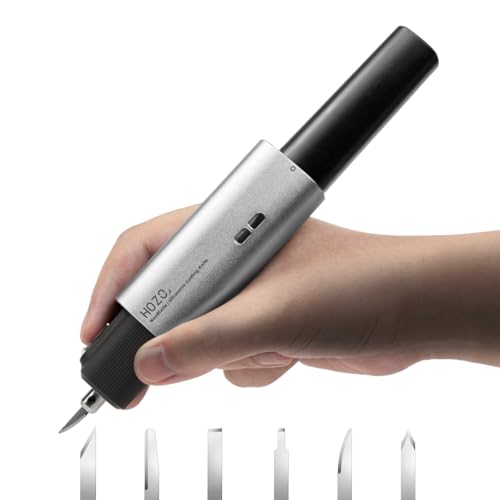
HOZO NeoBlade Wireless Ultrasonic Cutter 40W

OX Oscillating Blade 4 Pack for Wood, Drywall

Dremel Lite 7760 N/10 4V Cordless Rotary Tool Kit

Dremel Stylo+ 2050-15 Rotary Tool Kit

Dremel 8250-5 12V Cordless Rotary Tool Kit

HOZO NeoSander 64pc Sanding Head Collection

HOZO NeoSander Reciprocating Detail Sander
The Picks, Examined More Closely
The HOZO NeoBlade is a different animal from the rotary and detail sanders on this list. It uses ultrasonic vibration (high-frequency shaking, in this case 40kHz) to nibble through soft trim, foam, and 3D-printed parts without spinning abrasive wheels. That makes it a great prep tool for cutting back caulk lines, trimming door casings, or separating print supports before sanding.
At roughly 4.4 ounces without the battery, it ranks among the lightest cutters in its class, which matters during overhead work on crown molding. Two cutting modes and auto power adjustment let the tool match the density of the material instead of forcing you to babysit a speed dial.
The Helpful Details
- Ultrasonic cutting leaves far less dust than rotary or random-orbit sanding on trims
- Auto power adjustment tailors output as material density changes, reducing stalls
- Replaceable battery keeps long jobs moving without recharging the whole tool
- Light enough for extended overhead crown work without forearm fatigue
Things To Consider
- Not a finishing sander, so you’ll still want a Dremel or NeoSander for paint-ready surfaces
- Spare blades and battery packs add to the long-term cost
Feature Card
Whose Workbench It Belongs On
Trim carpenters and model makers who prep a lot of detailed profiles before final sanding.
Reach For A Different Pick When
You need a true sander for finish work, where the HOZO NeoSander Reciprocating Detail Sander handles full abrasive progression.
This OX bundle is an accessory, not a tool, but it earns its place because most trim sanding jobs start with cutting back material first. The set includes fine-tooth, coarse-tooth, extra-wide, and bi-metal blades for an oscillating multi-tool (a small power saw whose head vibrates side-to-side at high speed). You use the coarse and wide blades to remove old caulk, slice baseboards for removal, and undercut door jambs without pulling the trim.
Trim prep gets dramatically faster once you can plunge-cut and flush-cut instead of prying with a bar. The bi-metal option also helps when you hit a hidden nail or screw head behind baseboards.
What Stands Out
- Four-blade variety covers removal, plunge cuts, and metal-flush tasks in one pack
- Bi-metal blade survives the occasional nail strike during trim tear-out
- Extra-wide coarse blade speeds up long baseboard cuts
Trade Offs
- Requires a separate oscillating multi-tool to actually use the blades
- Not a finishing accessory, so you’ll still need a separate sander for paint prep
Right Fit For
Shoppers who already own an oscillating multi-tool and want a versatile blade kit for trim demo and prep.
Consider Something Else When
You don’t yet own a multi-tool, in which case the Dremel Lite 7760 offers a more complete starter package.
The Dremel Lite 7760 is a 4V cordless rotary tool (a handheld tool with a spinning tip that accepts dozens of interchangeable bits for cutting, grinding, and sanding), designed for light finishing rather than heavy material removal. For trim work, that distinction is helpful: you’re smoothing caulk residue, easing sharp edges on mitered corners, and cleaning up dried putty without over-sanding profiles. Variable speed control is the main feature, and it lets you dial back for soft pine trim where higher speeds scorch the surface.
The compact body fits inside cabinets and tight corners where a half-sheet sander would never reach. Owners commonly find the included accessory list covers the basics, though serious trim work benefits from picking up a few extra sanding drums and bands.
Useful Touches
- Variable speed range protects soft trim from scorch marks
- Penetrates inside corners and toe-kick areas where flat sanders cannot reach
- Cordless 4V platform keeps the workflow simple for occasional use
Some Limits To Know
- 4V motor is best for detail work, not for flattening large runs of trim
- You’ll likely buy extra sanding accessories beyond the included set for full trim prep
Feature Card
Made For
First-time rotary tool users handling light trim touch-ups and small craft projects.
Look Elsewhere When
You need sustained high-torque sanding, where the Dremel 8250-5 delivers noticeably more output.
The Stylo+ 2050 leans into fine detail work with a pen-style grip that gives you a writing-instrument feel. For sanding trim, that translates to better control along moldings, flutes, and inside corners where a chunky rotary barrel can wobble. The kit ships with 15 accessories, which is enough to start sanding, engraving, and polishing right away.
Variable speed control across the dial helps you stay gentle on finished edges while still removing material where you need to. The thinner body also means less fatigue during the kind of long, drawn-out trim work where you’d otherwise set a regular rotary down every few minutes.
The Value In It
- Pen grip improves precision on narrow molding profiles and flutes
- 15-piece accessory kit gives a real head start for trim projects
- Light form factor reduces hand fatigue on long detail sessions
Worth Noting
- Less torque than larger Dremel rotary models, so heavy stock removal isn’t its strength
- Pen form means more care is needed to keep a firm grip on larger sanding bands
Feature Card
Best Suited To
Detail-oriented DIYers and crafters sanding fine molding profiles, picture frame edges, and decorative trim.
Not Your Match When
You need higher torque for repeated stock removal, where the Dremel 8250-5 is the better tool.
The 8250-5 sits at the top of Dremel’s cordless rotary line, and the upgrade shows up where it counts on trim jobs: a brushless motor (a motor with no carbon brushes to wear out, so it runs cooler and lasts longer) for longer runtime, and 12V power that holds speed under load. You can sand long runs of baseboard and casing without the tool bogging down the way smaller 4V models can.
For trim-specific use, that extra headroom matters when you need to remove a layer of failed paint, shape a profile back to clean wood, or run a flap wheel across raised panels. The cordless design means you can walk from room to room during a whole-house repaint without dragging an extension cord behind you.
Reasons It Performs
- Brushless motor holds speed under load for cleaner sanding on dense trim
- 12V platform provides noticeably more torque than the 7760 Lite
- Strong battery life for full-day trim refinishing sessions
Practical Considerations
- Heavier than the 7760, so overhead work on ceiling moldings can tire you out faster
- Higher price point puts it beyond casual, once-a-year DIY needs
Feature Card
Who Should Grab It
Frequent DIYers and pros refinishing trim across whole rooms or multiple properties on a regular basis.
Where Another Pick Suits Better
Your sanding is mostly light detail work, in which case the Dremel Stylo+ 2050 is easier on the wrist.
The HOZO NeoSander 64-piece collection is an accessory set built around a color-coded grit system. Each grit level (from #180 for shaping up to #1500 for fine finishing) is assigned its own color, so you can grab the right abrasive without squinting at tiny printed numbers. For trim sanding, where you often move through several grits in a single session, that visual shortcut saves real time.
Eight different head shapes cover the geometry of most trim work: cones for inside corners, cylinders for flat runs, wedges for profiled edges, and tapered points for tight curves. Owners commonly report the color-coding reduces cross-contamination between grit levels, which keeps your fine finishing discs from getting scratched by stray coarse grains.
Benefits That Matter
- Color-coded grits eliminate the guesswork when switching between steps
- Eight head shapes handle inside corners, profiles, and flat trim in one kit
- Range from #180 to #1500 covers the full shaping-to-polishing progression
Points To Keep In Mind
- Requires a compatible NeoSander or similar mandrel tool to function
- 64-piece count assumes regular use; casual trimmers may not rotate through all grits
Feature Card
Perfect Match For
Detail-oriented finishers who work through multiple grits per project and want a clean, organized abrasive system.
Skip It When
You only sand trim once a year, where a smaller starter pack would be more practical than 64 pieces.
The HOZO NeoSander Reciprocating Detail Sander uses a true linear reciprocating motor (one that drives the sanding tip back and forth in a straight line, rather than spinning or orbiting) to deliver 13,000 strokes per minute. That straight-line motion suits trim sanding well, because it follows the direction of the wood grain on flat runs and doesn’t leave swirl marks on profiled edges.
Stepless stroke adjustment from 0.6 to 1.8mm lets you tune aggressiveness on the fly. A short stroke handles fine finishing on face moldings, while a longer stroke chews through old paint on baseboards. The pen-style grip keeps the tool comfortable for overhead crown work, which is where most trim sanders tend to feel heavy.
A Favorable Mix
- Linear motion reduces swirl marks on profiled trim compared to rotary tools
- Adjustable stroke length adapts from fine finishing to paint removal
- 13,000 SPM output handles long sanding sessions without bogging down
Honest Caveats
- Specialized heads limit abrasive choices compared to standard rotary systems
- Less common form factor means replacement tips may be harder to source locally
Who It Suits Best
Trim-focused DIYers and model makers who want a dedicated detail sander that complements a rotary tool, rather than replacing one.
A Better Fit Elsewhere
You need a versatile all-around rotary platform, in which case the Dremel 8250-5 handles a wider range of bit types.
What Matters Most Before Choosing Tools For Sanding Trim
Motor Type And Power Delivery
Trim work rarely needs the heaviest tool on the shelf, but it does demand control. Rotary tools offer the widest bit selection, oscillating blades excel at cutting back material before sanding, and detail sanders with linear motion follow grain direction more naturally. Match the motion to the profile: a flat run of baseboard handles different tool pressure than a curved ogee molding.
Grip And Form Factor
A pen-style grip shines on tight profiles and overhead crown work, where a full-size rotary barrel can throw off your balance. Heavier tools like the Dremel 8250-5 deliver more torque but tire you out faster on ladders. For multi-room jobs, lighter tools with swappable batteries tend to keep you moving longer.
Abrasive Variety And Progression
Trim sanding usually moves through three or more grits per project, from rough shaping to fine finishing. Kits like the HOZO NeoSander 64-piece collection cover that range in one organized set, while standalone tools require you to source abrasives separately. Color-coded grits reduce mid-project confusion, especially under shop lighting.
Compatibility And Long-Term Cost
Before buying any tool or accessory, confirm the abrasive system works with the mandrel or chuck you already own. Brushless motors last longer but cost more up front, while brushed motors are easier on a tight budget. Factor in replacement bits, sanding heads, and battery replacements when weighing overall value across the project, not just the initial price.
Key Considerations Across These Picks
Where Shoppers Go Wrong
The most common slip-up is reaching for the biggest, most powerful rotary tool on the shelf, then wondering why it ate through a delicate profile. Trim rewards finesse, not raw output. Another frequent mistake is buying a sander without confirming the abrasive system is available locally or online, leaving you stuck mid-project. Finally, some shoppers skip grit progression entirely, jumping from coarse to fine and leaving scratch patterns that show through paint.
Where The Extra Money Goes
Stepping up to a brushless motor like the one in the Dremel 8250-5 buys you longer runtime, cooler operation, and a tool that holds speed under load, which matters during long refinishing sessions. Higher-tier kits also tend to include better accessory quality, faster chargers, and more ergonomic grips. The upgrade is worth it for frequent users; for occasional touch-ups, a lighter, less expensive model handles the job just fine.
Frequently Asked Questions
What Is The Easiest Tool For Sanding Trim?
A detail sander with a pen-style grip and adjustable stroke is the easiest to learn. Tools like the HOZO NeoSander Reciprocating Detail Sander give you direct control along moldings without the bulk of a full-size rotary.
Can I Use A Rotary Tool For All Trim Sanding?
Yes, for most trim work a variable-speed rotary like the Dremel Lite 7760 or Dremel 8250-5 covers cutting, sanding, and polishing. Swap bits based on the profile and the material.
What Grit Should I Start With On Trim?
Coarse grits around #80 to #120 work for removing old paint, while #180 to #220 handles bare wood shaping. Move to #320 and finer for finish sanding before paint or stain.
Do I Need A Special Sander For Crown Molding?
Crown molding benefits from a pen-style or detail sander that can reach the angled profile without flattening the design. Larger flat sanders tend to round off edges you want to preserve.
How Do I Avoid Burning Wood While Sanding Trim?
Keep the tool moving and use lower speed settings on soft woods like pine. Higher speeds generate friction heat, which darkens soft trim and ruins the finish before paint ever goes on.