American-made tools carry a reputation for a reason. The factories behind them invest in better steel, tighter heat-treat cycles, and assemblers who actually understand tolerances. You feel that difference the first time a Klein pliers sinks into a stubborn copper wire, or when a Malco clamp holds its adjustment across dozens of glue-ups. This roundup covers nine picks that fit real working hands, from aviation crimpers and electrician-grade pliers to compact pink DIY kits and a heritage pocket knife. Some lean professional, some lean weekend project, and a few blur the line. Every item earns its spot for a specific reason, and each one tells you honestly when another pick in the list suits a different kind of work.
An Overview Of The Picks

JRready M22520/2-01 Indent Crimp Tool NEW-AS2G

Eagle Grip LP11C Locking C-Clamp

JRready ST2165 M22520/1-01 Crimp Tool Kit NEW-ASF1G

Klein Tools D2139NE11055 Pliers Set

Hi-Spec 8V Drill Set Home DIY Pink

JRready ST2168 M22520 Hand Crimp Tool Kit

Hi-Spec 3.6V Cordless Electric Screwdriver Kit
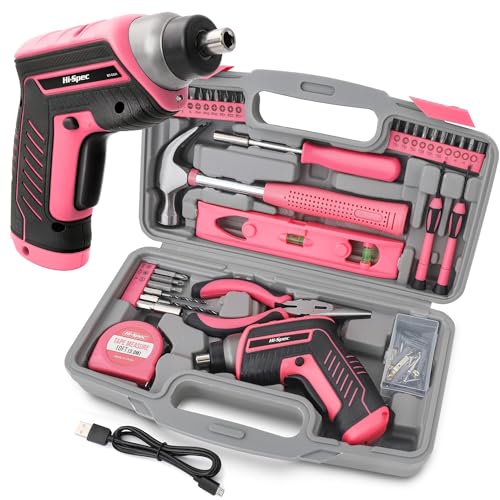
Hi-Spec 3.6V USB Electric Screwdriver Pink

Case WR XX Trapper Pocket Knife 9232
A Deeper Look At The Lineup
Aviation-grade wiring demands the kind of consistency a hobby crimper simply cannot deliver, and that is exactly where the JRready M22520/2-01 earns its place. The four-indent crimping geometry, in plain terms the die presses the contact from four sides at once, produces uniform compression across every pin, which matters when a signal has to survive vibration in a fuselage or a control panel. Compared to the broader wire-harness kit from JRready reviewed later, this tool is the focused, single-range specialist for the lower end of the AWG chart.
For bench technicians building Mil-spec harnesses, that focus reads as a feature, not a limitation. You get repeatable crimps on miniature and sub-miniature contacts without the second guessing that plagues cheaper tools.
What Pays Off
- Crimps 20-32AWG solid contacts in a single tool, covering the common sub-miniature range most aerospace work touches.
- Universal positioner with both P-W1 screw-adjust and M22520/2-02 fixed options, so you can dial in different contact families without buying extras.
- Four-indent geometry delivers the consistent pull strength that aviation harnesses require.
- Compact frame fits a crowded avionics bench better than full-size crimpers.
Things To Consider
- Limited to the 20-32AWG window, so heavier wire work requires a second tool.
- Positioner swaps take practice, and the first few crimps on a new contact type may need calibration checks.
Feature Snapshot
Who It Suits Best
Avionics techs and harness builders working on 20-32AWG Mil-spec contact systems will get the most out of this focused tool.
Consider Something Else When
Anyone building heavier-gauge wire harnesses should pair it with the JRready ST2165 M22520/1-01 reviewed below, which covers the 12-26AWG range.
The Eagle Grip LP11C lands in that small category of clamps you grab once and never willingly set down. Forged from American steel in DeWitt, Nebraska, then run through a premium heat-treat cycle, the body has a satisfying heft that cheaper imports simply cannot fake. The wide jaw opening paired with a narrow gripping face lets you clamp oddly shaped assemblies, and the locking mechanism holds its setting across repetitive glue-ups, which saves your hands during long production runs.
For woodworkers welding fixtures or assembling cabinetry, this clamp feels like a piece of shop infrastructure rather than a disposable tool. Most owners report the finish holding up well in humid shop environments, though a light oil wipe-down after wet jobs keeps the threads smooth.
Everyday Wins
- Forged American steel construction outlasts cast imports in heavy shop use.
- Locking mechanism holds adjustment through dozens of repeated cycles without drift.
- Wide jaw with a small gripping face reaches awkward shapes standard clamps cannot.
- 11-inch capacity covers most furniture and cabinetry glue-ups.
Worth Noting
- Heavier than aluminum-body clamps, so overhead work can fatigue your wrist.
- Not the right scale for delicate trim work where miniature clamps shine.
Who It Suits Best
Shop-based woodworkers and metalworkers handling repetitive clamping cycles will appreciate the LP11C’s staying power.
Look Elsewhere When
For fine electronics assembly or jewelry-scale clamping, the JRready crimp tools on this list serve a totally different role.
The ST2165 picks up where the smaller JRready M22520/2-01 leaves off, covering the upper 12-26AWG range that heavier harness work demands. Built to the MIL-C-22520/1-01 spec, this crimper uses a cycle-controlled ratchet (a mechanism that releases only at the end of a full stroke) that prevents partial crimps, which is the single most common quality failure in hand-crimped harnesses. The included PH102 turret head positioner accepts a wide range of contact families, so most shops can standardize on this single frame for their heavier-gauge runs.
For production environments where repeatability matters more than tool count, the eight-position selector knob is the quiet hero. You dial in the contact size once and the ratchet handles the rest, so the next operator gets the same result regardless of hand strength or fatigue.
What Helps Most
- Mil-Standard 8-impression crimp geometry maximizes tensile strength on closed-barrel contacts.
- Cycle-controlled ratchet eliminates the half-crimp problem that plagues cheaper hand tools.
- Universal screw adjustment pairs with PH102 turret head for broad contact compatibility.
- Eight-position selector keeps depth setting reproducible between operators and shifts.
Honest Caveats
- Heavier than the smaller M22520/2-01 reviewed above, so high-volume bench sessions demand a stand.
- Turret head changes between contact families take a moment and require the included adjustment wrench.
Feature Snapshot
Right Fit For
Production harness builders and aerospace wire techs who need repeatable Mil-spec crimps on 12-26AWG wire will find the ST2165 dialed in for their workflow.
A Better Fit Elsewhere
For pure 20-32AWG miniature contact work, the JRready M22520/2-01 reviewed earlier is a more focused match.
Klein has been forging pliers in the US for generations, and the D2139NE11055 set carries that lineage forward. The 9-inch lineman’s side cutter uses a high-leverage design with the rivet positioned closer to the cutting edge, which delivers substantially more cutting force than standard plier geometry. The included copper wire stripper and cutter handles the smaller branch-circuit work without forcing you to swap tools mid-task.
For electricians pulling wire through conduit, this pairing covers roughly 90% of daily hand-tool needs in a compact two-piece kit. The hot-riveted joint stays tight through years of cold weather and dropped-from-the-truck-deck use, though the induction-hardened cutting edges do benefit from occasional light oil to fight surface rust in damp truck boxes.
The Case For It
- High-leverage rivet placement gives the side cutters noticeably more bite per squeeze.
- Two-piece set covers cutting, gripping, and copper wire stripping without tool juggling.
- Induction-hardened edges hold their geometry through repeated MC cable and romex work.
- Made in the USA with the fit and finish electricians expect from Klein’s long-running lines.
Points To Keep In Mind
- Lineman’s pliers are bulky for tight panel work where long-nose reach helps more.
- Copper stripper is single-purpose, so aluminum work needs a different tool.
Feature Snapshot
Who Should Grab It
Working electricians and serious DIYers who cut and strip copper wire on a near-daily basis will get the most out of this pairing.
Not Your Match When
If your work centers on aviation contacts, the JRready crimpers elsewhere on this list serve a totally different niche.
The Hi-Spec 8V drill kit lands firmly in the apartment-DIY category, and that is exactly its strength. The USB-rechargeable 1500mAh battery, 10Nm of torque, and a variable-speed 800rpm motor handle flat-pack furniture, shelf mounting, and light wood projects with no fuss. The bright LED work light helps in dim closets where most of these projects actually happen, and the pink finish makes the kit easy to spot in a shared tool drawer.
For first-time tool owners or anyone setting up a small-space repair kit, the bundled accessory selection covers more jobs than the drill alone. Just set expectations around its real ceiling: it is not built for masonry, concrete, or tile.
Practical Advantages
- USB charging removes the dedicated battery charger from the apartment clutter list.
- 10Nm torque handles typical flat-pack assembly without bogging down.
- Integrated LED lightens dark corners where shelf and curtain-rod work happens.
- Compact kit footprint fits in a kitchen drawer or small workshop bin.
Trade Offs
- Not rated for masonry, tile, or hardened metals, so heavier drilling jobs need a different tool.
- 1500mAh battery requires mid-project charging during long furniture builds.
Made For
New homeowners, apartment dwellers, and casual DIYers handling furniture assembly and light repairs will find the kit matches their scale.
Swap It Out When
Anyone needing serious drilling power for masonry or metal should look past this kit entirely and choose a corded or higher-voltage drill.
The ST2168 is the kit that ties the two single-range JRready tools on this list into a complete bench solution. It bundles the NEW-AS2 for 20-32AWG and the NEW-ASF1G for 12-26AWG, plus a G125 go-nogo gauge (a simple pass/fail tool that confirms crimp depth is within spec) so you can verify depth setting without guessing. The camouflage-finish frame with oxidation treatment gives the kit a workshop-ready look that stands up to greasy bench drawers.
For shops handling both ends of the harness spectrum, owning both frames eliminates the swap-time cost of mid-day tool changes. The included go-nogo gauge makes the kit a smart pick for any operation that has to pass quality audits.
Notable Gains
- Covers the full 12-32AWG range across two included crimp frames.
- Go-nogo gauge included for quick crimp-depth verification on the bench.
- Compatible with M22520 and AS22520 standards for broad contact coverage.
- Oxidation-treated finish resists corrosion in humid shop environments.
Some Limits To Know
- Two-frame kit costs more upfront than either single-range tool reviewed earlier.
- K-series positioners for the AS2 frame are sold separately depending on contact family.
Feature Snapshot
Whose Shelf It Belongs On
Aviation and bench-repair shops that handle varied wire gauges in the same week will use both frames daily.
Reach For A Different Pick When
Specialists who only ever work in one wire-size range can save money by buying just the focused single-range JRready tool above.
The Hi-Spec 3.6V cordless screwdriver pulls double duty as a furniture-assembly accelerator and a small-repair hand tool. At roughly 0.7 pounds, it sits in the hand long enough to assemble a full flat-pack dresser without wrist fatigue, and the compact body reaches inside cabinet backs where bulkier drills simply will not fit. The pink finish and approachable design make it a natural pick for shared households and gift-giving.
For daily screwdriving chores, this is the kind of tool you leave on the counter because it gets used that often. It is a screwdriver, not a drill, so leave the masonry holes for something else.
The Value In It
- 0.7 lb weight keeps hand fatigue low across long assembly sessions.
- Compact body fits inside tight cabinet interiors and drawer builds.
- Rechargeable battery eliminates the disposable battery waste of basic electric screwdrivers.
- Approachable design works for shared households and first-time tool owners.
Practical Considerations
- Screwdriver only, with no drilling function for pilot holes or larger fasteners.
- Lower torque than the 8V drill kit reviewed earlier, so heavier assembly may stall the motor.
Best Suited To
Anyone assembling flat-pack furniture regularly or handling small household repairs will find this kit earns its drawer space.
Another Choice May Suit
For drilling-heavy weekend projects, the Hi-Spec 8V drill kit reviewed above is a more capable match.
This 3.6V USB-rechargeable screwdriver focuses on the quick-fix end of home repair, with 3.5Nm of torque covering cabinet hinge screws, outlet cover swaps, and light furniture assembly. The 35-piece bit bundle spans the common screw head types found around the house, and the extended bit reach accesses the tight spots behind appliance panels and inside cabinetry. USB charging means any phone charger tops the battery up.
For apartment dwellers and renters who need a no-fuss screwdriver that lives in a junk drawer, this kit hits the right scale. The lower torque ceiling means you will not be driving long deck screws, but for everyday tasks it gets out of the way and does the work.
Positive Points
- 3.5Nm torque handles most small household screwdriving tasks without stalling.
- 35-piece bit set covers the common screw head types found in home repairs.
- USB charging uses the same cable as most phones and tablets.
- Extended bit reach tackles the tight access spots bulkier drivers cannot.
Possible Compromises
- Lower torque ceiling struggles with long screws and dense hardwood assembly.
- Plastic body is lighter but less durable than the heavier Hi-Spec kit reviewed just above.
Who Will Love This
Renters and apartment residents who need a compact, USB-chargeable screwdriver for small repairs will appreciate the no-fuss approach.
Skip It When
Anyone assembling furniture on a regular basis will want the higher-torque Hi-Spec 3.6V kit reviewed just before this one.
The Case WR XX Trapper carries a different kind of made-in-America story, one rooted in Bradford, Pennsylvania knife-making tradition that stretches back over a century. The 9232 pairs a Clip blade and a Spey blade in Tru-Sharp stainless steel, both of which hold an edge well and resist rust in pocket carry. The smooth oatmeal bone handle with the engraved inscription gives the knife a personal touch that explains its long history as a gift piece.
Closed at 4 1/8 inches, the Trapper rides comfortably in a jeans pocket without printing, and the dual-blade configuration handles everything from breaking down cardboard to opening shipping packages. Most owners find the slip-joint mechanism familiar within a day of carry.
The Helpful Details
- Tru-Sharp stainless steel resists corrosion during everyday pocket carry.
- Dual-blade Trapper pattern covers both detail work and heavier cutting tasks.
- Smooth bone handle with engraved inscription makes it a natural gift piece.
- Compact 4 1/8-inch closed length fits standard pocket profiles.
Factors To Consider
- Slip-joint design lacks a blade lock, so heavy prying tasks call for a different tool.
- Smooth bone handle is more decorative than grippy in wet conditions.
Perfect Match For
Everyday carry users and collectors who appreciate American cutlery heritage will find the 9232 a satisfying pocket companion.
Where A Sibling Pick Shines
For shop work that calls for actual cutting tools, the Eagle Grip LP11C clamp and Klein pliers set on this list serve the trades far better than any pocket knife.
Picking The Right American-Made Tool For The Job
American-made tools cover a wider spread than the “tradesman” stereotype suggests, and matching the tool to the actual job is where most people get the most value. Professional hand tools like crimpers and pliers reward users with tighter tolerances and longer service lives, while compact DIY kits win on accessibility for new tool owners. The real question is not which category is better, but which category matches the kind of work the tool will actually see.
Match The Tool To The Workload
Crimpers, clamps, and pliers are consumable in the sense that they wear out, but a quality tool outlasts several cheap replacements. A Klein pliers set handed down through an electrician’s apprenticeship is the textbook example. For lighter household work, the Hi-Spec pink kits deliver the right amount of capability without overbuilding for jobs that never come.
Check The Manufacturing Origin And Materials
The “made in USA” label means more when paired with specific materials. Look for forged American steel, induction-hardened edges, and Mil-spec compliance where the source lists it. JRready’s M22520-series tools and the Klein pliers set both lean on engineering standards that prove out in the spec sheet.
Weight And Ergonomics Matter More Than Spec Sheets
A 0.7-pound cordless screwdriver lives on the counter because it does not fatigue your hand. A forged-steel clamp earns its place because the heft translates to holding power. Holding the tool mentally in your hand before buying helps avoid the drawer-queen problem.
Consider Future Compatibility And Standards
For specialized work, Mil-spec compatibility like the M22520/1-01 standard on the JRready kits ensures the tool works with the contact families your projects will call for over time. Buying the right standard once beats adapting cheaper tools project by project.
Smart Shoppers Watch For These Catches
Pitfalls Shoppers Hit
The most common mistake is buying a general-purpose tool for specialty work, or specialty tooling for general projects. A flat-pack furniture kit cannot crimp aviation contacts, and a Mil-spec crimper is overkill for swapping outlet covers. Match the tool to the workload, not the other way around.
A second slip is ignoring AWG ranges on crimping tools. The JRready M22520/2-01 covers 20-32AWG, and the ST2165 covers 12-26AWG, and the wrong pick for your contact family produces crimps that pass visual inspection but fail pull tests. Verify the wire size before the order goes in.
Where The Extra Money Goes
Higher-tier tools like the Klein pliers and JRready crimp kits cost more because of the materials and the manufacturing precision. The trade-off is a tool that holds its geometry through years of heavy use, where cheaper replacements dull, loosen, or fail mid-project. For tradespeople using the tool daily, the upgrade pays back in avoided downtime and consistent results.
For casual users, the budget tier is honest value. The Hi-Spec pink screwdriver kits cover real apartment-scale needs without overbuilding for jobs that never come. The right tier is the one that matches your actual usage, not the one that looks best on the workbench.
Frequently Asked Questions
Are American-made crimping tools worth the premium over imports?
For Mil-spec harness work, the precision and cycle-controlled ratchets on tools like the JRready M22520 series pay back through consistent crimp quality. For casual electronics work, a less expensive tool may serve fine.
What AWG range should I look for in a general-purpose crimper?
A kit covering 12-26AWG handles most home electrical and electronics work. Pure aviation harness builders often need a second tool for the 20-32AWG miniature range, which is where the JRready M22520/2-01 reviewed above comes in.
How does a high-leverage plier design differ from a standard one?
The rivet sits closer to the cutting edge, which gives more cutting force per squeeze. Klein’s D2139NE11055 set uses this geometry to deliver noticeably more bite without requiring a larger hand grip.
Can a USB-rechargeable screwdriver handle typical furniture assembly?
For flat-pack furniture and most home repair tasks, a 3.5 to 3.6Nm cordless screwdriver like the Hi-Spec kits reviewed here is enough. Dense hardwood or long deck screws may stall the motor and call for a higher-torque tool.
What makes a pocket knife like the Case Trapper a good everyday carry option?
The compact 4 1/8-inch closed length rides in a pocket without printing, the dual-blade Trapper pattern covers both detail and general cutting, and the Tru-Sharp stainless steel resists corrosion during daily carry.