Foam shows up in more projects than most people expect, from a hobbyist’s terrain model to a builder’s insulation job, and the wrong blade can turn a clean cut into a ragged mess. The right tool depends on the foam type, the curve of your cuts, and how often you actually use the thing. This list sorts through hot wire cutters, electric hot knives, and a sharp scissor option, so you spend less time wrestling with styrene and more time building what matters.
How The Shortlist Stacks Up
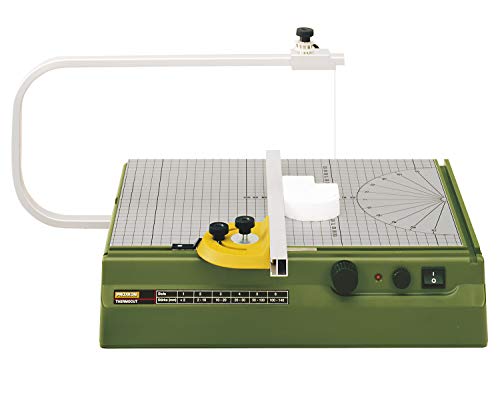
Proxxon Thermocut 115/E Hot Wire Foam Cutter

Ecarke 3-in-1 Hot Wire Foam Cutter

RONGTER 200W Air-Cooled Hot Knife Foam Cutter
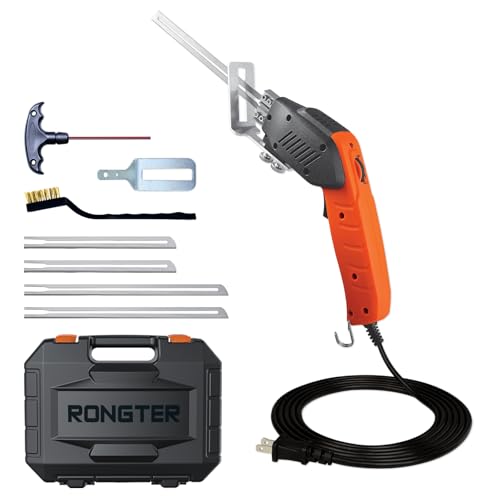
RONGTER 200W Electric Hot Knife Foam Cutter

RONGTER 300W Air-Cooled Hot Knife Foam Cutter

Fiskars 10″ Easy Action Bent Handle Scissors

RONGTER Air-Cooled Electric Hot Knife Foam Cutter
The Strengths Of Each Pick
The Proxxon Thermocut 115/E sits at the top of this list because it treats foam cutting like a machining task rather than a craft hobby. The wire heats to roughly 360°F, and the benchtop layout gives you a stable working surface for repeatable cuts across long runs. The fence includes a lockable feed bar, so angled slices stay consistent from one pass to the next.
For model makers building architectural mockups or railway layouts, that precision matters more than raw speed. Where the Ecarke 3-in-1 offers flexibility, this Proxxon trades portability for accuracy. The unit is mains-powered and meant to stay on a workbench, which suits anyone with a dedicated craft space.
The Helpful Details
- Wire temperature of around 360°F leaves clean, sealed edges on EPS (expanded polystyrene) and similar foams, reducing the dusty melt you get from a serrated blade.
- A double-function fence with lockable feed bar supports repeatable angled cuts, useful for tapered wing cores or roof profiles.
- The aluminum-based working surface (the brand calls it Aluminum Cobond compound) gives you a smooth glide for the workpiece and stays flat over time.
- Sturdy benchtop design means you push foam across the wire, not the tool across the foam, which reduces wrist fatigue on long sessions.
Points To Keep In Mind
- This is a stationary tool, so it loses appeal for anyone cutting foam at a job site or outside the workshop.
- The wire is a wear part; replacement spares add to the long-term cost, especially for heavy daily use.
- Setup takes a few minutes the first time you mount it, more commitment than a plug-and-go handheld.
Feature Snapshot
Whose Shelf It Belongs On
Dedicated model makers, architectural diorama builders, and serious hobbyists who already keep a craft bench set up and want repeatable precision over handheld convenience.
Look Elsewhere When
You need to roam with your tool; the Ecarke 3-in-1 Hot Wire Foam Cutter is a better fit for portable AC or DeWalt 20V battery work away from a fixed bench.
Versatility is the Ecarke 3-in-1’s whole pitch, and the design backs it up. Three interchangeable heads cover foam sculpting, detail trimming, and larger area work, so you swap the tip instead of buying a second tool. AC and DC power compatibility means you can plug it in at the bench or run it off a DeWalt 20V battery on a job site.
For signage shops and crafters who bounce between projects, that flexibility is the main draw. Compared to the Proxxon Thermocut 115/E, this is a more casual tool, less refined in build but far more portable. The trade-off is precision: handheld hot wire work rarely matches a fixed-fence bench rig for repeatable accuracy.
Well-Handled Touches
- Three swappable heads handle sculpting, precision trimming, and broad cuts in a single tool body.
- Dual AC/DC power support, including a compatible DeWalt 20V battery option, frees you from being tied to a wall outlet.
- Lightweight form factor suits craft fair booths, school workshops, and outdoor foam carving.
- Cuts polystyrene, foam board, and craft foams without the dust trail of a manual saw.
Worth Noting
- Handheld cutting relies on a steady hand; long straight edges are harder to keep clean than with the Proxxon’s table fence.
- Owners commonly report the included tips wear faster under heavy production use, so spares are worth budgeting for.
- Battery use drains a 20V pack faster than cordless drills; keep a spare charged for extended sessions.
Right Fit For
Sign makers, art teachers, and mobile crafters who split time between a workshop and a job site and want one tool that adapts rather than a drawer full of specialized cutters.
Consider Something Else When
You build scale models on a permanent bench; the Proxxon Thermocut 115/E Hot Wire Foam Cutter delivers the repeatable precision that handheld hot wire work struggles to match.
The RONGTER 200W is where the list shifts from specialty hot wire rigs to general-purpose hot knives. The temperature range is the headline, spanning roughly 122°F to 1202°F, which covers delicate craft foams and tougher packaging-grade materials. The active fan cooling supports about 120 minutes of continuous cutting, with a short rest cycle between long sessions.
You can shape insulation, trim packaging foam, or carve a costume prop without swapping tools. The 200W rating is modest compared to the 300W RONGTER further down, but for most home workshop tasks it’s more than enough. The trade-off is blade durability at the upper end of that temperature scale.
What Works In Its Favor
- Adjustable heat from about 122°F up to 1202°F covers everything from soft EVA (ethylene-vinyl acetate foam sheets) to denser XPS (extruded polystyrene) insulation.
- Built-in fan cooling supports up to 120 minutes of continuous cutting before the manufacturer recommends a 5-minute rest.
- Compact form factor fits in a drawer or small shop shelf, no dedicated bench space required.
- Cuts cleanly through foam without the debris cloud of a serrated knife or jigsaw blade.
Small Caveats
- At the highest temperature settings, the blade can scorch more delicate foams, so dialing in the right heat takes a little trial and error.
- The 5-minute rest cycle every 2 hours interrupts longer production runs, something to plan around for big projects.
- Replacement blades aren’t always bundled, so factor in a small spare-parts budget if you cut daily.
Best Suited To
Home DIYers, prop makers, and weekend crafters who want one adjustable tool for varied foam types and don’t need industrial-grade daily output.
Reach For A Different Pick When
You regularly cut thick, dense insulation foam all day; the RONGTER 300W Air-Cooled Hot Knife Foam Cutter has the higher wattage to push through tougher material without bogging down.
The RONGTER 200W Electric Hot Knife Foam Cutting Tool is essentially a sibling to the previous 200W model, and the two overlap heavily in spec. The shared air-cooled design and 120-minute continuous-run support are its core identity, paired with a power-adjustable knob for dialing in temperature.
For workshop regulars who already own RONGTER accessories or blades, picking this version can mean better compatibility with your existing setup. The honest read is that the difference between this and the other 200W model is mostly minor: slight color or accessory packaging may separate them more than function does. Both are solid mid-tier workhorses for general foam tasks.
Standout Benefits
- Adjustable temperature and power control let you match heat to foam density, reducing scorch marks on softer materials.
- Active fan cooling supports around 120 minutes of continuous cutting for those longer project days.
- Comfortable grip for extended shaping sessions, especially on curved cuts where wrist angle matters.
- Works well across DIY home projects, light workshop builds, and craft foam carving.
Trade Offs
- Spec overlap with the other 200W RONGTER means there’s no strong reason to pick this one over its sibling unless accessories or pricing favor it.
- The fan adds a small amount of operating noise, something to consider in shared or quiet workspaces.
- Like most hot knives, the cord length can be limiting in larger workshops without an extension nearby.
Perfect Match For
Workshop regulars who want a reliable 200W hot knife with a familiar RONGTER feel and value the steady continuous-run cooling system.
Skip It When
You need cordless flexibility for outdoor or job-site foam work; the Ecarke 3-in-1 Hot Wire Foam Cutter is purpose-built for portable AC or battery operation.
The RONGTER 300W steps up the wattage for tougher materials. Where the 200W models handle everyday craft and packaging foams comfortably, the extra power here pushes through denser insulation and thicker rigid sheets without bogging down. The same air-cooled design supports around 120 minutes of continuous cutting, with a brief rest cycle after.
For insulation contractors, theater set builders, and anyone carving rigid foam board, that extra headroom matters. Compared to the Fiskars 10″ Easy Action Scissors further down, this is a serious tool for serious foam volume, not a craft-room accessory. The 300W also runs hotter at the top of its range, which makes precise low-heat control a touch harder to dial in.
A Favorable Mix
- 300W motor handles dense EPS, XPS, and rigid insulation foam more confidently than lower-wattage options.
- Active fan cooling sustains up to 120 minutes of continuous cutting for production-level projects.
- Adjustable temperature knob covers a wide range of foam densities, from thin craft sheets to thick board stock.
- Sturdy build for daily workshop use, not just occasional weekend crafting.
Potential Drawbacks
- Higher wattage means more heat at the top of the dial, which can scorch delicate foams if you don’t back off the temperature.
- Heavier than the 200W models, so extended overhead or vertical cuts tire the wrist faster.
- The 5-minute rest cycle after long sessions still applies, even at the upgraded power level.
Feature Snapshot
Who It Suits Best
Insulation fitters, theater set builders, and serious hobbyists who regularly carve dense or thick foam and want the headroom of higher wattage.
Where Another Pick Suits Better
You mainly trim thin craft sheets and fabric-backed foam; the Fiskars 10″ Easy Action Bent Handle Scissors handles that volume with no heat, no cord, and far less setup.
The Fiskars 10″ Easy Action Bent Handle Scissors breaks the pattern on this list because it isn’t a hot tool at all. It’s a pair of bent-handle, spring-assisted scissors built for fabric and craft cutting, with high-grade stainless steel blades that hold an edge through repetitive use.
For thin foam sheets, foam board, and craft foam, a sharp scissor often beats a hot knife on speed and simplicity. No cord, no heat-up time, no fumes, and no scorched edges. The catch is thickness: once you push past a few millimeters of dense foam, the blades start to struggle. For everything else, this is a quietly capable backup to keep next to the bigger tools.
A Few Strong Suits
- Easy Action spring-assisted handle reduces hand fatigue during long cutting sessions, which matters for repetitive craft work.
- High-grade stainless steel blades cut cleanly through foam board, thin EVA sheets, and craft foam without tearing.
- Bent handle keeps your hand and wrist in a more natural cutting position, easing strain on longer projects.
- No power source, no heat, no fumes, which makes it a friendlier option for classroom and home use.
Honest Caveats
- Not built for thick rigid foam; dense insulation and thick EPS panels are well beyond what a 10″ scissor can manage.
- Sharpening eventually becomes necessary, since manual blades dull faster than hot wire elements do.
- Long, clean cuts on large foam boards depend more on user technique than on tool assistance.
Who Should Grab It
Sewists, crafters, and classroom users who frequently trim thin foam sheets, foam board, or fabric-backed craft materials and want a tool that’s ready to use the moment they pick it up.
A Better Fit Elsewhere
You’re cutting rigid foam board or insulation daily; the RONGTER 300W Air-Cooled Hot Knife Foam Cutter has the heat and wattage to power through dense material without blade fatigue.
The RONGTER Air-Cooled Electric Hot Knife rounds out the list as the dependable middle ground. It uses the same air-cooled platform as the other RONGTER models in this roundup, with a fan that supports up to 120 minutes of continuous cutting. The adjustable power knob lets you tune temperature and wattage to the foam in front of you.
For someone who needs one foam cutter to handle mixed projects, this is the safe pick. It won’t match the Proxxon Thermocut 115/E for precision, and it won’t reach the wattage of the 300W RONGTER for dense insulation, but it sits comfortably between the two. The honest read is that the family resemblance across the RONGTER line is strong, so choosing between them often comes down to specific power needs and accessory compatibility.
Where It Helps
- Active fan cooling sustains around 120 minutes of continuous cutting, good for mid-sized workshop sessions.
- Adjustable power control adapts the tool to different foam densities without swapping hardware.
- Compatible with the broader RONGTER accessory ecosystem if you already own blades or stands from the brand.
- Practical form factor for workshop, DIY, model making, and craft foam tasks alike.
Some Limits To Know
- Sits in the spec middle of the RONGTER range, so it doesn’t excel in any single direction; extreme precision or extreme density push you to a more specialized tool.
- The 5-minute rest cycle after long sessions still applies, so very large foam projects need planning.
- Replacement parts are sometimes easier to find for the higher-wattage models in the same family.
Made For
General workshop users and hobbyists who want one flexible hot knife to cover a range of foam types without committing to a specialist or a heavyweight.
Swap It Out When
You need bench-grade accuracy on long cuts; the Proxxon Thermocut 115/E Hot Wire Foam Cutter with its lockable fence and stable table is the better match for that workflow.
What Matters Most Before Choosing Tools To Cut Foam
Match The Tool To The Foam Type
Not every cutter works on every foam. Expanded polystyrene (EPS, the white “styrofoam” people picture) responds beautifully to hot wire cutting because the wire glides through the cell structure with minimal resistance. Extruded polystyrene (XPS) is denser and often calls for a hotter, more powerful hot knife rather than a thin hot wire. EVA craft foam and foam board thin enough to slice with a sharp blade can be handled by heavy-duty scissors like the Fiskars option here, with no power required at all. Picking a tool that targets your most common foam type prevents frustration and rough edges from the first cut.
Hot Wire Versus Hot Knife Versus Scissors
Hot wire cutters, like the Proxxon Thermocut 115/E and the Ecarke 3-in-1, use a thin heated wire that melts through foam with very clean edges. They shine on long, straight, and gently curved cuts in EPS. Electric hot knives, like the RONGTER 200W and 300W models, use a broader heated blade that powers through denser foams and rougher material. Scissors like the Fiskars 10″ handle thin craft foam and foam board without any heat setup at all. Each tool family suits a different workflow, and many serious crafters end up owning two.
Power, Heat Range, And Cooling Cycles
Wattage tells you how much thermal headroom a tool has. Higher wattage, like the 300W RONGTER, drives through dense foam without slowing down. A wide temperature range, like the 122°F to 1202°F spread on the 200W RONGTER, lets you match heat to foam density and avoid scorching. Air cooling matters because hot tools need breaks; the 120-minute continuous rating on the RONGTER line is solid for a hobbyist, but it still means a short rest after a long session.
Portability And Workspace Setup
Benchtop tools like the Proxxon Thermocut 115/E deliver precision but tie you to a workbench. Cordless or dual-power options like the Ecarke 3-in-1 open up outdoor and on-site foam work, which matters for set builders and event signage. Manual tools like the Fiskars scissors need no power at all and work anywhere you can sit comfortably. Before choosing, think about where you’ll actually be cutting and how often you’ll move the tool.
Key Considerations Across These Picks
Wrong Turns To Avoid
One common slip is buying a thin-wire hot wire cutter for dense foam board or thick insulation, then wondering why the wire keeps bowing or snapping. The tool simply isn’t rated for that material. Another trap is underestimating how much heat and fumes a hot knife produces in a small room, which is why ventilation matters even for short sessions. Choosing a tool that doesn’t match your foam type leads to rough cuts, melted edges, and frustration that usually ends in a second purchase.
When Paying More Pays Off
The step up to a bench-grade tool like the Proxxon Thermocut 115/E buys repeatable precision, a stable work surface, and cleaner edges on long production runs. For a casual crafter using foam twice a year, that jump rarely pays back. For model makers, diorama builders, or anyone cutting foam weekly, the accuracy and reduced waste add up fast. Higher-tier electric hot knives earn their keep when you regularly cut dense foam that stalls lower-wattage models. The upgrade is worth it when the tool you use most is the one that’s currently holding you back.
Frequently Asked Questions
What Is The Best Tool For Cutting Thick Foam Board?
For foam board around half an inch thick, an electric hot knife like the RONGTER 300W Air-Cooled Hot Knife Foam Cutter works well, with enough wattage to glide through without tearing. Hot wire cutters can handle it too, but only with the wire kept taut and a steady hand.
Can Hot Wire Cutters Be Used On All Foam Types?
They work best on expanded polystyrene (EPS) and similar low-density foams. Denser materials like extruded polystyrene (XPS) and rigid insulation often need a hot knife with more thermal headroom instead. Always test on a scrap piece before committing to a finished project.
Do Electric Foam Cutters Produce Harmful Fumes?
Hot cutting foam does release fumes, especially with polystyrene materials. Working in a ventilated space and avoiding enclosed rooms is the standard approach. A small fan or open window makes a noticeable difference in comfort during longer sessions.
How Do I Maintain A Hot Wire Or Hot Knife Cutter?
Keep blades and wires clean of melted residue, store the tool in a dry spot, and let it cool fully before putting it away. Replacement wires and blades are wear parts, so having a spare on hand prevents project delays. Air vents on cooled models should be kept clear of dust so the fan runs properly.
Are Scissors A Realistic Option For Cutting Foam?
For thin craft foam, foam board, and EVA sheets, a heavy-duty scissor like the Fiskars 10″ Easy Action Bent Handle Scissors is a genuinely useful tool. It won’t handle thick rigid foam, but for craft and hobby use, it offers zero setup time and precise control.