A trench is one of those jobs that sounds simple until you start. Running a new irrigation line, laying landscape edging, or burying a low-voltage cable all demand a clean, consistent channel, and the wrong tool leaves you with a ragged furrow and a sore back. The right implement matches the soil, the length of the cut, and your tolerance for swinging a heavier head.
The picks below cover the spread: narrow transplanting spades for shallow channels, root-slicing shovels for ground laced with old roots, a heavy pick mattock for compacted and rocky runs, and a couple of compact hand tools for finishing work in tight spaces. The goal is helping you match the tool to the trench you actually need to cut.
The Choices Worth Comparing
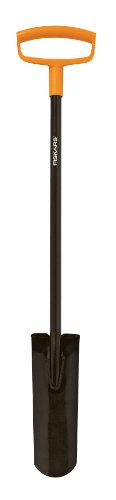
Fiskars 46″ Garden Transplanting Spade Shovel

Root Slayer 22011 Garden Shovel, Serrated Blade

Root Slayer RS224 Mini Digger Garden Shovel
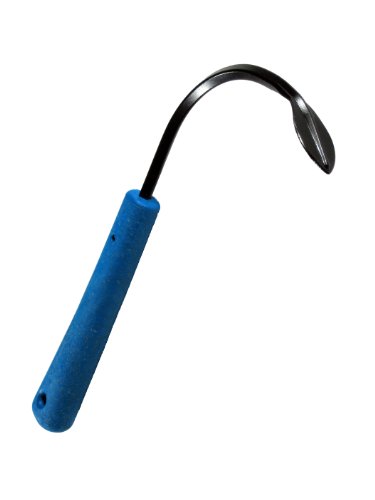
CobraHead Original Weeder & Cultivator

Truper 5 lb Pick Mattock 36″ Fiberglass Handle
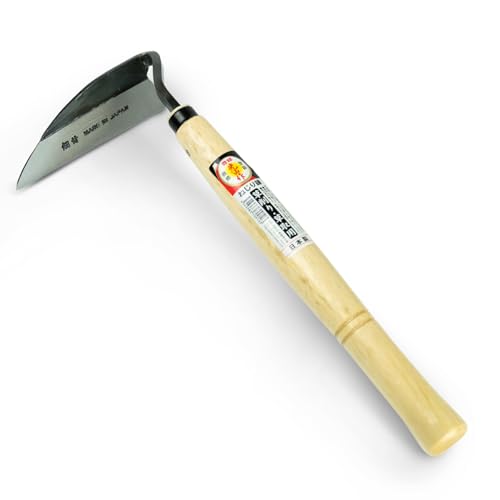
HOUNEN Japanese Weeding Sickle 4.7″ Blade

Fiskars 46″ Garden Digging Shovel D-Handle

Spear Head Spade SHFD3 40″ Garden Spade

Bond LH015 Mini D Handle Shovel
The Details Behind The Selections
Narrow trenches for shallow irrigation lines and drip tubing call for a blade that pushes straight down rather than scooping wide. The Fiskars 46″ Garden Transplanting Spade Shovel is built around that idea, with a slim profile that drops a clean channel through tilled beds and lawn patches without disturbing too much soil on either side.
The 14-gauge steel blade and 18-gauge steel shaft give the tool a stiffer feel than typical wood-handled transplanters, and the extra-large D-handle keeps two-handed control steady even with gloved hands. For anyone laying a 4-inch-deep line across a vegetable bed or a flower border, this is the trenching tool that stays out of its own way.
Where It Excels
- Penetrates firm soil cleanly thanks to the sharpened narrow blade
- Steel shaft resists the flex that can throw off a deep cut
- Long handle reduces how often you kneel or crouch during long runs
- Two-handed D-handle keeps control steady in heavier clay
Points To Note
- Not built for prying rocks; the slim blade can kink in stony ground
- Best for shallow channels rather than deep drainage work
- Rinse and dry the head after use to slow any surface oxidation
Quick Facts
Best Suited To
Homeowners laying shallow irrigation or lighting lines across existing garden beds.
Where Another Pick Suits Better
For a trench laced with old roots, the Root Slayer 22011 Garden Shovel’s serrated tip is a more productive choice.
Many backyards hide a mat of old roots just under the turf, the kind that turn a standard shovel into a frustrating bouncing exercise. The Root Slayer 22011 Garden Shovel, Serrated Blade is designed to break through that layer, with an inverted V cutting tip that works as a hatchet, saw, and shovel in a single head.
Rather than scraping around roots, you drive the sharpened point down and let the serrations cut through. The ergonomic shaft and grip setup spreads the load across both hands, which matters once a long trench starts to tire out your wrists. Compared to the Fiskars transplant spade above, this is a more aggressive trenching tool for ground that hasn’t been worked in years.
Strengths Worth Knowing
- V-shaped tip chews through roots that stop a normal blade cold
- Acts as shovel, hatchet, and root saw in one tool
- Better leverage reduces strain on hands and wrists in dense ground
Trade Offs
- Heavier than a standard digging shovel, so pace yourself on long runs
- Overkill for soft, freshly turned garden soil
- Serrations can snag gloves, so keep a steady hand on the shaft
Who It Suits Best
Homeowners reclaiming an overgrown strip where roots, old sod, and compacted dirt all meet.
Not Your Match When
For neat, shallow channels in already-tilled beds, the Fiskars 46″ Garden Transplanting Spade Shovel is the cleaner choice.
Raised beds, narrow borders, and tight flower strips don’t leave room for a full-size spade to swing freely. The Root Slayer RS224 Mini Digger Garden Shovel shrinks the original Root Slayer head down to roughly 70% size while keeping the same aggressive cutting profile, which makes trenching in close quarters much more controllable.
The 9 x 7.5 inch powder-coated carbon steel blade and oversized O-handle combine for a tool that fits in spaces where the full-size Root Slayer 22011 above would knock into surrounding plants. For drip-line runs along the edge of a raised bed, this compact head pulls its weight without taking out the marigolds next door.
A Strong Showing
- Compact head fits where full-size shovels can’t maneuver
- Powder-coated carbon steel resists corrosion across seasons
- O-handle grip area reduces hand fatigue on detailed cuts
Possible Compromises
- Smaller blade means more passes per linear foot
- Less reach than a long-handled spade for deep, straight runs
- Coating can scuff in heavy rocky contact
Feature Snapshot
Made For
Gardeners running short drip lines or edging trenches through raised beds and borders.
Reach For A Different Pick When
For long, uninterrupted trench runs, the Fiskars 46″ Garden Digging Shovel covers ground faster.
Sometimes a full-size trenching tool is overkill, especially for cleaning out a finished channel or carving a shallow slot for a landscape cable. The CobraHead Original Weeder & Cultivator is a short-handle tool with a curved, forged steel blade that pulls through soil the way a thumb pulls through soft putty.
It is the right pick for refining a trench after the main cut is done, scraping the bottom clean, or working around existing root balls where a long shovel would cause too much collateral damage. Where the Spear Head Spade and Fiskars D-handle dig the trench, the CobraHead shapes and tidies it.
Strong Points
- Curved blade reaches into tight curves along a trench line
- Forged steel head holds its shape through seasons of use
- Comfortable recycled-plastic grip works for right or left hands
Less Ideal Details
- Not designed for primary trench digging in unbroken ground
- Short handle means kneeling for most trench work
- Blade tip needs occasional cleaning to keep its slicing action
Right Fit For
Anyone doing finishing work, detail cuts, or cleanup in an already-open channel.
Look Elsewhere When
For breaking into compacted or rooty ground, the Truper 5 lb Pick Mattock has the mass to do the job.
Some trenching jobs are not really about the shovel. Hardpan, dry clay, and rocky fill don’t yield to a thin blade, so the Truper 5 lb Pick Mattock steps in with a forged dual head: a precision-ground pick for prying stones and a sharp mattock blade for chopping and clearing loose material.
The 36-inch fiberglass handle absorbs the shock that would otherwise travel straight into your elbows, and the non-slip grip keeps the tool planted through heavy swings. This is the pick for opening a long trench through a section of yard that has never been cultivated, where a regular shovel would just bounce.
The Good Stuff
- 5 lb forged head breaks ground that stops a normal shovel
- 110 mm chisel edge handles prying and chopping in one tool
- Fiberglass handle shrugs off weather, rot, and warping
Some Limits To Know
- Real workout to swing for extended periods
- Heavier than full-size shovels, so consider your strength and pace
- Overkill for soft, established garden beds
Key Product Details
Who Should Grab It
Property owners cutting trenches through compacted clay, rocky fill, or untended ground.
A Better Fit Elsewhere
For neat, soft-soil channels, the Spear Head Spade SHFD3 leaves a cleaner finished cut.
Not every trench needs to be a foot deep. Defining an edge along a flower bed, slicing a shallow slot for a low-voltage wire, or shaving weeds out of an existing channel all happen at the soil surface, and that is exactly where the HOUNEN Japanese Weeding Sickle works best.
The 4.7-inch thick composite steel blade and twisted profile deliver a controlled scraping cut that a long shovel cannot match in close quarters. For right-handed users, the tool pulls cleanly along a marked line without disturbing nearby plants. Compared to the CobraHead above, it leans more toward slicing than prying.
Reasons It Performs
- Compact blade reaches spots a long tool cannot approach
- Twisted profile supports firm scraping at the soil level
- Composite steel holds an edge through regular use
Where It Is Less Suited
- Not built for deep or wide trenching tasks
- Right-handed design, so left-handed users will adapt to the angle
- Blade benefits from occasional drying and light oiling
Perfect Match For
Right-handed gardeners defining edges or clearing weeds from shallow existing channels.
Swap It Out When
For deeper, soil-moving trenching, the Fiskars 46″ Garden Transplanting Spade Shovel does the work faster.
The Fiskars 46″ Garden Digging Shovel, D-Handle is the generalist of the group: a sharpened steel blade on a steel shaft, sized to handle turning soil, cutting clean edges, and trenching reasonable lengths across typical yard ground. It is the tool most people reach for by default, and for many trenching jobs that is the right call.
Compared to the narrower transplanting spade that opens this list, this is a wider-blade shovel that moves more soil per scoop. Pair it with a Truper pick mattock for the truly stubborn sections, and a CobraHead or HOUNEN sickle for the finishing details, and you have a complete trenching kit.
The Helpful Details
- Powder-coated steel head holds up through seasons of use
- Sharpened blade penetrates typical yard soil without much fuss
- Steel shaft keeps the head tracking straight under load
A Few Limitations
- Wider blade can disturb more surrounding soil than a transplanting spade
- Not the best pick for very rocky or root-bound trench lines
- Steel shaft transfers more vibration than fiberglass on hard strikes
Spec Overview
Who Will Love This
Homeowners who want one dependable shovel for most trenching and digging jobs.
Where A Sibling Pick Shines
For tight, rooty ground, the Root Slayer 22011 Garden Shovel is a more capable trenching tool.
Rocky ground has a way of punishing a standard blade, which is why the Spear Head Spade SHFD3 uses a beveled, spear-shaped carbon manganese steel head designed to find the path of least resistance. Instead of meeting a stone head-on, the blade deflects and works around it, which makes trenching through old fill or gravelly soil far less frustrating.
The 40-inch steel-reinforced fiberglass handle and UV-resistant cushioned D-grip keep the tool light enough for longer sessions, while the powder-coated self-sharpening finish gradually exposes a fresh edge as the epoxy wears. Where the Fiskars digging shovel hits a hard limit on rocky ground, the Spear Head Spade keeps moving.
What Makes Sense
- Beveled blade steers around rocks rather than stopping dead
- Carbon manganese steel is thicker than typical digging shovels
- Self-sharpening finish keeps the working edge fresh over time
Practical Considerations
- Specialty blade costs more than a basic digging shovel
- Not the right tool for perfectly clean, finished bed edges
- Coating can take cosmetic scuffs in heavy contact
Built With In Mind
Homeowners with rocky, gravelly, or previously disturbed soil where normal blades stall.
Consider Something Else When
For soft garden soil and clean bed edges, the Fiskars 46″ Garden Digging Shovel is a friendlier fit.
Trenching is not always a backyard job. For off-road recovery, beach setup, or campsite work, the Bond LH015 Mini D Handle Shovel covers the gaps where a full-size spade is too much to pack. The heat-treated head and rust-resistant powder-coated finish are built to live in a truck bed or a camp bin, not a tidy garden shed.
Sharpened edges cut into packed dirt or sand with less effort, and the comfortable non-slip grip keeps the tool controllable even with cold or wet hands. Compared to the CobraHead or HOUNEN sickle, this is a proper shovel that moves real volume, just in a compact form factor. It earns its spot as the on-the-go trenching companion.
Real Benefits
- Compact size stows in a vehicle or camp kit easily
- Heat-treated head holds up to repeated tough contact
- Non-slip grip stays secure with cold or gloved hands
Trade Offs
- Too small for primary backyard trenching projects
- Less leverage than a long-handled spade on hard ground
- Powder coating benefits from a wipe-down after sandy or salty use
Whose Shelf It Belongs On
Campers, off-roaders, and beachgoers who need a real digging tool on the go.
Skip It When
For residential trenching, the Spear Head Spade SHFD3 or Fiskars 46″ Garden Digging Shovel are stronger everyday choices.
What Matters Most Before Choosing Tools To Dig A Trench
Match The Tool To The Soil
Soft, recently worked garden soil gives up easily under almost any sharpened spade, so the key question is blade shape rather than raw strength. Hardpan, rocky fill, and rooty ground are a different story: a heavy pick mattock earns its place by breaking ground a shovel cannot even penetrate. The shorter the cut and the cleaner the bed, the more a narrow transplanting spade or compact digger makes sense. Long runs in average soil reward a generalist digging shovel with a full-size D-handle.
Size And Handle Length
Long-handled tools (around 40 to 46 inches) reduce how often you kneel, and they help you build the leverage needed for deeper channels. Shorter handles give you more control in tight beds, near established plants, and inside raised borders. For trenching near established perennials, a compact blade and shorter shaft will protect the surrounding root systems far better than a full-size spade.
Blade Material And Finish
Steel blades dominate this category for a reason: they hold an edge, resist flex, and dig straight. Powder-coated finishes slow down surface oxidation when tools are stored in a damp shed, which matters for any tool you plan to keep season after season. A fiberglass or steel-reinforced shaft adds weather resistance compared to traditional wood, which can rot or warp if left outdoors.
Comfort Over Long Sessions
D-handles and O-handles both have a place. D-handles give a strong two-handed grip for heavier swings, while O-handles spread the load across more of the hand and reduce fatigue during detail work. Anyone who has trenched for a full afternoon knows the difference: a tool that feels fine for ten minutes can turn punishing by the second hour.
Key Considerations Across These Picks
Common Shopping Slip Ups
The most common mistake is grabbing the biggest, heaviest tool on the assumption that more mass equals more trenching. In established beds, a heavy pick mattock can do more harm than good, and in soft soil, an overbuilt shovel simply adds fatigue. Another frequent trap is choosing a narrow transplanting spade for a run that crosses old roots; the slim blade that works so well in tilled soil can kink or stall when it meets a hidden root mat. Matching the tool to the actual ground conditions saves both time and frustration.
Where The Extra Money Goes
A higher-tier trenching tool generally buys three things: a stiffer shaft that holds its line under load, a coating that resists corrosion across multiple seasons, and a blade geometry designed for a specific job (serrated for roots, beveled for rocks, narrow for transplanting). The premium is rarely about flashy branding; it is about how the tool feels on the twentieth dig, not just the first. For occasional weekend work, a generalist digging shovel may be all you really need, and spending more pays off most clearly when you are facing the same challenging soil week after week.
Frequently Asked Questions
How Deep Can A Garden Trenching Shovel Realistically Cut?
Most full-size digging spades handle a channel roughly 8 to 12 inches deep in average soil, which covers the majority of drip irrigation and low-voltage cable runs. For deeper drainage work, plan on staged cuts rather than a single pass.
What Is The Best Shovel For Trenching In Rocky Or Root-Filled Ground?
A serrated or beveled blade, paired with a pick mattock for the worst sections, is the most productive combination. A standard flat-edged spade tends to bounce off rocks and glance off roots rather than cutting through them.
Can I Use A Transplanting Spade For A Full Trench Run?
A transplanting spade works well for short, shallow channels in soft soil, but a wider digging shovel is faster for longer runs. Using the transplanting spade for extended trenching will slow you down and tire your hands faster.
Do I Need A Pick Mattock For A Typical Yard Project?
A pick mattock earns its place mainly when the trench crosses compacted, rocky, or previously disturbed ground. For cultivated beds and normal lawn soil, a quality digging shovel or root-cutting spade is usually enough.
How Should I Care For Trenching Tools To Make Them Last?
Wipe the blade clean after each session, dry it before storage, and apply a thin coat of oil to carbon steel heads a few times per season. Wooden or fiberglass handles benefit from a quick inspection for cracks and from being stored out of direct rain.