


A 3/8″ torque wrench is the sweet spot for most home mechanics: small enough to live in a drawer, strong enough for engine accessory bolts, valve covers, motorcycle work, and most bike components. The catch is the format itself. Some 3/8″ models are classic split-beam or click-style mechanicals that rely on feel and a memory needle. Others are digital, with color displays, audible buzzers, and torque targets you can preset and repeat. Picking between them depends less on torque specs and more on how you actually work.
This list covers nine 3/8″-drive options across mechanical and digital formats, from dial indicators to flex-head electronic units, so you can match the tool to the bolts in front of you.
A Quick View Of The Lineup

Precision Instruments PREC2FR100F Split Beam Torque Wrench

SUERCUP 3/8″ Digital Torque Wrench (1.5-99.6 Ft.Lb)
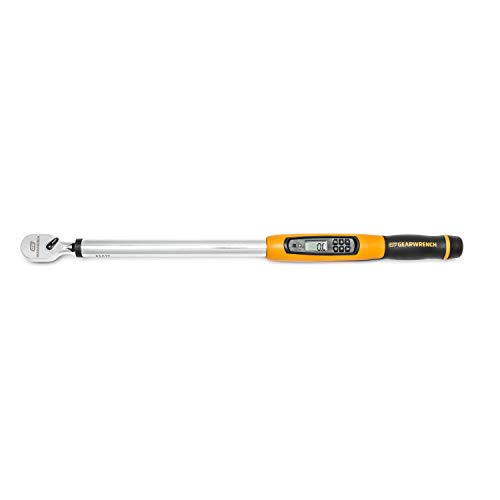
GEARWRENCH 1/2″ Drive Electronic Torque Wrench 85077

SUERCUP 1/4″ Digital Torque Wrench (0.45-30 N.m)

SUERCUP 1/4″ & 3/8″ & 1/2″ Digital Torque Wrench Set

Precision Instruments PRED2F150HM Dial-Type Torque Wrench

SUERCUP 1/2″ Digital Torque Wrench (3.8-250.8 Ft.Lb)
GEARWRENCH 3/8″ Electronic Torque Wrench 85076

GEARWRENCH 3/8″ Flex Head Electronic Torque Wrench 85078
A Closer Look At Each Pick
A split-beam torque wrench works on a different principle than a click-style tool. Instead of a spring that snaps at a set value, the split-beam design bends slightly as torque rises, and a separate indicator shows where you are on the scale. That makes the feel smoother, and many users find it easier to read mid-pull than waiting for a click that can be missed on a stubborn bolt.
The PREC2FR100F runs from 20 to 100 ft-lbs on a 3/8″ drive, which covers most under-hood work, motorcycle assemblies, and trailer hub service. The flex head helps in tight engine bays where a fixed head would bind against a bracket or hose. It ships in a storage case, which protects calibration during transport. For a home garage that already has a 1/2″ click wrench, this 3/8″ split-beam fills the precision gap nicely.
Where It Helps
- Smooth, progressive feel that many mechanics prefer over a hard click
- Flex head reaches recessed bolts on intake manifolds and suspension pieces
- Made in the USA with a dated calibration compliance certificate for traceability
- Storage case included, useful for keeping the calibration stable in a busy shop
- 20 to 100 ft-lb range suits a wide cross-section of mid-size jobs
Worth Noting
- Lower limit of 20 ft-lbs rules out small fasteners like valve cover bolts on some engines
- Split-beam tools can lose calibration if dropped, so storage care matters more than with rugged click wrenches
Whose Workbench It Belongs On
Shade-tree mechanics and small-shop owners who want a precision-focused 3/8″ wrench and who already have a heavier 1/2″ tool for axle nuts.
Skip It When
You spend more time on sub-20 ft-lb work, in which case the SUERCUP 1/4″ Digital Torque Wrench is a tighter fit.
Digital torque wrenches shift the job from listening for a click to watching a screen. You set a target, pull, and the tool tells you when you arrive. The SUERCUP 3/8″ Digital goes a step further: as you approach the preset, the handle vibrates, a buzzer sounds, and an LED ring cycles from green to yellow to red. That triple feedback is genuinely useful in loud shops where a single beep gets lost under an impact gun.
The 1.5 to 99.6 ft-lb range fits cars, motorcycles, and most bikes, and the unit also supports Nm if you prefer metric fasteners. The display is a large color LED, readable in low light under a car. The trade-off is digital: batteries require checking before a job, and the screen and electronics add weight compared with a simple click wrench. For most weekend mechanics, that is a fair exchange for confidence on wheel and engine work.
Bright Spots
- Vibration, buzzer, and color LED provide layered feedback, which is helpful when an engine is running nearby
- Wide 1.5 to 99.6 ft-lb range covers a single 3/8″ tool for cars, motorcycles, and most bikes
- Color display with backlight is readable in dim garage conditions
- Dual-unit readout lets you switch between ft-lb and Nm without separate tools
Trade Offs
- Requires battery power, so you need to charge or swap cells before big jobs
- Electronics add weight at the head compared with a basic click wrench
- Calibration can drift over time, which is a common concern with digital torque tools
Feature Snapshot
Who Will Love This
Home mechanics who bounce between cars, motorcycles, and bikes and want one digital tool that covers the bulk of those jobs.
A Better Fit Elsewhere
Wheel and lug work at higher torque values, where the SUERCUP 1/2″ Digital Torque Wrench is a more natural match.
The 85077 is technically a 1/2″ drive, not a 3/8″ drive, but it earns its place in any honest roundup of mid-range torque wrenches because it covers the upper end that a 3/8″ simply cannot. Lug nuts, axle nuts, suspension bolts, and large engine fasteners all live above the comfortable range of a typical 3/8″ tool, and forcing a smaller drive there risks rounding off fasteners or under-torquing joints.
GEARWRENCH’s electronic family is known for audible alerts and a clear numerical readout, so you set your target and listen for the tone rather than watching for a click. For shops running trucks, SUVs, and trailer axles, that range and digital feedback reduce the guesswork on big bolts. The honest read is that this is overkill for a single 3/8″ question, but it complements one rather than competing with it.
Strengths Worth Knowing
- 1/2″ drive handles high-torque fasteners like lug nuts and axle hardware
- Electronic readout removes the visual hunt for a click on long pulls
- Complements a 3/8″ tool rather than replacing it, so you cover the full range
Points To Note
- Bigger and heavier than 3/8″ options, which can be tiring in tight engine bays
- Overkill for small fasteners and electronics, where a smaller drive is the right tool
- Electronic calibration should be checked periodically, which is common across digital wrenches
Built With In Mind
Garages that service trucks, SUVs, and trailers and need accurate torque on large suspension and wheel hardware.
Consider Something Else When
Most of your work is under 100 ft-lb, where the GEARWRENCH 3/8″ Electronic Torque Wrench 85076 stays lighter and easier to handle.
Carbon handlebars, light stems, and seatpost clamps sit in a torque window that most click wrenches barely register. A 3/8″ tool typically starts around 20 ft-lb, which is already past the safe limit on many cockpit parts. The SUERCUP 1/4″ digital fills that gap with a 0.45 to 30 N.m range, which is 0.33 to 22.1 ft-lb, ideal for bikes, motorcycles with light fasteners, and small electronics.
The body is compact, the color display is backlit, and the accuracy sits around plus or minus one percent in the spec sheet. For a home mechanic who already owns a 3/8″ tool, this is a second-purpose purchase, not a replacement. If your only torque work is bikes, it can do the whole job, and you’ll find the small head much easier to swing around a stem or under a bottle cage than a chunky click wrench.
What Stands Out
- 0.45 to 30 N.m range covers carbon cockpit parts and light stems without overshooting
- Backlit color display works in dim garages and shaded trail-side setups
- 1/4″ drive pairs with the small bits and hex sockets you already own for bike work
Honest Caveats
- Top end of 22.1 ft-lb rules out anything heavier than typical bike or small engine fasteners
- Battery dependent, so a spare set is useful for long trail or shop days
- Not a replacement for a 3/8″ or 1/2″ tool on cars or motorcycles
Feature Snapshot
Perfect Match For
Cyclists, bike mechanics, and electronics tinkerers who need accurate low-torque values without overshooting carbon components.
Look Elsewhere When
Most of your work is automotive, where the SUERCUP 3/8″ Digital Torque Wrench covers the typical fastener range better.
Buying three separate torque wrenches adds up fast, and matching calibration across them is a chore. SUERCUP’s three-drive set addresses that by bundling 1/4″, 3/8″, and 1/2″ digital wrenches in one package, each with the same plus or minus one percent accuracy spec and the same color display interface. You learn one menu, one button layout, and you move between drives without retraining your hands.
The 3/8″ wrench in this set is the heart of the bundle, covering most engine, suspension, and motorcycle work. The 1/4″ handles bikes and small fasteners, and the 1/2″ takes over for lug nuts and axle hardware. For a shop just getting organized, or a homeowner building a long-term tool kit, this is a clean way to cover the full torque range without mixing brands or display styles.
Well-Handled Touches
- Three drives in one set cover bikes, cars, and trucks with a single interface
- Consistent plus or minus one percent accuracy across all three wrenches
- Shared display and button layout reduce the learning curve between drives
- Storage case keeps all three wrenches organized and protected
Some Limits To Know
- Three tools to charge, calibrate, and store, which is more upkeep than a single wrench
- Initial outlay is higher than buying one wrench, even if the per-tool cost is reasonable
Best Suited To
New home workshops building out a complete torque system, or mechanics who regularly switch between bikes, cars, and trucks.
Where Another Pick Suits Better
Strictly bike or light motorcycle work, where the single SUERCUP 1/4″ Digital Torque Wrench is enough on its own.
Dial-type torque wrenches look old-school, and that is the appeal. A mechanical dial shows you the live torque value as you pull, and a memory needle holds the peak so you can read it after the fact. No clicks, no buzzers, no batteries, just a needle and a scale. The PRED2F150HM uses a torsion bar design that Precision Instruments claims is accurate to within two percent of the reading in both directions.
The range is 30 to 150 lb-in, which translates to roughly 2.5 to 12.5 ft-lb. That puts this tool squarely in small-engine, motorcycle, and instrument territory, well below the typical 3/8″ click wrench range. It also stands out because hand position does not affect the reading, so you can grab the handle however is comfortable in a tight spot. The trade-off is no audible click, so your eyes do the work.
Standout Benefits
- Live dial readout shows real-time torque during the pull
- Memory needle holds the peak for inspection after the fact
- Hand position does not affect the reading, a real advantage in awkward spots
- No batteries, no electronics, no calibration drift from software
A Few Limitations
- No audible click, so you have to watch the dial carefully
- Low range rules out anything beyond small engine and instrument work
- Larger head than a slim 3/8″ digital, which can crowd very tight spaces
Who Should Grab It
Mechanics and instrument techs who want a non-electronic precision tool and who prefer a visual readout over an audible click.
Reach For A Different Pick When
You need an audible cue for noisy shops, where the SUERCUP 3/8″ Digital Torque Wrench’s buzzer is more practical.
Lug nuts live in a torque window that catches a lot of people out. The factory spec for many cars and trucks sits between 80 and 140 ft-lb, and a 3/8″ click wrench simply cannot deliver that without forcing the user into the high end of its range, where accuracy drops off. The SUERCUP 1/2″ digital covers 3.8 to 250.8 ft-lb, so you are well inside the calibrated range on most wheel and lug work.
The same color display and buzzer setup from the smaller SUERCUP models carries over, so existing owners will feel right at home. The head is bigger than a 3/8″, which makes recessed lug covers a little harder to reach on certain alloys, but the trade is worth it for the torque headroom. For a household that does its own tire rotations or brakes, this fills the role a 3/8″ cannot.
Useful Highlights
- Up to 250.8 ft-lb covers most passenger and light truck wheel specs
- Familiar SUERCUP display and buzzer interface for brand-loyal users
- Color LED readout works in shaded wheel wells and dim garages
- Strong fit for seasonal tire swaps and brake jobs
Points To Keep In Mind
- Larger head than a 3/8″ tool, which can be tight on some alloy wheel lug covers
- Heavier than 3/8″ options, noticeable on long brake or suspension jobs
Made For
DIYers who rotate their own tires, swap seasonal wheels, or do their own brake work and need accurate torque on big fasteners.
Swap It Out When
Most of your work is under 100 ft-lb on engine accessories, where the SUERCUP 3/8″ Digital Torque Wrench is a lighter, more agile tool.
GEARWRENCH’s 3/8″ electronic sits in a useful middle ground. The 7.4 to 99.6 ft-lb range covers the bulk of automotive accessory work without the bulk of a 1/2″ tool, and the electronic readout plus audible alert means you are not relying on a click you might miss while watching a bolt head.
Compared with the Precision Instruments split-beam in the first slot, this is a different philosophy: digital versus mechanical, audible tone versus physical click. For a shop already standardizing on electronic tools, the 85076 fits the existing workflow and reduces training time. For a homeowner, it removes a lot of the feel-based guesswork that mechanical wrenches demand.
Useful Strengths
- 3/8″ drive at 7.4 to 99.6 ft-lb hits the sweet spot for engine and suspension work
- Electronic alert system reduces dependence on feeling a click
- Compatible with most standard 3/8″ sockets, so no special adapter is required
Where It Is Less Suited
- Not the right tool for sub-7 ft-lb work like small fasteners or instruments
- Electronic calibration should be checked, which is a common owner responsibility
Right Fit For
Shops and frequent DIYers who prefer electronic feedback and want a 3/8″ tool sized right for daily automotive work.
Another Choice May Suit
Bike and small fastener work, where the SUERCUP 1/4″ Digital Torque Wrench covers a more useful low range.
A flex head sounds like a small thing until you try to torque a bolt that sits behind a brace, under a cowl, or next to a hose that will not move. The 85078 takes the 85076’s electronic body and adds a pivoting head, so the handle stays roughly perpendicular while the socket angles into the bolt. For modern engine bays, that flexibility saves time and skin.
Compared with the split-beam Precision Instruments earlier in this list, the flex mechanism here is electronic and ratcheting, not mechanical and fixed. Both reach awkward bolts, but this one trades a touch of rigidity for audible and digital feedback. Depending on your shop layout, you may find the digital cues more or less useful than a click.
Notable Gains
- Flex head reaches recessed bolts without forcing your wrist into awkward positions
- Electronic alert system complements the flex head for visual confirmation in tight spots
- 3/8″ drive remains compatible with the standard socket sets most owners already own
Possible Compromises
- Flex head adds a small amount of weight and a moving part that needs care
- Head clearance in very tight manifolds can still be limited, so measurement is wise before buying
Who It Suits Best
Mechanics and serious DIYers who regularly work in crowded engine bays where a fixed-head wrench simply will not swing.
Not Your Match When
Your work is mostly bench-top or open undercarriage, where the GEARWRENCH 3/8″ Electronic Torque Wrench 85076 saves a few dollars.
Picking The Right Torque Wrench 3 8 For Your Work
Drive size sets the boundary, but the real decision is between mechanical and digital formats. Mechanical click and split-beam wrenches are simple, durable, and do not need batteries, but they rely on a feel that takes practice. Digital wrenches add buzzers, lights, and color displays, which help in noisy shops or for users who prefer a visual cue. Choose based on where you work and how you like to receive feedback.
The torque range matters more than people think. A 3/8″ wrench that starts at 20 ft-lb is fine for most engine accessories, but it is too coarse for carbon bike parts, light instrument work, or small engine fasteners. Conversely, a low-range digital tool is the wrong fit for lug nuts and large suspension bolts. Match the range to your most common fastener, not the broadest use case.
Calibration and storage go together. Mechanical wrenches lose calibration if dropped, and digital wrenches drift over time, so a protective case and a habit of recertifying annually are useful. Owners commonly report that wrenches stored loose in a drawer under wrenches and sockets tend to drift faster than those kept in a case between uses.
Finally, think about the second tool. A single 3/8″ wrench rarely covers a whole garage. Pairing it with a 1/4″ for small fasteners or a 1/2″ for wheel work is common, and the SUERCUP three-drive set bundles that coverage into one purchase if you would rather start complete.
Smart Considerations Before You Commit
Common Shopping Slip Ups
The most frequent mistake is buying on drive size alone. A 3/8″ drive is a great general-purpose size, but the torque range varies wildly between models, and choosing one that maxes out below your common fastener spec means you are always pushing the tool to its limit. Equally common is grabbing the cheapest click wrench without checking calibration documentation, then finding out six months later that the torque values were off by ten percent from the start.
Another trap is ignoring low-end range. A wrench that starts at 20 ft-lb will not help you on a carbon stem or a small engine cover bolt, no matter how accurate it is at the top of the scale. Match the lower limit to your smallest fastener, not just the upper limit to your largest.
Where The Extra Money Goes
Higher-tier torque wrenches typically add electronic feedback, better build tolerances, and longer calibration intervals. A digital readout with buzzer and vibration feedback costs more than a basic click wrench, but the value shows up in repeatability: you set a target, you hit it, and the tool confirms it. That confirmation is worth real money on jobs where under- or over-torque can damage a part or void a warranty.
The upgrade also tends to bring a sturdier case, a better ratchet mechanism, and clearer documentation. For a shop running torque wrenches every day, those touches add up to less downtime and fewer recertifications. For a homeowner who pulls a wrench out a few times a year, the upgrade is harder to justify on price alone, and a mid-tier mechanical wrench often hits the right balance.
Frequently Asked Questions
What Is A 3/8″ Torque Wrench Best Used For?
A 3/8″ torque wrench is the everyday workhorse for engine accessories, valve covers, suspension bolts, and most motorcycle work. It also fits many bike components and light trailer hardware. The drive size sits between the smaller 1/4″ (for instruments and bikes) and the larger 1/2″ (for lug nuts and axle hardware), making it the most versatile single size for a mixed home garage.
Are Digital Torque Wrenches More Accurate Than Click-Style?
In spec, yes. Many digital wrenches claim plus or minus one percent accuracy across their range, while mechanical click wrenches commonly sit around plus or minus four percent. In practice, accuracy depends on calibration, technique, and how carefully the user watches the dial or listens for the click. A well-calibrated click wrench in trained hands can match a digital tool, but the digital readout removes some of that variable.
How Often Should A Torque Wrench Be Recalibrated?
Most manufacturers suggest a yearly check, or after any drop or impact. For occasional home use, a yearly recertification is plenty. For shop or daily use, every six months is a safer interval. Owners commonly report that wrenches used weekly drift faster than occasional-use tools, so a heavier schedule is wise for professionals.
Can A 3/8″ Wrench Torque Lug Nuts?
Some, but it is not ideal. Many passenger car lug nuts sit between 80 and 140 ft-lb, which is at or above the top of a typical 3/8″ wrench’s range. A 1/2″ wrench is the better tool for that job, both for accuracy and for the leverage needed to reach the spec without straining. A 3/8″ tool works in a pinch, but accuracy drops near the upper limit of the range.
What Is The Difference Between A Click And A Split-Beam Wrench?
A click wrench uses an internal spring that snaps at the set torque, producing an audible click and a small release of force. A split-beam wrench bends slightly as torque rises, and a separate indicator shows the value on a scale. Split-beam tools give a smoother, more progressive feel, while click wrenches give a clear, single signal that some users find easier to read.




