


Carbon frames, lightweight stems, and carbon handlebars have a low tolerance for sloppy tightening. One over-torqued bolt on a road bike can crack a steerer, ovalize a seatpost, or sheer a carbon clamp from the inside out. The right torque tool turns a guessing game into a routine job, and that’s exactly what this roundup is built around.
You’ll find dedicated bike torque wrenches with 1/4″ drives, multi-piece kits for riders who service multiple bikes, and digital options that show the exact value in real time. There’s a mix of click-type and beam-style mechanics, plus a couple of larger 1/2″ picks for anyone who also works on cars or motorcycles at home. Every entry below is tied to a real use case, from a weekend MTB tune-up to a full pro workshop setup.
A Side-By-Side Look

YIYEIE 60Pcs Torque Screwdriver Set, 10-70 Inch Pounds with S2 Bits

HAZET 5122-2CT Torque Wrench 1/2 Inch Drive, 32 Teeth
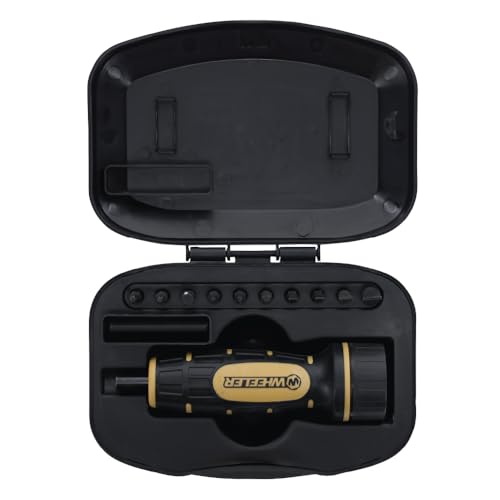
Wheeler Manual Firearms Accurizing Torque Wrench with Storage Case
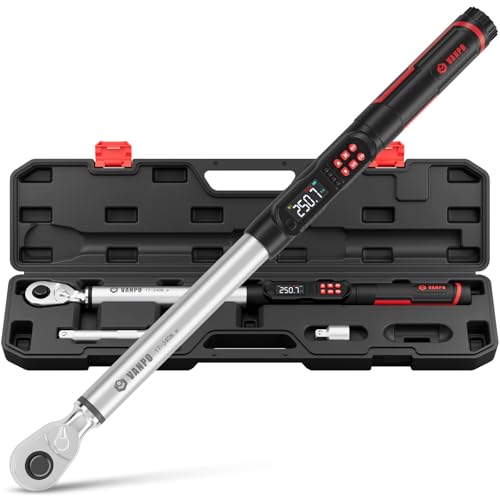
VANPO Digital Torque Wrench 1/2 Inch Drive, 12.5-250.8 ft-lb

VANPO Digital Torque Wrench 3/8-Inch, 5-99.6 Ft-Lb

VANPO Digital Torque Wrench 1/4-Inch 1.5-30 Nm for Bike

YIYEIE 50Pcs Master Bike Torque Wrench Set, 1/4 Inch Drive, 10-230 IN.LB
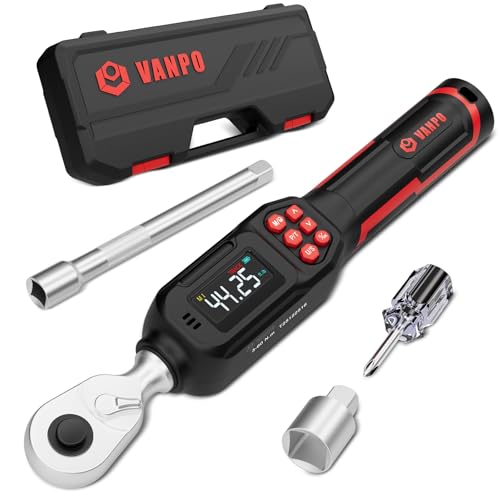
VANPO Digital Torque Wrench 3/8-Inch Drive, 2.21-44.25 ft-lb
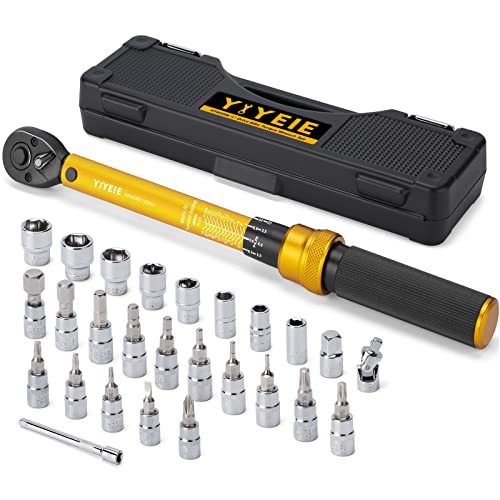
YIYEIE 1/4 Inch Drive Bike Torque Wrench, 1-25 Nm
More Details On Our Top Picks
Sixty pieces of hardware in a single case is a bold opening move, and the YIYEIE 60Pcs Torque Screwdriver Set uses it well. You get a 1/4″ drive torque driver, a T-handle shaft, a 100mm extension, plus a 1/4″ bit adapter and a wide selection of bits covering Hex, Torx, Phillips, Pozi, Slotted, Square, and a few specialty profiles. In plain terms, that covers nearly every bolt on a modern bike, a firearm, or a piece of flat-pack furniture without breaking out a second toolkit.
The 10-70 in-lb (inch-pound) range and 0.5 in-lb fine adjustment make it a strong fit for carbon components, stem faceplates, and seatpost clamps where a slightly overzealous twist can spell trouble. Bits are made from S2 alloy steel, which tends to hold up well under repeated use. For someone who services a bike plus a few other hobbies at home, this kit earns its keep.
Useful Strengths
- Sixty-piece coverage means one kit covers bike, gun, and household fastening jobs.
- 0.5 in-lb micro-adjustment is genuinely useful for sensitive carbon parts.
- S2 steel bits hold their shape longer than softer chrome-vanadium alternatives.
- Comes with a hard storage case to keep the small bits from disappearing.
Things To Consider
- The maximum 70 in-lb ceiling is too low for automotive or motorcycle work.
- With 55 bits, you’ll likely never use a few of the more obscure profiles.
At A Glance
Who It Suits Best
Riders who also tinker with firearms, electronics, or furniture assembly benefit most from this all-in-one approach, since the bit variety stretches well beyond the workshop.
Where Another Pick Suits Better
For pure MTB service, the YIYEIE 50Pcs Master Bike Torque Wrench Set keeps the bit selection tighter and adds MTB-friendly ranges, so a dedicated mountain biker is better served there.
The HAZET 5122-2CT is a 1/2″ drive click-type wrench built for higher-torque work like axle nuts, crank bolts, and stem hardware on motorcycles and cars. At 20.43 inches long with a 32-tooth ratchet, it produces an 11.25-degree actuating arc, which keeps you cranking even in tight engine bay corners. The 4% tolerance is solid for general mechanical work, and the reversible ratchet head adds convenience for right- and left-hand threads.
For bicycle-specific work, this is overkill, but for a home shop that services both bikes and vehicles, it pulls double duty. Cyclists running hub-bearing service, bottom brackets, or thru-axle duties on cargo or e-bikes can also find a use for it. HAZET has a long reputation in professional German toolmaking, and the build reflects that lineage.
Standout Benefits
- 32-tooth ratchet gives a tight 11.25-degree swing for cramped spaces.
- Reversible head handles both standard and reverse-thread fasteners.
- 1/2″ drive handles axle nuts and crank bolts that smaller drives can’t reach.
Worth Noting
- The 1/2″ drive and overall length are too bulky for delicate stem or carbon-seatpost work.
- More wrench than a casual weekend cyclist actually needs.
Made For
Pro mechanics and serious home wrenchers who service a mix of cars, motorcycles, and bicycles in a single shop benefit most from this tool’s heavier-duty profile.
Skip It When
Casual commuters sticking to bolt checks and saddle swaps will find the VANPO Digital Torque Wrench 1/4-Inch 1.5-30 Nm far more bike-appropriate and easier to handle.
The Wheeler Manual F.A.T. Wrench crosses categories in a way cyclists genuinely appreciate. Designed around inch-pounds for scope rings and action screws, it has the same low-torque sweet spot that road and gravel riders need for stems, seatposts, and carbon bar clamps. The “click” feedback arrives at a familiar pressure, and Wheeler has built a strong reputation in the precision-tooling world for consistent, repeatable readings.
It’s a manual click-type wrench, so there’s no screen to read, no battery to swap, and no calibration headaches. For a cyclist who already owns Wheeler bits from other projects, the cross-compatibility is a real perk. You won’t get bike-specific range labeling, but the inch-pound scale is clear enough to translate any spec sheet.
Bright Spots
- Manual click mechanism means no batteries, no screens, and very few things to break.
- Inch-pound calibration is well-suited to the lower torque values bikes demand.
- Storage case keeps the bits organized in a busy workbench drawer.
Trade Offs
- Maximum range is lower than dedicated bike kits, so larger components fall outside the scale.
- Bit selection is firearms-leaning, so cyclists may need to source a few extras.
Best Suited To
Cyclists who value repeatable, mechanical simplicity over digital readouts, and who don’t mind pairing it with their existing bit collection.
Not Your Match When
Riders wanting one all-bike kit should consider the YIYEIE 50Pcs Master Bike Torque Wrench Set, which bundles bike-specific sockets in the same case.
The VANPO 1/2″ Digital Torque Wrench is built for the big bolts. The 12.5-250.8 ft-lb range and ±2% clockwise accuracy put it squarely in automotive and motorcycle territory, covering lug nuts, suspension fasteners, and engine work that smaller wrenches simply cannot reach. A digital readout takes the guesswork out of the click, and many modern digital wrenches also offer visual and audible alerts at the target torque.
For cyclists, this is more of an adjacent tool than a primary one, but riders with e-bikes, cargo bikes, or motorcycle side projects will find it useful. Compared to the HAZET 5122-2CT earlier in the list, this VANPO trades some old-school mechanical feel for a screen-based readout that beginners tend to trust.
Real-World Strengths
- ±2% clockwise accuracy is tighter than the 4% tolerance of the HAZET pick above.
- 250.8 ft-lb ceiling handles nearly any vehicle fastener a home user will meet.
- Digital readout is helpful for newer mechanics who don’t yet trust a click.
Points To Note
- 1/2″ drive is too large for stem bolts, seatpost clamps, or other small bike fasteners.
- Digital readouts require batteries and occasional calibration checks.
At A Glance
Right Fit For
Home wrenchers balancing car, truck, and motorcycle maintenance alongside the occasional bike service will get the most out of this digital powerhouse.
A Better Fit Elsewhere
A road cyclist working on a single carbon frame is better served by the VANPO Digital Torque Wrench 1/4-Inch 1.5-30 Nm, which lives entirely in the bike-friendly Nm range.
The 3/8″ VANPO Digital Torque Wrench lives in the middle of the road. The 5-99.6 ft-lb range covers brake caliper bolts, fork crown assemblies, suspension pivots, and many motorcycle engine covers, which means it’s right at home for a rider who also services a small motorbike. ±2% clockwise accuracy keeps the readings honest for components where over-torquing risks damage.
Where it really shines is on the cusp between bikes and motorcycles. A gravel rider rebuilding a cockpit with a 4-bolt stem, or an e-bike owner tightening a rack mount, will appreciate the headroom above a pure 1/4″ wrench. The digital display helps when you’re jumping between spec sheets that mix Nm and ft-lb.
Everyday Perks
- 5-99.6 ft-lb range covers a useful middle ground between bike and motor work.
- ±2% accuracy is solid for a digital tool at this level.
- 3/8″ drive accepts a wide variety of common socket sizes.
Some Limits To Know
- Range is overkill for the smallest carbon-bike bolts, which sit below 5 ft-lb.
- Digital batteries need to be checked before longer service sessions.
Perfect Match For
Riders who split their time between bicycles and small-displacement motorcycles benefit from the mid-range coverage this VANPO offers.
Look Elsewhere When
Pure road or MTB owners will get more value from the YIYEIE 50Pcs Master Bike Torque Wrench Set, which adds bike-specific sockets to a similar torque range.
The VANPO 1/4″ Digital Torque Wrench is purpose-built for bikes. The 1.5-30 Nm range, converted from 1.11-22.13 ft-lb, lines up almost perfectly with the values printed in most component manuals, from carbon seatpost clamps at 5 Nm up to stem faceplates at 6-8 Nm. The 1/4″ drive accepts the same bits and sockets cyclists already own, so you can move from this wrench to a familiar ratchet without retooling.
±2% clockwise accuracy is on par with the bigger VANPO models, and the digital readout eliminates the “did I hear a click or not?” moment that trips up first-timers. It feels like the obvious choice for anyone whose entire torque work happens within a few meters of a bike stand.
A Strong Showing
- 1.5-30 Nm range lines up with the printed specs on most road, gravel, and MTB components.
- 1/4″ drive plays well with the bits cyclists already use for casual adjustments.
- Digital display reduces the learning curve for first-time torque users.
Honest Caveats
- Lower ceiling means you cannot use it on hub, bottom-bracket, or axle jobs.
- Digital readouts need a charged battery for accurate field use.
At A Glance
Who Should Grab It
Road and gravel cyclists who mostly work on cockpits, seatposts, and bottle cages benefit most, since these bolts all sit comfortably within the 1.5-30 Nm window.
Another Choice May Suit
MTB owners tackling pivot, shock, and dropout bolts may find the YIYEIE 50Pcs Master Bike Torque Wrench Set’s higher Nm ceiling more useful across the full bike.
The YIYEIE 50Pcs Master Bike Torque Wrench Set is the most bike-shaped option in this roundup. The 10-230 in-lb (1-26.0 Nm) range, ±3% accuracy, and 0.1 Nm micro-adjustment give a level of fine control that matters when you’re working on a carbon frame or a set of Ti bolts. The kit is built around the fasteners you actually find on a bike: Hex 2-10, Torx 8-40, 6-point sockets from 4 to 15mm, plus Phillips, Pozi, Slotted, and Robertson options for the occasional surprise fastener.
The included 1/4″ to 3/8″ adapter, universal joint, and 4-inch extension bar make it easy to reach awkwardly placed bolts behind a stem or under a derailleur hanger. A storage case keeps everything from rattling around in a drawer. For most home MTB mechanics, this is the single kit that handles a full seasonal tune-up.
Advantages To Know
- 0.1 Nm micro-adjustment is finer than most bike wrenches at this level.
- Bit and socket selection mirrors real-world MTB and road hardware.
- Adapters and extension bar reach fasteners in tight frame corners.
- Storage case keeps small sockets from vanishing mid-project.
- ±3% accuracy is well within bike-tolerance expectations.
Minor Gripes
- Click-type mechanism has a learning curve for users switching from digital wrenches.
- The 230 in-lb ceiling is too low for any automotive or motorcycle work.
Built With In Mind
MTB owners and home mechanics running a full seasonal tune-up benefit most, since the kit covers practically every bolt on a modern mountain bike.
Reach For A Different Pick When
Riders who share space with motorcycle or car work will get more flexibility from the VANPO Digital Torque Wrench 3/8-Inch Drive, 2.21-44.25 ft-lb model.
The second 3/8″ VANPO entry stretches the lower end further. The 2.21-44.25 ft-lb (3-60 Nm) range reaches lower than the 5-99.6 ft-lb sibling, which means you can also use it on smaller bike bolts without losing the upper-room needed for motorcycle service. ±2% clockwise accuracy and the digital readout keep the readings consistent across jobs.
Compared with the other VANPO model covered earlier, this one feels more like a “do it all” garage tool. It handles suspension pivots, caliper bolts, and a wide spread of motorcycle fasteners, while still reaching down to the small stem faceplate values a road bike requires. For households with more than one vehicle on a lift, it’s a sensible middle ground.
What Earns Its Place
- 3-60 Nm range bridges the gap between bike cockpit bolts and motorcycle hardware.
- ±2% accuracy and digital readout are competitive in this price tier.
- 3/8″ drive is a common format for mid-size sockets and accessories.
Points To Keep In Mind
- Battery reliance is a field concern for long touring or multi-day repair trips.
- Larger than necessary for a road-only cyclist working on a single carbon frame.
Quick Facts
The Right Fit
Multi-vehicle households where one wrench needs to cover a road bike, an MTB, and a small motorcycle get the most out of this wide digital range.
Swap It Out When
A dedicated MTB mechanic chasing the smallest 0.1 Nm increments is better served by the YIYEIE 50Pcs Master Bike Torque Wrench Set, which has a bike-specific socket collection.
The YIYEIE 1/4″ Drive Bike Torque Wrench distills a 27-piece kit down to exactly what most home cyclists reach for. The 1-25 Nm (10-222.5 in-lb) range covers stems, seatposts, bottle cages, and brake lever clamps, and the bit lineup skips straight to the profiles you actually use: Hex H2-H10, Torx T10-T30, 6-point sockets 7-15mm, a single Phillips PH2, and a Slotted SL4. A 1/4″ to 3/8″ adapter, a bit holder, a universal joint, and a 4-inch extension round out the kit.
It’s the simplest, least intimidating option here, and for someone who has just bought a nicer bike and wants to stop “snugging” bolts by feel, that’s a genuine plus. Owners commonly find the storage case easy to slip into a closet or take along to a park tool-in.
What Makes Sense
- 1-25 Nm range matches the most common printed bike torque values.
- 27-piece count is manageable rather than overwhelming for new users.
- Extension bar and universal joint make cockpit bolts easier to reach.
Less Ideal Details
- Lower Nm ceiling rules out axle, hub, and bottom-bracket work.
- No digital readout, so users rely on the click sensation alone.
Whose Shelf It Belongs On
First-time home bike owners who want a simple, dedicated tool for the most common adjustments benefit most from this compact, no-fuss kit.
Consider Something Else When
Riders who also service motorcycles will find the VANPO Digital Torque Wrench 3/8-Inch Drive, 2.21-44.25 ft-lb a better cross-vehicle fit, since it adds headroom for larger fasteners.
What Matters When Choosing a Bike Torque Wrench
Match the Drive Size to the Bike
Bikes use 1/4″ drive hardware for almost every printed torque spec, and 3/8″ or 1/2″ only come into play for thru-axles, hub bearings, or bottom brackets on heavy-duty frames. Start with a 1/4″ wrench for cockpit, seatpost, and bottle-cage work, then add a bigger drive only if your bike demands it.
Understand the Range You Actually Need
A road bike’s stem faceplate sits around 5-6 Nm, a carbon seatpost at 5 Nm, and most bottle cages at 2-3 Nm. Anything below 1 Nm is rare outside the shop, and anything above 30 Nm on a bike is usually an axle or BB. Pick a wrench whose lower-to-middle range lines up with your bike’s printed values, since that’s where most of the work happens.
Click-Type vs Digital Feel
Click-type wrenches are mechanical, durable, and battery-free, but they depend on you hearing or feeling the release. Digital wrenches display the exact value in real time, which is helpful for beginners, though batteries and calibration become routine maintenance. The honest read is that either works, and your comfort with the click sensation matters more than the spec sheet.
Calibration and Long-Term Care
A torque wrench is a measuring tool, and like any gauge, it drifts. Wipe it down after greasy jobs, store it at the lowest setting (or as the maker recommends), and plan on a periodic check. Owners commonly find that treated carefully, a good wrench holds accuracy for years.
Key Considerations Across These Picks
Common Shopping Slip Ups
The biggest mistake is buying a 1/2″ automotive wrench for a carbon road bike, then cranking a stem faceplate to 30 ft-lb. The bolt is rated for 5-6 Nm, and a 1/2″ drive feels uncontrollable at that low end. Match the wrench’s lowest comfortable range to your bike’s most common values, not the maximum range you might one day need.
Another trap is ignoring the included bits. A kit without the right Hex, Torx, or 6-point socket for your specific bike means an extra purchase anyway, so look at the bit list before the headline spec.
Where The Extra Money Goes
Premium bike torque wrenches typically spend the budget on tighter accuracy (sub-3% rather than 4-5%), better internal mechanisms that hold calibration longer, and nicer steel in the ratchet teeth. Digital models add a screen, sensor package, and battery housing, which is why two visually similar wrenches can sit at very different prices. For a once-a-year seasonal tune-up, the mid-tier is enough. For a working mechanic or a household with several bikes, the upgrade tends to pay off in how often you reach for it without thinking.
Frequently Asked Questions
What torque range covers most bicycle work?
Most bike bolts fall between 2 and 10 Nm, with a few axle and bottom-bracket fasteners reaching 30-40 Nm. A 1-25 Nm or 1-30 Nm wrench covers the vast majority of printed values you’ll find in a manual.
Can one torque wrench work for both bikes and cars?
Not really, because the two worlds use very different drive sizes and torque ranges. A 1/2″ wrench handles automotive fasteners easily but is hard to use precisely below 10 Nm, and a 1/4″ wrench maxes out before you reach a lug nut. A two-tool setup is the practical answer for a multi-vehicle household.
How often should a bike torque wrench be recalibrated?
Once a year is a common interval for occasional home use, and every six months for a working mechanic. Wrench accuracy also drifts faster if the tool is dropped or stored at the high end of its scale, so storing it at the lowest setting helps preserve calibration.
Are digital torque wrenches more accurate than click-type?
In most cases, yes, often around ±2% compared to ±3-4% for click-type models. The bigger difference is how the value is communicated: digital readouts show a number, while click-type relies on feel. Accuracy and confidence are related but not identical, and many experienced mechanics still prefer the click.
Is a higher Nm ceiling always better?
Not necessarily, since precision at the low end of the scale matters more for bike work than maximum range. A wrench with a tighter lower bound and good adjustment increment will serve a road cyclist better than a 250 ft-lb automotive tool.




