


Whether you’re torquing down a cylinder head, snugging lug nuts on a daily driver, or dialing in scope rings on a precision rifle, the right wrench turns guesswork into repeatable results. Engine fasteners live in a tight window: too loose and you risk leaks or failures, too tight and you stretch bolts past their yield point. A good torque wrench pays for itself the first time it saves a stripped thread.
The list below covers nine models that span the real-world range of engine work, from feather-light inch-pounds on small fasteners to serious foot-pounds for suspension and crank hardware. Some are analog, some are digital, and a few are built for the abuse of a busy shop. Pick the one that matches the fasteners you actually touch.
The Shortlist At A Glance
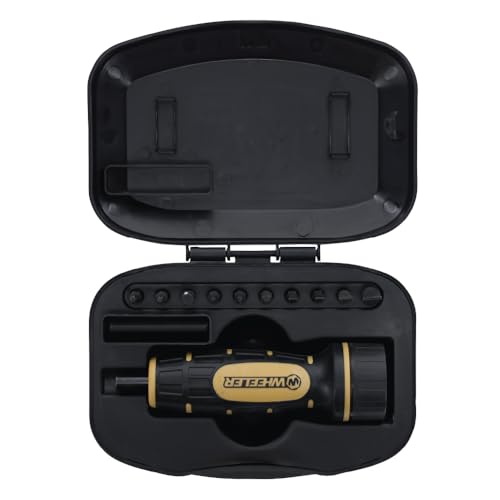
Wheeler Manual F.A.T. Wrench with Storage Case
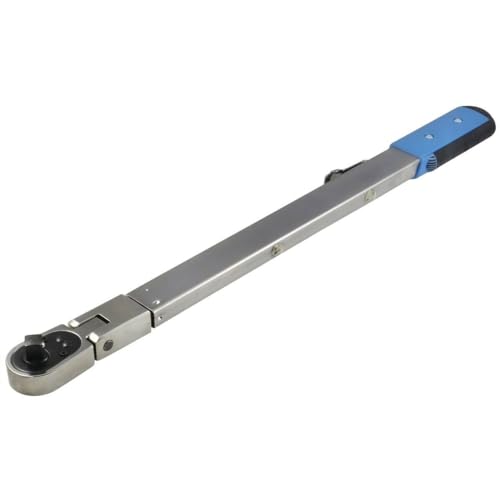
Precision Instruments PREC3FR250F Split Beam Torque Wrench
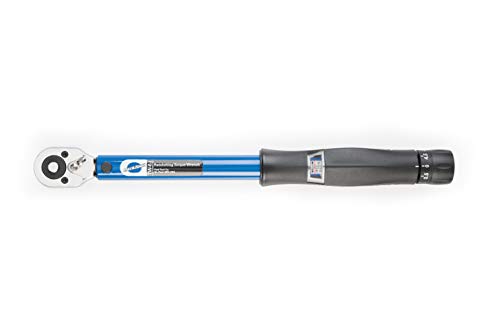
Park Tool TW-6.2 Ratcheting Torque Wrench 3/8″

DEWALT Torque Wrench Tire Change Kit (DWMT45012)

Precision Instruments PRED2F600HM Dial Torque Wrench
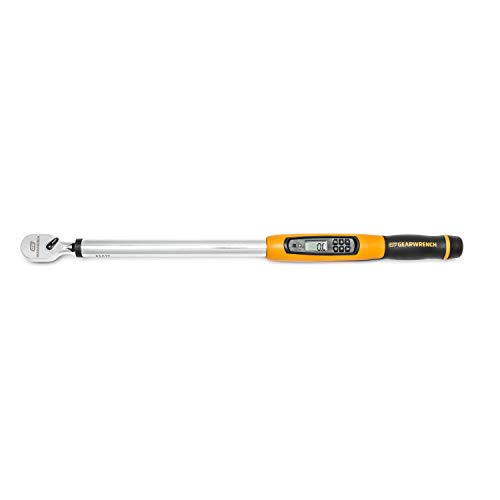
GEARWRENCH 1/2″ Drive Electronic Torque Wrench 85077

SUERCUP 1/2″ Digital Torque Wrench ±1%
GEARWRENCH 3/8″ Drive Electronic Torque Wrench 85076

GEARWRENCH 3/8″ Flex Head Electronic Torque Wrench 85078
Why These Options Stand Out
The Wheeler Manual F.A.T. Wrench is built around inch-pound measurements, which is exactly the range that governs most small-engine fasteners and accessories. It’s a handheld, manually adjusted tool designed to deliver repeatable torque settings rather than maximum force, and it ships with a bit set and storage case that keep everything organized in a drawer or range bag.
Where the Wheeler shines is on jobs where overtightening is the real danger: scope rings, guard screws, recoil pads, and any small fastener where the difference between 15 and 25 in-lb actually matters. Compared to the half-inch split-beam picks further down this list, this one trades raw reach for surgical control. For most home gunsmithing and detail work around an engine bay, that trade feels like the right one.
Positive Points
- Delivers repeatable inch-pound settings, which protects delicate threads on small fasteners.
- Includes a bit set and storage case so everything stays in one place.
- Compact form factor slips into a drawer or range bag without hogging space.
- Handheld design reads torque without needing a power source or calibration routine.
Worth Noting
- Limited to low torque ranges, so it can’t double as a lug-nut wrench for engine-out work.
- Bit compatibility is a known consideration; confirm your specific bit style fits the drive.
Who It Suits Best
Home gunsmiths, detail-oriented mechanics, and anyone who works on small fasteners where over-torque is a constant risk.
Where Another Pick Suits Better
The Precision Instruments PREC3FR250F is the stronger match when you need real foot-pounds for engine bay fasteners.
The Precision Instruments PREC3FR250F is a half-inch drive split-beam click wrench with a flex head, built for the kind of torque work that lives in the middle of an engine bay. Split-beam designs use an internal mechanism that clicks when the target torque is reached, and the flex head lets you angle the handle around obstructions rather than fighting them.
This is the wrench that feels at home in a busy shop. The half-inch drive accepts the sockets you already own for suspension, crank pulleys, and axle hardware, and the long handle gives you the leverage to actually hit higher torque values without straining. For anyone stepping up from a click-type micrometer wrench, the split-beam design is a meaningful upgrade in repeatability.
Useful Strengths
- Flex head navigates around hoses, brackets, and other engine bay obstructions.
- Half-inch drive handles the higher torque demands of engine and suspension fasteners.
- Split-beam design means no return-to-zero cycle between uses, which speeds up repetitive jobs.
- Long handle provides the leverage needed to reach mid-range foot-pound values comfortably.
Trade Offs
- Heavier than a 3/8″ wrench, so it can feel bulky in tight overhead work.
- Owners commonly report that flex-head ratchets need occasional cleaning to stay smooth.
Feature Snapshot
Made For
Working mechanics and serious home builders who torque suspension, axle, and engine hardware on a regular basis.
Consider Something Else When
The Park Tool TW-6.2 fits better if your work centers on smaller fasteners in the 10 to 60 Nm range.
The Park Tool TW-6.2 is a steel-bodied, ratcheting 3/8″ drive torque wrench covering 10 to 60 Nm, and it brings bike-shop precision into the engine world. Park Tool built its reputation on shop-grade hand tools, and the TW-6.2 carries that pedigree with a dial-adjust click system and a ratcheting head that lets you work without lifting the wrench off the fastener between strokes.
The 3/8″ drive is the sweet spot for valve covers, intake manifolds, and many small-engine components where the half-inch picks feel oversized. It’s noticeably lighter than the Precision Instruments half-inch, and the shorter handle makes overhead work less of a strain. For motorcycle work, lawn equipment, and compact car engine bays, the TW-6.2 punches well above its size.
Benefits That Matter
- Steel construction holds up to daily shop abuse better than some plastic-bodied competitors.
- 3/8″ drive pairs naturally with the sockets used for valve covers and intake hardware.
- 10 to 60 Nm range covers the bulk of small-engine fastener specifications.
- Ratcheting head speeds up repetitive torquing on multi-bolt covers.
Some Limits To Know
- Not suited for high foot-pound demands like crank bolts or axle nuts.
- Shorter handle means more hand force is needed to reach the top of its range.
Right Fit For
Motorcycle owners, small-engine technicians, and home mechanics focused on valve cover and intake manifold work.
Not Your Match When
The DEWALT DWMT45012 is the stronger pick for full tire changes and suspension work in the 50 to 250 ft-lb range.
The DEWALT DWMT45012 is a 12-piece torque wrench kit that pairs a half-inch micrometer-style torque wrench with a breaker bar and a full spread of fractional and metric sockets. The 50 to 250 ft-lb range is purpose-built for tire changes and suspension work, and the included storage case keeps the sockets from migrating across the garage floor.
What sets this kit apart from a bare wrench is the completeness of the package. The protective head bumper, bi-material grip, locking trigger, and forward-reverse torque capabilities all add up to a tool that’s designed for repeat use rather than occasional duty. Compared to the Precision Instruments split-beam pick above, this one leans more toward tire and chassis work than precision engine assembly.
What Works In Its Favor
- 12-piece kit covers the sockets needed for most car and light truck tire changes.
- Bi-material grip and locking trigger reduce hand fatigue during long sessions.
- Forward and reverse torque capabilities let you confirm fastener tightness in both directions.
- Storage case keeps the kit organized and portable.
Points To Keep In Mind
- 50 to 250 ft-lb range is too high for delicate engine fasteners like valve covers or intake bolts.
- Owners commonly report that the micrometer scale takes a few uses to read quickly.
Spec Overview
Best Suited To
DIYers who handle their own tire rotations, brake swaps, and suspension bolt-ups on cars and light trucks.
Look Elsewhere When
The Precision Instruments PRED2F600HM dial wrench is the smarter pick for fine engine rebuilds where low-range accuracy matters most.
The Precision Instruments PRED2F600HM is a 3/8″ drive dial-type torque wrench rated to 600 inch-pounds, built around a patented torsion bar design aimed at long-term accuracy. The dial face lets you read the actual torque value in real time, and the memory pointer holds the peak reading so you can confirm what was applied even after the wrench relaxes.
This is the kind of wrench that machine shops and engine builders gravitate toward. The torsion bar design is specified for accuracy within a tight percentage in both directions, and the dial format gives a clear visual of the force curve as you approach the target. Compared to the Wheeler at the top of the list, the PRED2F600HM trades compact size for laboratory-style precision.
Strengths Worth Knowing
- Memory pointer captures the peak torque reading, which simplifies verification on critical fasteners.
- Real-time dial readout removes the guesswork of waiting for an audible click.
- 3/8″ drive is a good match for engine accessory fasteners and small chassis hardware.
- Torsion bar design is built for sustained accuracy over years of shop use.
Practical Considerations
- Dial face is more vulnerable to impact damage than enclosed click-style wrenches.
- Reading a moving dial while applying force takes practice; expect a learning curve.
Quick Facts
Who Will Love This
Engine rebuilders, machine shop technicians, and serious hobbyists who want verifiable torque data on critical fasteners.
Skip It When
The GEARWRENCH 85077 electronic wrench is a better match if you prefer a digital readout over a dial face.
The GEARWRENCH 85077 is a 1/2″ drive electronic torque wrench that swaps the click or dial for a digital screen, and that single change reshapes the whole experience. The readout tells you exactly how much torque you’re applying in real time, and the tool signals when you’ve reached the target, so you don’t have to interpret a click against background noise.
The 1/2″ drive puts this wrench in the same range as the DEWALT tire kit and the Precision Instruments split-beam, but the electronic format leans toward technicians who want data rather than feel. Compared to the Precision Instruments dial wrench above, the GEARWRENCH trades analog precision for digital convenience. For most engine accessory work and light suspension, it covers the bases cleanly.
What Helps Most
- Digital readout removes the audible-click guesswork in noisy shop environments.
- 1/2″ drive handles mid-to-upper range foot-pound values for engine and chassis work.
- Electronic signaling tells you precisely when the target torque is reached.
Where It May Fall Short
- Electronic components add a dependency on battery power and calibration cycles.
- Heavier than a comparable click-style wrench, which can wear on extended overhead use.
Perfect Match For
Shops and techs who want clear digital readouts and a tool that documents the torque application.
Another Choice May Suit
The SUERCUP digital wrench is worth a look if you need a wider Nm range for mixed fastener sizes.
The SUERCUP 1/2″ digital torque wrench spans 2.2 to 147.5 ft-lb, roughly 3 to 200 Nm, which is one of the widest ranges you’ll find in a single electronic tool. The 1/2″ drive and stated accuracy spec make it a versatile choice for anyone juggling everything from small engine accessories up through mid-range chassis bolts.
What stands out is the range combined with a digital format. The wide Nm window means you can switch from delicate valve cover fasteners to heavier suspension bolts without swapping tools, though the actual drive size will dictate which sockets fit. Compared to the GEARWRENCH 85077 above, the SUERCUP leans toward versatility over shop-grade refinement.
A Favorable Mix
- Wide 3 to 200 Nm range covers both small accessories and mid-range chassis bolts.
- Digital readout simplifies torque application in low-light or noisy environments.
- 1/2″ drive is the most common size for automotive sockets.
Things To Weigh
- Wide range can make the digital display feel less specialized than purpose-built wrenches.
- Owners commonly report that accuracy depends on regular calibration, especially in heavy rotation.
Key Product Details
Who Should Grab It
DIYers and techs who work on a mix of small-engine accessories and heavier chassis fasteners and want one tool that covers both.
Reach For A Different Pick When
The DEWALT DWMT45012 is the better match for dedicated tire work, where the included sockets matter more than the range.
The GEARWRENCH 85076 is the 3/8″ sibling to the 85077, scaled down for the mid-range of engine and chassis work. The 7.4 to 99.6 ft-lb window lands squarely on valve covers, intake manifolds, oil pan hardware, and many suspension bolts that don’t need a half-inch drive.
The 3/8″ format keeps the wrench light enough for overhead work, and the electronic readout provides a digital alternative to the click and dial wrenches earlier in this list. For daily drivers and most engine accessory bolts, this range covers the spec sheets without forcing you into a heavier tool. It’s the natural step up from the Park Tool TW-6.2 if you want a screen instead of a click.
The Helpful Details
- 3/8″ drive keeps the wrench light enough for extended overhead engine work.
- Digital readout confirms torque values in noisy or low-light conditions.
- Mid-range window covers the bulk of engine accessory fastener specifications.
Honest Caveats
- Not strong enough for high-torque demands like axle nuts or crank bolts.
- Owners commonly report needing fresh batteries more often in cold shop environments.
Built With In Mind
Working techs and dedicated DIYers who want a digital readout for valve covers, intake manifolds, and oil pan hardware.
A Better Fit Elsewhere
The GEARWRENCH 85078 is worth stepping up to if you also need a flex head for angled access in the engine bay.
The GEARWRENCH 85078 takes the electronic 3/8″ platform of the 85076 and adds a flex head, and that one change is what makes it a torque wrench for engine work specifically. Modern engine bays are crowded, and a flex head lets you swing the ratcheting end around brackets, hoses, and frame rails that would block a fixed-head wrench entirely.
The 3/8″ drive and electronic readout keep the wrench light and informative, while the flex head does the spatial problem-solving. It pairs naturally with the Park Tool TW-6.2 for smaller fasteners and the Precision Instruments split-beam for heavier work. For anyone who has ever fought a straight wrench against a timing cover, the flex head earns its keep fast.
What It Does Well
- Flex head angles into recessed fasteners that block a fixed head.
- Electronic readout confirms torque values without relying on a click.
- 3/8″ drive is the most versatile size for engine accessory work.
- Light enough to use overhead without wearing out your wrist.
Less-Strong Areas
- Flex head adds a small amount of flex under load, which some users notice on long pulls.
- Owners commonly report that the digital screen can be hard to read in direct sunlight.
Feature Rundown
Whose Shelf It Belongs On
Mechanics and enthusiasts who regularly work in crowded engine bays and want a digital readout plus angled access.
Swap It Out When
The Precision Instruments PREC3FR250F is the better call if you need half-inch drive strength for the heaviest fasteners.
Picking the Right Torque Wrench for the Fasteners You Actually Touch
Match the Drive Size to the Fastener
Drive size (the square end that the socket snaps onto) is the first filter, and it sets the ceiling for how much torque you can comfortably apply. Half-inch drives handle suspension, axle, and large engine hardware. Three-eighths drives cover valve covers, intake manifolds, and most engine accessories. Anything smaller usually belongs in the gun-smithing or instrument world, not engine work.
Decide Between Click, Dial, and Electronic
Click-style wrenches are the workhorse. They release a tactile snap and a faint sound when the target is reached, which most people learn to trust quickly. Dial wrenches show the actual torque in real time and use a memory pointer to hold the peak, which is helpful on critical fasteners. Electronic wrenches display a number and often beep or vibrate at the target, which removes the listening challenge in noisy shops. The honest read is that all three formats work; the choice comes down to whether you want sound, sight, or a number.
Check the Torque Range Before You Buy
Every wrench has a usable window, and the lower 20% of that window is where accuracy tends to weaken. A wrench rated 20 to 100 ft-lb is most accurate in the 25 to 80 ft-lb zone. If your engine fasteners sit at 15 ft-lb, look for a wrench that starts there. Buying one wrench for every range you touch is normal, and most home mechanics end up with two or three.
Think About Access and Handle Length
Engine bays punish long handles. A flex head solves the angle problem for recessed bolts, and a shorter handle keeps overhead work manageable. For very high torque values, longer handles give you the leverage to reach the spec without standing on the wrench. Real-world ownership means accepting that one wrench rarely covers every situation.
Calibrate and Store With Intention
Mechanical torque wrenches are precision instruments, and the spring inside loses calibration if the wrench is stored at a high setting. Most manufacturers recommend returning the wrench to its lowest setting after use and recalibrating every year or so, depending on how often you use it. Electronic wrenches need fresh batteries and periodic zero-checks, but skip those and the displayed number drifts from reality.
Key Considerations Across These Picks
Common Shopping Slip Ups
The most frequent mistake is buying a wrench whose range doesn’t match the fasteners you actually tighten. A 1/2″ drive 50 to 250 ft-lb wrench is useless on a 12 ft-lb valve cover bolt, and a 10 to 60 Nm wrench won’t crack an axle nut. The second common trap is ignoring storage habits. Leaving a torque wrench set to a high value stretches the internal spring over time, which throws the calibration off. Reset to the lowest setting and store it in its case, and the wrench will hold accuracy far longer.
What The Higher Tier Buys
Premium torque wrenches earn their cost with tighter accuracy specs, better internal mechanisms, and longer warranties. A dial or electronic wrench with a memory pointer costs more because it does something a click wrench cannot: it shows you the peak torque applied, which is useful on critical fasteners. A flex head adds cost but solves real access problems in tight engine bays. You may find that a mid-range click wrench covers most of your needs, and that the upgrade is worth it once you start doing repeat work where the speed and feedback save real time.
Frequently Asked Questions
How often should a torque wrench be calibrated?
For home use, an annual check is a common rhythm. Daily shop use typically calls for calibration every few thousand cycles or once a year, whichever comes first. Any time a wrench is dropped, treat that as a reason to verify accuracy before relying on it again.
Can one torque wrench cover an entire engine rebuild?
Most rebuilds involve fasteners ranging from under 10 ft-lb on small covers up to 150 ft-lb or more on critical bolts. A single mid-range wrench will get close, but a second wrench for either the very low or very high end of the range is usually the cleaner approach.
Is a flex head worth the extra cost for engine work?
In a modern, crowded engine bay, a flex head often pays for itself the first time you angle around a bracket to reach a head bolt. For older engines with more open access, a fixed head is perfectly fine and slightly more accurate under heavy load.
What’s the difference between ft-lb, in-lb, and Nm?
Foot-pounds and inch-pounds are the two main imperial units. One foot-pound equals 12 inch-pounds. Newton-meters is the metric equivalent, and 1 ft-lb is roughly 1.356 Nm. Most spec sheets list one or the other, and a unit conversion chart in the toolbox prevents math errors mid-job.
Should the wrench be reset to zero after each use?
Setting the wrench to its lowest value before storage takes the spring load off the internal mechanism, which is the most common recommendation for preserving calibration. It is not a guarantee of long-term accuracy, but it is a small habit that tends to extend the working life of the tool.




