


Splitting firewood feels less like a chore when the tool fits the job. A short hatchet handles wrist-friendly kindling duty on a back porch, while a 36″ maul turns a stack of rounds into stove-ready pieces in fewer swings. This list covers nine options, from compact backcountry companions to full-length powerhouses, so your next cord splits with less effort and fewer stuck blades.
A Snapshot Of The Selections

Fiskars U32 Ultra Splitting Axe 32″

Fiskars X25 Splitting Axe 28″

Fiskars X11 Splitting Axe 17″
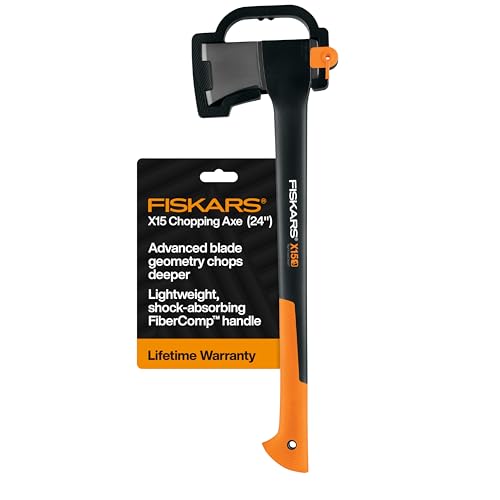
Fiskars X15 Chopping Axe 24″

Fiskars X27 Super Splitting Axe 36″

Fiskars Pro IsoCore 8 lb Splitting Maul 36″

Fiskars X7 Small Hatchet Axe 14″

Fiskars X13 Ultralight Hiking Axe 13″
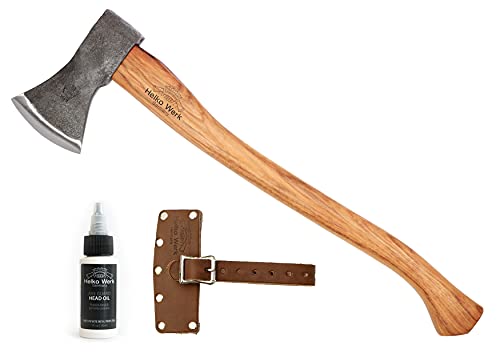
1844 Helko Werk Germany Black Forest Woodworker Axe (13562)
What Each Pick Brings To The Table
The U32 sits in a sweet spot for most home woodpiles. Its 32″ handle gives serious leverage without crossing into maul territory, and the RazorEdge geometry, a precision-ground cutting profile that focuses impact force on a narrower edge, helps the bit drive into rounds cleanly. A low-friction coating reduces the chance of the head sticking after a hit, which keeps the rhythm going on a long afternoon.
You will feel the balance point shift toward the head during the swing, which is the whole point. Where the X25 below is friendlier to average-height users, the U32 asks for a slightly more committed stroke and rewards it with deeper penetration on bigger rounds.
Why It Works Well
- RazorEdge blade profile concentrates force on a narrow entry path
- 32″ length splits a full cord in fewer heavy swings
- Low-friction coating reduces stuck heads and speeds up repeated strikes
- Forged steel construction holds an edge through regular home use
- Composite handle dampens sting on off-center hits
Things To Consider
- Heavier than shorter X-series picks, so it tires out smaller-framed users faster
- Edge geometry favors splitting over chopping, so limbing feels less natural than with the X15
Quick Facts
Made For
Homeowners heating with wood through a long winter, splitting rounds in the 12″ to 20″ range on a steady weekend rhythm.
A Better Fit Elsewhere
Backpackers and day hikers will find the 14″ Fiskars X7 Small Hatchet Axe far easier to carry for camp chores than the U32’s full-length handle.
The X25 is the axe most people end up actually using. At 28″ it splits a wide range of rounds without the bulk of a 36″ maul, and the optimized weight distribution lands the bit cleanly on target. Owners commonly report that the advanced blade geometry, a convex bevel shape that drives force into the center of the log, helps the head pop free on its own after a good hit.
It handles seasoned oak roughly as well as softer maple, which makes it a strong fit for mixed woodpiles. Compared to the U32 above, you give up a little leverage on the largest rounds, but you gain swing control that smaller users tend to appreciate.
Points In Its Favor
- 28″ length fits a wide range of user heights comfortably
- Virtually unbreakable handle design reduces common failure points
- Advanced convex blade geometry splits with fewer follow-up swings
- Low-friction coating helps the head release from green wood
Worth Noting
- Less reach than the 36″ Fiskars X27 for very large rounds
- Not a substitute for a felling axe on standing timber
Feature Snapshot
Right Fit For
Anyone splitting two to four cords a season for a wood stove, who wants one tool that handles the majority of round sizes without swapping axes.
Skip It When
You mostly fell small trees and limb branches, where the Fiskars X15 Chopping Axe 24″ delivers a more useful blade shape than a dedicated splitter.
The X11 fills the gap between a pocket knife and a full-size axe. Its 17″ handle makes it genuinely one-hand friendly, and the same convex blade geometry that drives the larger X-series picks shows up here in a scaled-down form. You can stand at a chopping block and split kindling without swinging a two-handed tool overhead, which is easier on shoulders and backs.
It lives well on a back porch or next to a fire pit, and it travels surprisingly well in a truck bed or tote. Compared to the X15 ahead, the X11 is shorter and lighter, so the trade-off is leverage on anything larger than a wrist-thick round.
Positive Takeaways
- Compact 17″ handle suits one-handed use in tight workspaces
- Easy to store in a closet, shed, or vehicle
- Convex blade geometry punches into small rounds cleanly
- Light enough for extended kindling sessions without fatigue
Room For Improvement
- Limited reach on rounds above 10″ in diameter
- Smaller head means more hits per split on tougher wood
Best Suited To
Campers, apartment dwellers with a small fire pit, and homeowners who only need to break rounds down into kindling-sized pieces.
Another Choice May Suit
Heating a cabin with full cordwood is faster work with the Fiskars X27 Super Splitting Axe 36″ than wrestling large rounds with the 17″ X11.
The X15 is the one to grab when the wood is still standing. Where the rest of the X-series leans toward splitting rounds, the X15’s blade is shaped for chopping across the grain, which is exactly what tree felling and limbing require. The 24″ handle gives you a controlled swing in brushy terrain without overextending.
The PermaHead design, a forged-over mold that locks the head to the handle, is the main durability story here. Owners commonly report that the head stays put even after years of hard use, which is rare in this price range. Compared to the X11 ahead in the list, the X15 is a step up in capability for outdoor wood management.
A Few Highlights
- PermaHead over-mold prevents the head from loosening or flying off
- 24″ length is maneuverable in tight woods and brush
- Sharp blade geometry drives through branches and small trunks
- Reliable companion for felling, limbing, and bucking
Trade Offs
- Not optimized for splitting seasoned rounds, which is the X25’s strength
- Requires sharpening more often than a coated splitter under heavy use
Who Should Grab It
Homesteaders clearing trails, trimming property, and bucking trees into rounds before they ever reach a splitting block.
Look Elsewhere When
You only need a stove-side splitter for a delivered cord, where the Fiskars Pro IsoCore 8 lb Splitting Maul makes faster work of tough rounds.
The X27 is the longest splitter in the X-series, and the reach matters more than people expect. On a 36″ handle, the swing arc delivers measurable extra velocity at the bit, which translates into deeper penetration on rounds that would take two hits with a shorter axe. Taller users finally get a tool that matches their stance rather than forcing a bent-knee swing.
It is overkill for kindling, but for round oak and dense maple, fewer swings mean less fatigue over a cord. The X27’s optimized weight distribution also keeps the head tracking straight, which is helpful when the rounds are not perfectly centered on the block.
Practical Pluses
- 36″ length generates high bit speed for large rounds
- Ultra-sharp cutting edge powers through dense, knotty wood
- Bonded handle design resists common breakage points
- Low-friction coating reduces the stuck-head problem on green rounds
Small Caveats
- Awkward for users under about 5’8″ who may find the swing arc too long
- Heavier swing makes precision on small kindling harder
Perfect Match For
Tall homeowners, off-grid property owners, and anyone burning four-plus cords a season of mixed hardwoods.
Swap It Out When
You split mostly small rounds and kindling, where the Fiskars X11 Splitting Axe 17″ handles one-handed work without the long swing.
The Pro IsoCore 8 lb maul is what you reach for when a regular axe is not enough. At 8 pounds of head weight on a 36″ handle, it is a serious tool, but the IsoCore technology, a dual-layer internal structure designed to absorb and redirect shock, softens the jarring rebound that turns a long day of splitting into a sore-arms situation. It also helps protect wrists and elbows on off-center hits.
Where the X27 above is a refined splitter, the IsoCore maul is a brute-force tool for the gnarliest rounds. Knotty oak, twisted grain, and 24″ rounds that laugh at lighter axes tend to give way under its mass. It is a step up in both capability and physical demand.
The Good Stuff
- 8 lb head delivers mass-driven splits on tough, knotty wood
- IsoCore handle construction absorbs impact vibration
- 36″ length pairs with the heavier head for strong leverage
- Advanced blade geometry drives force into the log center
Honest Caveats
- Too heavy and overpowered for casual kindling duty
- Long learning curve to swing accurately without drifting off target
At A Glance
Whose Shelf It Belongs On
Woodburners in cold climates dealing with dense, knotty hardwood that lighter axes struggle to split on the first swing.
Reach For A Different Pick When
You mostly split medium, well-seasoned rounds, where the Fiskars X25 Splitting Axe 28″ does the job with less fatigue.
The X7 is a genuine packable hatchet, not a miniature novelty. At 14″, it slips into a pack or hangs off a belt loop, and the low-friction blade coating means it splits kindling cleanly even in damp camp conditions. The optimized weight distribution shows up here in a smaller package, so the swing feels balanced rather than head-heavy.
It is the kind of tool that lives in a camp box, a truck, or a bug-out bag. Compared to the heavier X-series splitting axes above, the X7 trades raw power for portability, which is exactly the right call for trail use.
A Few Strong Suits
- 14″ length fits in packs, truck beds, and camp boxes
- Low-friction coating handles damp, sappy wood without constant sticking
- Balanced swing for one-handed use around a fire ring
- Durable construction survives years of outdoor storage
Where It May Fall Short
- Not suited for anything beyond kindling and small branch work
Who Will Love This
Car campers, overlanders, and homeowners who want a small, reliable hatchet next to a backyard fire pit.
Not Your Match When
You split firewood weekly, where the Fiskars X27 Super Splitting Axe 36″ handles the volume without wearing you out.
The X13 is the lightest pick in the Fiskars X-series, built specifically for hikers who count every ounce. The forged steel blade holds up to repeated kindling duty without losing its edge, and the low-friction coating adds rust resistance that matters on long trips in wet environments. The bright orange handle is easy to spot if you set it down in the leaves.
You will not fell a tree with it, but you will not need to. The X13 is purpose-built for backcountry shelter-building and fire-starting tasks. It is meaningfully lighter than the X7 above, and for a true backpacker, that weight savings is the whole story.
What Earns Its Place
- Lightest X-series option, ideal for weight-conscious backpackers
- Forged steel blade holds an edge through multi-day trips
- Compact 13″ size stows easily in a pack or external lash
- High-visibility handle reduces the chance of leaving it behind at camp
Points To Note
- Limited to small kindling and light shelter work
- Premium price for what is essentially a single-purpose tool
Built With In Mind
Long-distance hikers, thru-hikers, and ultralight backpackers who want a reliable camp axe without sacrificing pack space or weight.
Where A Sibling Pick Shines
Weekend campers who drive to a site will get more versatility from the Fiskars X7 Small Hatchet Axe 14″ at a friendlier cost.
Helko Werk has been hand-forging axes in Germany’s Black Forest region since 1844, and the Rheinland-pattern head on this model is the closest thing to a heirloom tool in the roundup. The compact size makes it a versatile pack-and-carry axe for light felling, limbing, and chopping, while the hand-forged head carries the kind of finish that mass-produced axes rarely match.
It is not a workhorse splitter, and it is not trying to be. Where every other pick in this list optimizes for daily firewood production, the Helko Woodworker leans into tradition, craftsmanship, and a feel that appeals to people who use their tools for decades. Compared to the Fiskars lineup above, you are paying for a different kind of value.
Useful Strengths
- Hand-forged in Germany with a Rheinland-pattern head
- Compact size works well for limbing, carving, and light felling
- Traditional build quality aimed at long-term ownership
- Compact head and handle suit backpack and saddle carry
Worth Bearing In Mind
- Not optimized for high-volume firewood splitting
- Premium positioning commands a higher price than composite-handle picks
- Requires traditional wood-handle care to maintain long-term durability
Feature Card
The Right Fit
Traditionalists, bushcrafters, and anyone who wants a hand-forged axe that doubles as a working tool and a long-term keepsake.
Where Another Pick Suits Better
Volume-focused wood splitters will move more cord faster with the Fiskars Pro IsoCore 8 lb Splitting Maul 36″ than with a compact traditional axe.
Matching Tree Cutting Axes to Real-World Tasks
Handle Length and Your Stance
Handle length, measured from the bottom of the grip to the top of the head, controls both leverage and swing control. A 14″ to 17″ handle gives one-handed control for kindling and camp work, while 24″ to 28″ handles split most home rounds comfortably. Once you cross 32″, you get more bit speed but need the height to swing it without stooping. Taller users (around 5’10” and up) usually find 32″ to 36″ handles feel natural, while average-height users tend to favor the 28″ range.
Head Weight and Wood Density
Head weight, the mass of the cutting end measured in pounds, drives the split. Lighter heads (around 1.5 to 2.5 pounds) suit softwoods and kindling, while 3 to 5 pound heads split seasoned hardwood cleanly. Once you cross 6 pounds, you are in maul territory, where the extra mass powers through knotty, twisted, or extra-large rounds but demands more from your shoulders and wrists.
Blade Geometry: Splitting vs. Chopping
Splitting axes, like the Fiskars X-series, use a wider, wedge-like profile that drives force straight down. Chopping axes, such as the Fiskars X15, use a narrower profile tuned for cutting across the grain. The trade-off: a splitting bit gets stuck in felling cuts, while a chopping bit bounces off rounds. Some users keep both, since swapping one tool for the wrong job quickly becomes frustrating.
Build Materials and Long-Term Care
Composite handles resist weather and common breakage, making them low-fuss for most users. Traditional wood handles feel better in the hand and absorb some vibration naturally, but they need occasional oiling and proper storage. Coated steel heads resist rust, while bare forged steel holds an edge longer and sharpens back easily. For most people, the right answer depends on climate and how often the axe lives outside.
Key Considerations Across These Picks
Common Buying Slip Ups
One frequent mistake is choosing a maul when a splitter would do the job, leading to wasted energy on rounds that did not need the mass. Another is matching a long handle to a shorter user, which forces an awkward swing and increases the chance of glancing hits. Skipping head weight in favor of blade shape alone also backfires, since a light head on a tough round means more strikes and faster fatigue.
Where The Extra Money Goes
Higher-tier axes typically invest in vibration control, shock-absorbing handle systems, and bonded head connections that resist loosening over years. The hand-forged Helko model trades composite-handle convenience for traditional materials and finish. Whether the upgrade pays off depends on how many cords you split each season and how much the feel of a well-made tool matters to you.
Frequently Asked Questions
What size tree cutting axe is best for home firewood?
A 28″ splitting axe handles most home rounds cleanly without the bulk of a full maul. For larger rounds or taller users, a 32″ or 36″ model generates more leverage at the cost of swing weight.
Can a tree cutting axe fell a small tree?
A chopping axe with a narrower blade profile, such as the Fiskars X15, can fell small trees and limb branches effectively. Dedicated splitters are built for rounds, not standing timber, and they tend to wedge into the wood rather than cut across the grain.
How do I keep my axe from sticking in the wood?
Low-friction blade coatings help the head release after impact, especially in green or sappy wood. Sharpening the bit to a clean convex profile also reduces sticking, and setting rounds on a flat, dense splitting block improves first-strike success.
What is the difference between an axe and a maul?
A splitting axe uses a wedge-shaped head optimized for driving force into rounds, while a maul adds significant head weight to power through large, knotty logs. Mauls are heavier, more tiring, and overkill for softwood or kindling work.
How should I store my axe long-term?
Keep the head dry and lightly oiled, store the tool in a sheath or cover, and hang it off the ground in a shed or garage. For wood-handled models, occasional linseed oil on the handle prevents drying and cracking over the seasons.




