


A tree leans the wrong way, the back-cut closes, and your chainsaw pinches mid-cut. Tree felling wedges solve that headache, tipping the trunk the way you want and keeping the kerf open so the bar keeps cutting. Most home owners only need a basic plastic set, while anyone bucking bigger hardwood on rural land wants something with real mass. Below is a working shortlist built around what your trees actually demand.
Your Options, Compared

Oregon Felling Wedge Lever 130cm

Sawyer 8.75″ & 4″ Spacing Wedge Bundle

Poweka 10″ ABS Felling Wedges, 6-Pack

Poweka 8″ ABS Felling Wedges, 6-Pack
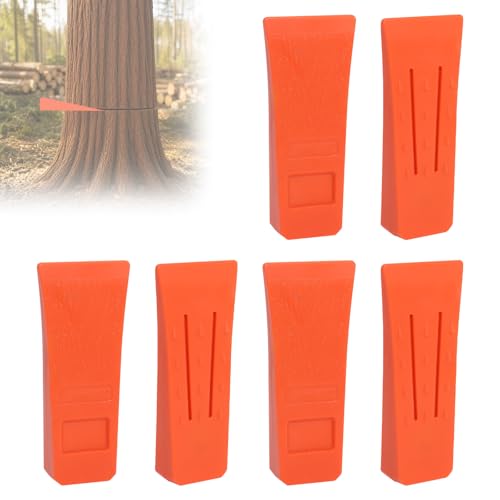
Poweka 6″ ABS Felling Wedges, 6-Pack

Poweka Mixed-Size Felling Wedges, 6-Pack

Skyward 8″ ABS Spiked Logging Wedges, 6-Pack
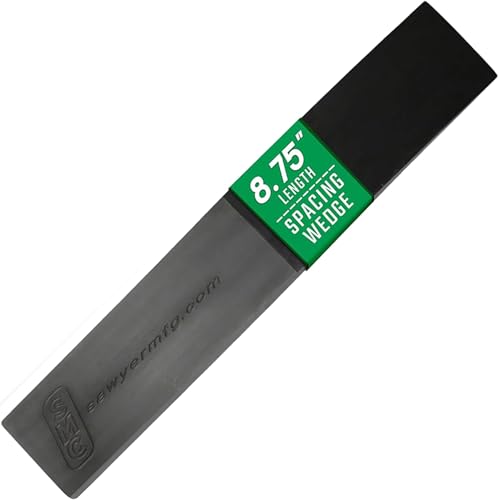
Sawyer 8.75″ Welding Spacing Wedge

Sawyer 4″ Welding Spacing Wedge
More On The Choices That Made The List
The Oregon Felling Wedge Lever works on a different idea than the plastic blocks further down this list. Instead of just driving a wedge into the back-cut, the 130cm steel lever hooks onto a chain or strap and lets you physically pry the tree in the direction you want. On large-diameter hardwoods where plastic wedges sink and stall, that mechanical advantage keeps the cut moving forward.
For most homeowners cutting smaller softwood, the tool is more than necessary, but for anyone bucking a 30-inch oak on a rural lot, it earns its place. The forged handle and non-slip grip give the leverage point a confident, planted feel. You may find it overkill for routine yard work, which is exactly why it lives at the top of the list for big trees.
Real Benefits
- 130cm length gives real torque against heavy trunks
- Forged steel body tolerates repeated hammer strikes
- Non-slip rubber grip holds when conditions turn wet
- Sliding head works as a breaking bar in all seasons
- Pry-and-hook design avoids the need to drive a wedge deep
Honest Caveats
- Heavier than any plastic option, so it takes up truck bed space
- Single tool, not a multi-pack like the Poweka entries below
Built With In Mind
Professional loggers, arborists, and rural property owners felling large-diameter hardwoods where a plastic wedge simply runs out of force.
A Better Fit Elsewhere
Anyone mostly clearing small softwood saplings will get better value from the Poweka 6″ ABS Felling Wedges, which are far easier to carry and tap into a small back-cut.
The Sawyer spacing wedge bundle sits in a different lane from every other item here, because it is built for pipe welding, not felling trees. Hardened steel construction gives these wedges the rigidity to hold pipe joints at a precise gap under clamp pressure, and the two sizes cover a realistic range of pipe diameters and TIG fit-ups.
That said, the listing does call out tree felling as a secondary use, and owners do reach for them in a pinch when a small tree wedge goes missing. For most folks, the value lives on the welding bench, where consistent gap control means a cleaner bead. You may find the steel too aggressive for soft back-cuts in green wood, which is why it lives outside the felling-first list.
What Works In Its Favor
- Hardened steel holds shape under heat and clamp load
- Two-size bundle handles small and large pipe joints
- Tapered profile delivers repeatable gap accuracy
- Doubles as a tree wedge in an emergency
Trade-Offs To Consider
- Hard steel can crush soft green wood if used on a back-cut
- No impact cap, so a maul can mushroom the edge over time
Whose Shelf It Belongs On
Welders and ironworker pros who need consistent pipe gap control and want one steel wedge set for multiple fit-up sizes.
Swap It Out When
Anyone felling trees as the main job will get a more useful design from the Poweka 10″ ABS Felling Wedges, which are built specifically for back-cut work.
The 10-inch Poweka set is the size most homeowners will reach for most often. A 10″ wedge drives deep enough to tip medium trees, while the orange ABS body stays visible in sawdust and leaf litter, which matters when one rolls into the brush mid-cut. Six pieces means you can chain wedges, drive one, then drop in another without stopping to fish the first one out of the undergrowth.
Anti-slip teeth on the faces bite into the kerf walls and resist kicking back under hammer strike, which is a common complaint about smooth plastic wedges. Compared to the Oregon lever above, this is a more traditional drive-in design that trades raw torque for portability and storage ease. The honest read is that ABS won’t survive years of commercial abuse, but for the price of a few gallons of bar oil, it covers a lot of weekend cuts.
Reasons It Performs
- 10″ length is the sweet spot for medium hardwoods
- Six-pack gives room for chained wedge stacks
- High-visibility orange simplifies brush recovery
- Anti-slip teeth hold position under driving force
Points To Keep In Mind
- ABS plastic can crack if struck on frozen knots
- Less useful on very large trunks where steel outperforms
Who Will Love This
Property owners handling medium backyard trees who want enough wedges to chain a deep back-cut without running out.
Look Elsewhere When
Anyone working on consistently small saplings will find the shorter Poweka 6″ ABS Felling Wedges easier to drive in tight back-cuts.
Drop one step down in length and you get the 8-inch Poweka, which is the workhorse for general yard work. Eight inches is short enough to fit into a shallow back-cut on a young tree, but long enough to still crack a moderate trunk if the wood is on the softer side. The spiked faces behave the same as the 10″ version, which is good news for anyone who has fought a wedge popping out mid-swing.
For most owners this is the most-used size, since trees under 18 inches are common and rarely justify driving a 10″ wedge deep. The ABS body is light enough to toss in a bucket with the chainsaw gear. You may find yourself wishing for one longer wedge in the pack for the occasional big tree, which is what the mixed-size Poweka set further down is built for.
Standout Benefits
- 8″ length is versatile across most yard species
- Spiked faces prevent pop-out during driving
- Light enough to carry several in a tool bucket
- Six-pack leaves spares for a stacked-wedge technique
Practical Considerations
- Not deep enough for very thick hardwoods
- ABS can fade in prolonged direct sun
Best Suited To
Homeowners who trim a mix of small and mid-size trees and want a single set that handles both without overspecializing.
Not Your Match When
Anyone cutting primarily 20-inch-plus trunks will appreciate the deeper drive of the Poweka 10″ ABS Felling Wedges more.
Six inches is the smallest size that still does useful work as a felling wedge, and Poweka packs six of them into a single set. The shorter length means a quicker, lighter swing, which is helpful when the tree is small enough that a heavy maul blow is overkill. It is also a great starter wedge that you drive in first to keep the kerf open before stepping up to a longer wedge from another pack.
The trade-off shows up in trunk diameter, because there just isn’t enough material to crack a 20-inch hardwood. For saplings, firewood rounds, and storm cleanup branches, the size is right. You may find yourself using these as the everyday pair and reaching for longer wedges only when the project demands it.
Where It Excels
- Short 6″ length is easy to start in shallow back-cuts
- Light ABS body reduces arm fatigue over many cuts
- Six-pack covers a full day of small-tree cleanup
- Anti-slip teeth grip even on soft, sappy wood
Worth Bearing In Mind
- Too short for medium or large trunk work
- Lacks the visual weight of longer wedges in dense brush
Perfect Match For
Suburban homeowners clearing small trees, branches, and storm debris where a short throw and a fast swing are the priority.
Another Choice May Suit
Anyone working across a wider range of trunk sizes will get more flexibility from the Poweka Mixed-Size Felling Wedges further down, which includes this length plus larger wedges.
This mixed pack is the closest thing to a one-purchase solution in the Poweka lineup. You get two 5.5-inch, two 8-inch, and two 10-inch wedges, which covers the realistic size ladder most homeowners will face on a single property. Smaller wedges can start the kerf, mid-size wedges carry the load, and the longer pair handles the occasional larger tree.
The honest trade-off is that any given size only has two copies, so aggressive stacking on a big trunk uses up your inventory fast. For most yards, though, two of each is plenty, and the variety means you don’t have to guess at sizes before the first cut. The orange ABS body matches the other Poweka sets, so the look stays consistent if you already own a piece or two.
Well-Handled Touches
- Three sizes cover small to large tree work
- Pair count per size suits typical residential use
- Consistent orange ABS matches other Poweka gear
- Spiked faces grip across all three sizes
Where It Is Less Suited
- Only two of each size limits heavy stacking
- ABS plastic still vulnerable to maul mis-strikes
Made For
Homeowners who want one purchase that handles a variety of tree sizes without buying multiple full packs.
Where Another Pick Shines
Anyone who already knows they only cut one size of tree will save money with a single-size Poweka pack, like the 10″ six-piece set reviewed earlier.
The Skyward pack arrives in a familiar eight-inch format, which lines it up directly against the Poweka 8″ set covered earlier. The serrated protrusions and elastic ABS body are designed to keep the wedge in place when the trunk starts to settle, rather than launching back out of the cut. For property owners running through regular cleanup, six wedges in the bucket is a comfortable working count.
You may find the performance gap between this and the Poweka 8″ set fairly small, since the materials and dimensions overlap. The honest case for the Skyward is usually price or pack count, and for someone who treats wedges as consumables that occasionally crack and need replacing, that is a fair reason to pick this one. For bigger trees, the 8″ still hits the same ceiling every 8″ ABS wedge hits.
Key Advantages
- Elastic ABS body resists cracking on hard strikes
- Serrated protrusions hold inside a closing kerf
- Six-pack covers a full day’s logging session
- Bright orange body stands out in tall grass
Some Limits To Know
- Performance is similar to other 8″ ABS packs at this size
- Doesn’t unlock larger-tree work that demands 10″ wedges
Who Should Grab It
Property owners who want a familiar 8″ ABS design and appreciate the elastic body that tolerates an occasional off-center hammer blow.
Consider Something Else When
Anyone who needs to handle bigger trunks will get more lift from the Poweka 10″ ABS Felling Wedges covered earlier in this shortlist.
Stepping up from the bundle to a single 8.75″ Sawyer wedge, you get a dedicated fit-up tool without paying for a second piece. The hardened steel keeps its dimensions across high-heat welding environments, which is what matters when gap accuracy drives weld quality. TIG operators in particular want that predictable taper, because root-pass penetration depends on it.
Outside the weld shop, the steel construction makes this a poor primary felling wedge on green wood, since the hard edges can dig in and split the kerf. For most users, this lives on a welding bench, not a chainsaw scabbard. The honest read is that if you already own the bundle above, you don’t need this single piece unless you want a dedicated unit on a second station.
Notable Gains
- Hardened steel maintains shape under heat
- Predictable taper supports consistent weld gaps
- Single-tool format suits a dedicated fit-up station
What To Weigh
- Overkill if you already own the Sawyer bundle
- Steel edges can damage green wood if used as a felling wedge
Quick Facts
Right Fit For
TIG and pipe welders who want a single, hardened spacing wedge for dedicated fit-up work without buying a bundle.
Skip It When
Tree felling is the main goal, since the Poweka 10″ ABS Felling Wedges are purpose-built for back-cut work and cost less per pack.
The 4″ Sawyer wedge is the smallest of the steel spacing family, and it lives in tight quarters where longer wedges simply don’t fit. Small-diameter pipe, branch-line welds, and cramped fab shop jigs all benefit from a wedge this compact. Hardened steel construction carries through from the larger siblings, so the tool holds its shape under repeated clamping.
For tree work, four inches is too short to be useful, which makes this a strict specialty pick for welders. The trade-off is the same one you see with any small steel wedge: limited range, narrow use case, but excellent at the one job it is sized for. You may find it pairs well with the 8.75″ version above for a full-size coverage on the welding bench.
Strengths Worth Knowing
- Compact 4″ length fits in tight pipe joints
- Hardened steel matches the larger Sawyer wedges
- Useful companion to the 8.75″ version on the same bench
Honest Caveats
- Too small for any practical tree felling work
- Narrow use case limits everyday value
Best Suited To
Welders working on small-diameter pipe or tight fit-up situations who need a compact steel spacer for accurate gap control.
Reach For A Different Pick When
Anyone focused on tree felling will get a far more useful pack of the Poweka 6″ ABS Felling Wedges for a similar outlay.
What To Weigh Before Choosing Tree Felling Wedges
Matching Wedge Size To Tree Diameter
The clearest signal for which size to buy is trunk diameter at the cut. A 6″ wedge covers softwood saplings and small branches, an 8″ wedge handles most yard trees up to about 18 inches, and a 10″ wedge is the right starting point for medium hardwoods approaching 24 inches. Beyond that, a steel lever like the Oregon at the top of this list is the better tool. Buying one size down from what you actually need is the most common error, because the wedge runs out of lift before the back-cut finishes closing.
Material: ABS Plastic Versus Steel
ABS plastic wedges are light, cheap, and forgiving on your chainsaw chain if you accidentally nick one. They work for the vast majority of residential tree work and won’t bend or rust in storage. Steel tools are heavier, more expensive, and built for commercial crews, large trees, or non-felling uses like pipe fit-up. Match the material to the job, and you avoid overpaying for steel you’ll never need.
Grip, Visibility, And Pack Count
Anti-slip teeth or serrated faces keep the wedge inside the kerf, which matters when the trunk settles. High-visibility orange makes a wedge easier to find in leaves and sawdust, a small detail that saves real time on a busy cleanup day. Pack count matters too: a single wedge runs out of lift on big trees, so most users want at least three to chain together. Mixed-size packs are a good first purchase when you don’t yet know what your trees demand.
Smart Tips For First-Time Tree Felling Wedge Shoppers
Where Shoppers Go Wrong
The most common mistake is buying a single wedge and expecting it to fell a 20-inch tree. Real back-cuts often need two or three wedges stacked, which is why most packs on this list ship in counts of six. Another pitfall is matching a steel wedge to a softwood cut, where the hard edges can split green wood. Pick the material to match the tree, not the other way around.
Where The Extra Money Goes
Higher-tier steel tools like the Oregon Felling Wedge Lever cost more because they replace brute-force hammer strikes with mechanical advantage. That upgrade pays off for anyone felling large-diameter hardwoods on a regular basis, where a plastic wedge sinks and stalls. For the average homeowner, a mid-priced ABS pack from Poweka or Skyward covers the realistic workload without overspending on tool you only use a few times a year.
Frequently Asked Questions
How Many Tree Felling Wedges Do You Need For A Typical Tree?
Most residential trees under 18 inches in diameter need two to three wedges stacked to keep the back-cut open through the fall. A six-pack gives you enough spares to recover a wedge that slips out and to chain a deeper cut on bigger trees.
Can You Drive Tree Felling Wedges With A Chainsaw?
You can tap a wedge in with the blunt end of a chainsaw scabbard or the spine of a hatchet, but a dedicated maul or splitting hammer works better. The wedge head is designed to take repeated hammer blows without cracking, which a chainsaw handle is not.
What’s The Difference Between A Felling Wedge And A Splitting Wedge?
Felling wedges are shorter, lighter, and designed to keep a back-cut open without driving the tree apart. Splitting wedges are taller, heavier, and used to force logs apart along the grain for firewood. Using a splitting wedge for felling often overdrives the kerf and can pinch the saw.
Are Plastic Felling Wedges Safe For Use With A Chainsaw?
Yes, ABS plastic wedges are safe to use alongside a chainsaw because the material won’t damage the chain the way steel can. Most felling wedge packs on this list are ABS for that reason, and the plastic is rated to take repeated maul strikes.
Do You Need A Wedge For Every Tree You Fell?
Not every cut needs a wedge, but a leaning tree, a heavy side branch, or a back-cut at risk of closing will almost always benefit from one. Keeping a wedge in your chainsaw kit is a small habit that prevents the most common cause of stuck bars.




