


Pruning tools make or break the gardening season. A dull blade crushes stems, invites disease, and turns a quick trim into a chore. The right pair of tree pruning shears slices cleanly, fits your hand without fighting you, and holds up through wet spring mornings and dry August afternoons. This shortlist covers hand pruners, loppers, and micro-snips for shaping everything from young saplings to flowering shrubs. Each pick is built around a specific job, so you can match the tool to the branch instead of forcing one pair to do everything.
How The Shortlist Stacks Up
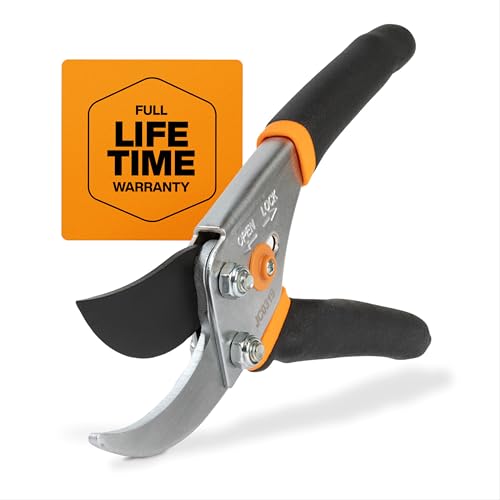
Fiskars Bypass Pruning Shears, 5/8″ Cut

Fiskars 28″ Garden Bypass Loppers, 1.5″ Cut

Fiskars 6″ Non-Stick Pruning Snips, 2-Pack

Fiskars 6″ Steel Micro-Tip Pruning Scissors

Fiskars PowerGear2 Bypass Pruning Shears, 3/4″

Fiskars Forged Steel Bypass Pruning Shears, 1″
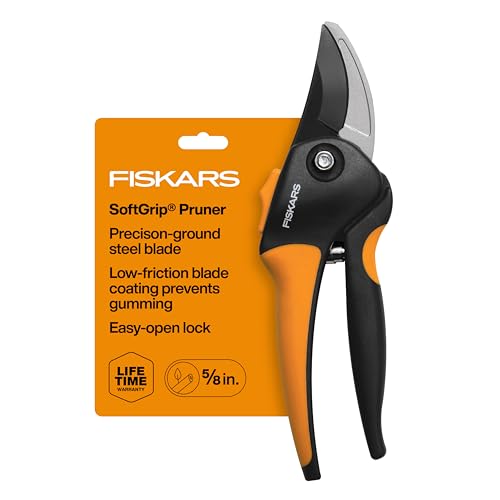
Fiskars SoftGrip Bypass Pruning Shears, 5/8″

Felco F2 Swiss-Made Pruning Shears

Fiskars DualAction 2-in-1 Bypass Pruners, 1″
What Each Pick Brings To The Table
The Fiskars Bypass Pruning Shears are the kind of tool that quietly ends up in every gardener’s kit. A bypass blade, which means two curved blades pass each other like scissors, makes a clean cut on live green wood rather than crushing it the way an anvil-style blade can. With a 5/8-inch cut capacity, this pair handles most rose canes, small fruit tree suckers, and the kind of random sprouts that show up after every rain.
For anyone tending a small yard or a few raised beds, these shears feel right at home. The fully hardened steel blade holds an edge through a season of weekly use, and the lightweight build keeps hand fatigue down during longer sessions. You may find the grip a touch narrow for very large hands, but for most gardeners, the fit lands in a comfortable middle ground.
What Helps Most
- Clean bypass action protects live plant tissue from crushing damage
- 5/8-inch capacity covers the majority of routine pruning tasks
- Hardened steel blade stays sharp across many cutting sessions
- Lightweight frame reduces wrist strain during long pruning runs
Worth Noting
- Stems thicker than 5/8 inch will require a second tool
- Wipe the blade dry after use to prevent sap buildup on the cutting edge
Who It Suits Best
Home gardeners maintaining flower beds, roses, and small fruit trees on a weekly schedule.
Look Elsewhere When
You regularly face branches approaching an inch thick, in which case the Fiskars Forged Steel Bypass Pruning Shears will serve you better.
When the branches sit above your head or the wood stops giving way to your hand pruners, loppers take over. The Fiskars 28-inch Garden Bypass Loppers extend your reach by more than two feet and push the cut capacity up to 1.5 inches, which covers most small tree limbs and overgrown shrub branches that hand shears simply cannot handle.
The low-friction blade coating helps the steel glide through green wood without sticking or rusting in damp spring weather. For homeowners with mature trees, tall hedges, or a neglected corner that needs reclaiming, these loppers turn a frustrating job into a manageable afternoon. They feel long in tight spaces, so think of them as an outdoor tool rather than a patio one.
What Makes Sense
- 1.5-inch cut capacity handles limbs well beyond hand pruner range
- 28-inch reach clears overhead branches without a ladder for most tasks
- Low-friction coating reduces sap sticking and helps resist rust
- Bypass action delivers clean cuts that heal faster on live wood
Trade Offs
- Length makes them awkward to maneuver in tight garden corners
- Heavier than hand shears, so arm fatigue sets in during long overhead work
Key Specs
Best Suited To
Homeowners managing mature trees, tall hedges, and overgrown branches that exceed hand pruner capacity.
Not Your Match When
Most of your pruning involves small flowers and tight shaping, where the Fiskars 6″ Steel Micro-Tip Pruning Scissors give you more control.
The 2-pack format sets the Fiskars Non-Stick Pruning Snips apart from single-tool options. You get two pairs, which solves a common problem: snips go missing in the garden, get left in a potting shed, or simply wear out faster than larger shears because they see heavy use. Having a backup already on hand removes that small daily friction.
The non-stick blade coating matters more than it sounds. Resinous plants like pine, juniper, and certain herbs gum up untreated blades fast, forcing constant wiping. For anyone working with evergreens, herbs, or sticky-stemmed flowers, the coating keeps the cuts clean and the workflow moving.
What It Does Well
- Two-pack design provides a ready spare for the shed or greenhouse
- Non-stick coating resists sap and resin buildup during heavy use
- 6-inch size fits comfortably in smaller hands and tight spaces
- Lightweight build suits extended trimming sessions without fatigue
Small Caveats
- Best for thin stems and foliage, not woody branches
- Smaller blades require more cuts to clear a large shrub
Who Will Love This
Herb gardeners, flower arrangers, and anyone trimming resin-heavy evergreens who wants a backup pair on hand.
Another Choice May Suit
You mainly prune woody shrubs and small branches, in which case the Fiskars Bypass Pruning Shears offer a more capable single-tool option.
Micro-tip snips fill a gap that regular pruning shears leave wide open. The narrow, pointed blades reach into the center of a plant where larger tools cannot follow, letting you clean out dead growth, shape bonsai, or harvest herbs without damaging nearby stems. For indoor plant collectors and serious flower gardeners, the Fiskars 6-inch Micro-Tip Pruning Scissors become a daily-carry tool rather than a weekend-only one.
The stainless steel construction holds up to the moisture levels typical in terrariums and houseplant corners, where humidity would pit lesser blades. These snips work well as a complement to the Fiskars Bypass Pruning Shears in the first slot, not a replacement, because their strength is precision rather than raw cutting power.
A Strong Showing
- Micro-tip blades reach into tight plant centers for precision cuts
- Stainless steel resists corrosion in humid indoor growing conditions
- Compact 6-inch size suits small hands and detailed shaping work
- Lightweight frame allows for extended trimming without cramping
Points To Keep In Mind
- Not built for woody stems beyond a few millimeters thick
- Smaller blades mean more individual cuts on larger plants
At A Glance
Right Fit For
Houseplant enthusiasts, herb growers, and flower gardeners who do detailed shaping work on small, soft growth.
Swap It Out When
You need to cut through actual wood on a regular basis, in which case the Felco F2 Pruning Shears deliver professional-grade cutting strength.
The PowerGear2 mechanism is the standout feature on these Fiskars pruning shears. A small gear set inside the handle multiplies the force your hand applies, so a 3/4-inch branch feels closer to cutting a 1/2-inch stem. For gardeners with arthritis, limited grip strength, or simply a long list of cuts ahead, that mechanical advantage changes the whole experience.
Compared to the original Fiskars Bypass Pruning Shears in slot one, this version trades a bit of simplicity for added cutting power. The contoured SoftGrip handle distributes pressure across the palm, which helps during long sessions in the rose garden or orchard. You may notice the gear housing adds slight weight, but most users find the trade worthwhile.
Positive Takeaways
- Patented gear mechanism multiplies hand force for easier cuts
- 3/4-inch capacity exceeds standard bypass pruners in the same size class
- Contoured handle fits the natural curve of the hand
- SoftGrip covering reduces pressure points during extended use
Honest Caveats
- Slightly heavier than gear-free bypass models
- More internal parts to keep clear of sap and debris
Feature Snapshot
Made For
Gardeners with grip limitations, anyone tackling thick stems, and orchard owners who prune for hours at a stretch.
A Better Fit Elsewhere
Your pruning stays light and you prefer the simplest tool possible, in which case the Fiskars Bypass Pruning Shears cover the basics without extra weight.
The Fiskars Forged Steel Bypass Pruning Shears move up the strength ladder with a 1-inch cut capacity and forged steel handles. Forged steel, meaning the metal is shaped under high pressure rather than cast, gives the tool more structural rigidity than stamped or cast alternatives, which matters when you push a blade toward its maximum rating.
For property owners managing established shrubs, mature berry bushes, or small fruit trees, the extra capacity covers branches that would normally force a switch to loppers. The tradeoff shows up in weight: these feel noticeably heavier than the 5/8-inch model in slot one, and that heft becomes real during overhead work. For ground-level pruning, though, the durability advantage is significant.
The Practical Payoff
- 1-inch cut capacity handles branches that defeat standard hand pruners
- Forged steel handles resist bending under heavy load
- Fully hardened blade maintains its edge through demanding use
- Replaces the need for loppers on many medium-sized jobs
Less Ideal Details
- Noticeably heavier than lighter-duty bypass models
- May feel oversized for gardeners with smaller hands
Key Specs
Perfect Match For
Property owners pruning established shrubs, berry bushes, and small fruit trees that exceed standard hand pruner limits.
Where Another Pick Suits Better
You mostly handle thin, soft growth and want a lighter feel, in which case the Fiskars SoftGrip Bypass Pruning Shears in slot seven offer a kinder hand fit.
The SoftGrip version of the Fiskars Bypass Pruning Shears focuses on hand comfort over raw strength. Same 5/8-inch cut capacity as the standard model in slot one, but with a softer handle covering that absorbs vibration and reduces pressure points during repeated cuts. For gardeners with sensitive hands, arthritis, or simply long to-do lists, that comfort layer becomes a real feature rather than a nice-to-have.
The self-cleaning sap groove is a practical touch that tends to matter more as you accumulate hours with the tool. It channels sticky residue away from the blade pivot, which keeps the cutting action smooth and reduces the wiping-down between cuts. Compared to the PowerGear2 model, this pair trades mechanical advantage for a lighter, simpler design.
Notable Upsides
- Soft grip covering reduces pressure on hands during long sessions
- Self-cleaning sap groove keeps the blade action smooth
- 5/8-inch cut capacity covers the majority of home garden tasks
- Lighter weight than gear-assisted or forged alternatives
Practical Considerations
- No extra cutting power beyond standard bypass designs
- Soft grip material may wear faster under heavy commercial use
Whose Shelf It Belongs On
Comfort-focused gardeners, anyone with hand sensitivity, and home users who do moderate pruning throughout the week.
Skip It When
You face thick, woody growth on a regular basis, in which case the Fiskars PowerGear2 Bypass Pruning Shears in slot five handle the same workload with less effort.
The Felco F2 sits at the top of the category for good reason. Swiss-made with forged aluminum handles, a hardened steel bypass blade, and a design philosophy built around serviceability, this is a tool you can disassemble, sharpen, and rebuild rather than replace. For gardeners who prune daily, run a small nursery, or simply want the last pair of pruners they buy for a long while, the F2 earns its reputation through decades of professional use.
The replaceable parts philosophy means a worn blade, a tired spring, or a chipped handle component can be swapped individually. The trade-off is the upfront cost, which runs well above the Fiskars options, and a learning curve for users new to high-end pruners. For a casual weekend gardener with light trimming duties, that investment may not pencil out. For anyone serious about the craft, it is the reference point.
Practical Pluses
- Replaceable parts extend tool life across years of professional use
- Hardened steel blade delivers clean, precise cuts on branches up to 1 inch
- Forged aluminum handles balance strength with manageable weight
- Ergonomic design reduces hand fatigue during extended pruning
Things To Weigh
- Higher upfront cost than most consumer-grade pruners
- Requires occasional disassembly and sharpening to stay in top condition
Quick Facts
Who Should Grab It
Professional landscapers, serious enthusiasts, and anyone who wants a single pair of pruners to maintain across many seasons.
Reach For A Different Pick When
You prune occasionally and want simple, affordable performance, in which case the Fiskars Bypass Pruning Shears deliver the basics without the premium price.
The Fiskars DualAction Pruners solve a familiar problem: switching between tools when moving from thin stems to thicker branches. This model offers two cutting modes, a single-pivot S mode for fast, light work and a geared L mode that powers through growth up to 1 inch. The mode switch happens on the fly without a tool change, which keeps the workflow moving during longer pruning sessions.
For gardeners who bounce between trimming new growth and removing established branches throughout a single afternoon, the dual-mode approach cuts out the constant back-and-forth to the tool bucket. Compared to the single-mode Fiskars Bypass Pruning Shears in slot one, this version covers the same light work plus a meaningful slice of the heavy-duty range in a single tool.
Practical Advantages
- Two cutting modes handle thin stems and thick branches in one tool
- 1-inch capacity in geared mode extends reach beyond standard pruners
- On-the-fly mode switching reduces interruptions during long sessions
- Low-friction blade coating helps resist sap and rust buildup
Factors To Consider
- Heavier than single-mode bypass pruners
- More internal mechanism to keep clean and lubricated
Built With In Mind
Gardeners who alternate between light shaping and heavier branch removal throughout a single session and want one tool to cover both.
Consider Something Else When
Your pruning is consistent and one-dimensional, where a simpler single-mode pruner like the Fiskars Bypass Pruning Shears keeps the tool lighter and the learning curve shorter.
Choosing Tree Pruning Shears That Actually Fit Your Garden
Match the Tool to the Branch Size
Cut capacity is the first number to check. A 5/8-inch pruner covers most flower stems and small fruit tree suckers. Push toward 3/4-inch or 1-inch capacity when you regularly face established shrubs or mature berry bushes. For anything above 1 inch, loppers or a small pruning saw join the kit rather than replace the hand pruners. The branches you actually face in your yard should drive the spec, not the largest number on the shelf.
Understand Bypass vs. Anvil Cutting
Bypass pruners use two curved blades that pass each other, similar to scissors, and make clean cuts on live green wood. Anvil pruners use one straight blade that closes onto a flat surface, which works fine on dead wood but can crush live stems. For the vast majority of tree and shrub pruning, bypass is the better fit. An anvil design has its place for dry, dead growth, but most home gardeners reach for bypass exclusively.
Consider Hand Fit and Grip Comfort
A pruner that fights your hand will sit in the shed. Look for handle shapes that match your grip style, and consider soft-grip or contoured covers if you prune for more than a few minutes at a stretch. For users with arthritis or limited grip strength, geared mechanisms like the PowerGear2 design multiply hand force and extend comfortable pruning time significantly.
Blade Material and Maintenance
Hardened steel blades hold an edge through heavy use, while stainless steel resists corrosion in humid or wet conditions. Non-stick coatings reduce sap buildup, which matters when you prune resinous evergreens or sticky herbs. Plan to wipe blades dry after each session and sharpen periodically; a well-maintained pruner lasts years longer than a neglected one.
Key Considerations Across These Picks
Common Shopping Slip Ups
The most frequent misstep is buying a pruner with a cut capacity below what your yard actually demands, then forcing the tool past its rating. Another pitfall is choosing a heavy-duty forged pruner when a lighter bypass model would cover 90 percent of the work with less arm fatigue. Always match the tool to your real workload rather than the biggest branches you might occasionally face.
Where The Extra Money Goes
Premium picks like the Felco F2 invest the higher price into replaceable parts, forged components, and manufacturing precision. That translates into years of service rather than seasons. For professionals or dedicated enthusiasts, the math works out because a rebuildable tool outlasts several disposable ones. For casual weekend gardeners, mid-range options often cover the job without the premium.
Frequently Asked Questions
What cut capacity do most home gardeners actually need?
A 5/8-inch bypass pruner covers the majority of flower stems, rose canes, and small fruit tree suckers. Step up to 3/4-inch or 1-inch capacity when your yard includes mature berry bushes, established shrubs, or small ornamental trees that produce woody growth beyond the basic range.
How often should pruning shear blades be sharpened?
Sharpen bypass blades at least once per growing season with regular use, more often if you prune frequently or notice the cuts starting to crush rather than slice. A few passes with a diamond file or sharpening stone along the original bevel angle is typically enough to restore a clean edge.
Can bypass pruners handle dead wood as well as live wood?
Bypass pruners work on both, but they really shine on live green growth. For dry, brittle dead wood, an anvil pruner or pruning saw often makes cleaner cuts with less effort, since bypass blades can get pinched trying to spread apart tough, dead fibers.
Is it worth paying more for replaceable parts in a pruner?
For users who prune weekly or run a landscaping business, replaceable parts extend tool life across many seasons and lower the lifetime cost. For casual gardeners who prune a few times a year, a mid-range pruner with a replaceable blade but fixed handles typically strikes a sensible balance.
How should pruning shears be stored to maximize their lifespan?
Store pruners dry with the blades closed, ideally in a shed or garage rather than outdoors. Wipe sap and moisture off after each session, and apply a light oil coat to the blade and pivot before long-term storage to prevent rust through the off-season.




