A good try square is one of those quiet tools you forget about until it’s missing. Reaching for a square that wiggles, drifts, or loses its 90-degree truth ruins a layout fast, and most projects don’t forgive that drift. Woodworkers, machinists, and weekend DIYers all need the same thing: a rigid reference edge you can trust against a board, a saw, or a part.
This list rounds up nine squares, square heads, and related layout tools worth knowing for 2026, from full-featured combination sets to replacement heads and a mic stand for clean dimensional work. Use it to match a tool to your bench, your budget, and the kind of work you actually do.
The Leading Options At A Glance

PEC Tools 2-Piece Combination Square 18″ Blade, English & Metric

Woodpeckers 6″ & 8″ Precision Woodworking Square Set, Aluminum, USA Made
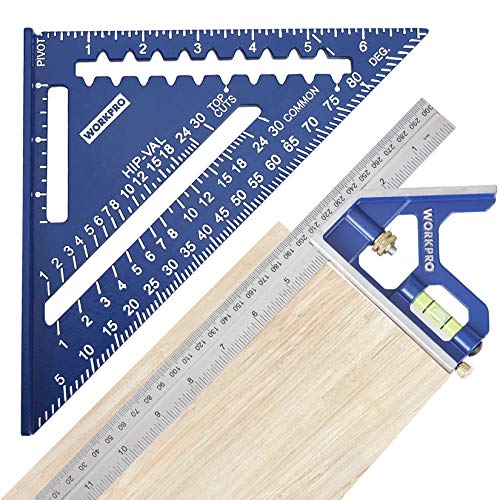
WORKPRO Aluminum Alloy Carpenter and Zinc-Alloy Square Ruler Set

PEC Tools Hardened Square Head, Fits 12″/18″/24″ Blades
PEC Tools Hardened Square Head for 6″ Combination Squares
PEC Tools Square Head for 12″ and Larger Combination Square Blades
PEC Tools Square Head for 6″/150mm Combination Squares

PEC Tools Micrometer Stand, Holder for Micrometers Up to 4″

PEC Tools Machinist Square Set, 2″/3″/4″/6″
The Details Behind The Selections
This two-piece PEC Tools combination square earns its spot at the top for users who want a full kit rather than a single tool. You get an 18-inch blade with both English and metric graduations, plus a second miter head. The satin-chrome finished tempered carbon steel blade is the part that matters day to day, since it slides cleanly and keeps numbers readable under shop lighting.
For carpenters, machinists, and serious woodworkers, the appeal is the replaceable head design. You can swap in a different head later, and the longer blade covers sheet-goods work that shorter squares can’t. Micro-fine etched graduations are etched into the steel rather than printed on top, so the marks tend to hold up to repeated handling in a busy shop.
What Makes Sense
- 18-inch blade handles full sheets and long stock without repositioning.
- Etched graduations resist wear better than surface-printed scales in most home shops.
- Dual English and metric markings cut down on unit conversions mid-project.
- Two-piece design lets you mount the miter head on a spare blade later.
Trade Offs
- Longer blade is overkill for small box work and pocket-sized jobs.
- Carbon steel needs a light wipe-down to prevent surface oxidation on humid days.
At A Glance
Whose Bench It Belongs On
Full-time carpenters, machinists, and serious hobbyists who already know what a 90-degree reference means to their work.
Where Another Pick Suits Better
The WORKPRO set is a friendlier match for casual DIYers who don’t need an 18-inch reach and want a lower entry cost.
The Woodpeckers set is a different kind of beast than the PEC combination square above. These are dedicated try squares, which means the blade is fixed permanently to a beam, with no moving parts and no miter head. The body comes from a machined cast aluminum tool plate, which gives the tool a planted feel on the bench that cheaper squares struggle to match.
You get two sizes, 6-inch and 8-inch, both accurate to within 0.001 inch along their full length. The shoulder lip along the inside of the handle lets the tool sit flat on a board for edge marking, and the thick base stands the square upright on a table saw or bandsaw for blade alignment. In a fine-furniture shop, that combination tends to get used constantly.
Positive Takeaways
- 0.001-inch accuracy is rare at this price point and shows up clearly in tight joinery.
- Shoulder lip and thick base add real setup versatility around machinery.
- Aluminum body stays dimensionally stable across shop temperature swings.
- Two sizes cover most small-to-medium layout work in a single purchase.
- Made in the USA with a casting-first build process that keeps the geometry honest.
Worth Noting
- No miter or 45-degree face, so a combination square is still useful alongside it.
- Aluminum can be marked by harder steel scribes if you press too hard.
Who It Suits Best
Fine furniture makers, cabinet builders, and machinists who need a dedicated setup square for blade and fence alignment work.
Consider Something Else When
The PEC Tools 18-inch combination square is the right call for users who need both a 90-degree reference and a 45-degree miter face in one tool.
The WORKPRO set covers both ends of basic carpentry in one box. You get a rafter-style square in heavy-gauge aluminum alloy for roof and stair layout, plus a smaller combination square with a zinc-alloy head and a stainless steel blade. The materials are mixed on purpose, since each part of a layout job sees different kinds of abuse.
For weekend builders, this set covers the most common 90-degree and angle layout needs without forcing you to invest in a single premium tool. The low-glare powder coat on the rafter square helps with reading marks in bright outdoor light, and the matte stainless finish on the smaller blade keeps glare down indoors too.
Bright Spots
- Two-square combo covers both rafter layout and fine-edge marking.
- Powder-coated rafter square stays readable in outdoor sun.
- Stainless steel ruler blade resists corrosion in damp garage conditions.
- Entry-level price point for first-time square owners.
Some Limits To Know
- Mass-market tolerances won’t satisfy fine-furniture work, where the Woodpeckers set pulls ahead.
- Zinc-alloy head is lighter than cast iron, so it can shift under heavy marking pressure.
Made For
Weekend DIYers, new homeowners, and garage woodworkers who need a forgiving, all-purpose starter set.
Look Elsewhere When
The Woodpeckers 6″ & 8″ precision set is a stronger fit for users who care about sub-thousandth-inch accuracy on furniture joints.
This is a square head only, not a complete square, and that’s the point. It’s designed to mount on any compatible PEC combination square blade of 12 inches or longer, which makes it a smart replacement or upgrade part rather than a beginner’s first tool. The hardened cast iron body is the upgrade story, since standard cast heads tend to dent or warp under hard use in a pro shop.
You get a precision-ground 90-degree face, a 45-degree miter face, a level vial, and a hardened scribe stored in the body. For users who already have a PEC blade but a worn or bent head, swapping in this hardened unit restores that tight reference edge without buying a brand new square.
Notable Gains
- Hardened cast iron resists denting better than standard cast heads in heavy shop use.
- Level vial adds a quick plumb check during layout and setup work.
- Built-in scribe keeps a marking point on hand without grabbing a separate tool.
- Hammertone powder coat gives a grippy, shop-friendly finish.
Honest Caveats
- Only fits PEC blades of 12 inches or longer, so shorter combinations need a different head.
- Heavier than a standard head, which some users notice on long layout sessions.
Best Suited To
Existing PEC blade owners who need a tougher head, plus new buyers planning a long-blade combination square build.
Skip It When
The PEC Tools Hardened Square Head for 6″ Combination Squares is the right match for users with shorter compact blades.
Same hardened cast iron build as the larger pick above, but sized for 6-inch combination square blades. That smaller footprint makes it a strong match for cabinetry, model making, and any layout work that needs a tight, controllable reference in close quarters. A 6-inch blade plus this head is easier to maneuver around a dovetail or a tight drawer than an 18-inch rig.
The fit is specific. This head locks onto a 6-inch blade only, so it’s a swap for compact squares rather than a universal upgrade. In return, you get the same level vial and stored scribe that the larger hardened head carries, just in a smaller package.
Why It Works Well
- Hardened cast iron upgrade for 6-inch square users who want longer head life.
- Compact size handles tight joinery work where longer squares get in the way.
- Built-in scribe removes one more tool from the bench clutter.
Potential Drawbacks
- Limited to 6-inch blades, so it won’t cross over to longer combinations.
Feature Snapshot
Perfect Match For
Cabinetmakers and detail woodworkers who already rely on a 6-inch combination square and want a tougher head.
Swap It Out When
For sheet-goods and framing layouts, the larger PEC Tools Hardened Square Head for 12″/18″/24″ blades covers that work better.
This is the standard cast iron sibling of the hardened heads above, made for any PEC combination square blade of 12 inches or longer. Where the hardened versions focus on dent resistance, this one is the everyday workshop workhorse: a reliable replacement head for a square that’s been dropped, worn, or left in a damp toolbox too long.
The precision-ground 90-degree face and 45-degree miter face keep the geometry honest, and the locking bolt mechanism is the same as on other PEC heads, so swapping is straightforward. PEC Tools has been around since 1960, and that consistency shows in how cleanly this head pairs with existing blades.
What Helps Most
- Standard cast iron build is a sensible everyday replacement for a worn head.
- Works with any compatible 12-inch or longer PEC blade already in the shop.
- Hammertone powder coat holds up to typical shop wear and tear.
Soft Spots
- Standard cast iron can dent if dropped on a concrete shop floor, where the hardened version would survive.
Who Will Love This
Shop owners and serious hobbyists who already have a working PEC blade and just need a fresh, dependable head.
Another Choice May Suit
For users in heavy production settings where heads see real abuse, the PEC Tools Hardened Square Head for 12″/18″/24″ blades is a stronger long-term play.
Where the other 6-inch head is built in inches only, this version is set up for both 6-inch and 150mm blades. That detail matters in shops that move between imperial and metric parts, which is more common than it used to be as more plans and imported tooling mix both systems. The cast iron body and powder-coat finish are familiar PEC territory at this point.
You get the same precision-ground 90 and 45 faces, plus the level vial and built-in scribe that show up across the rest of the PEC head family. If your bench sees both metric and imperial work and you keep a 6-inch square in the drawer, this head is the one that keeps the unit math out of your layout.
Strong Points
- Fits both 6-inch and 150mm blades for mixed-unit shops.
- Level vial and built-in scribe cover common layout needs.
- Cast iron body with powder-coat finish handles typical shop abuse.
Less Ideal Details
- Standard cast iron dents more easily than the hardened version in a hard-use environment.
Right Fit For
Users with metric and imperial blades in the same drawer who want one head that handles both without swapping parts.
Where A Sibling Pick Shines
The PEC Tools Hardened Square Head for 6″ Combination Squares is the better pick when dent resistance matters more than unit flexibility.
Stepping away from squares for a moment, this PEC micrometer stand is the kind of bench accessory that quietly improves measurement accuracy. A micrometer, a precision tool for measuring outside dimensions to thousandths of an inch, is much more useful when it’s held in a stable stand instead of balancing on the part. The cast iron body and rubber base do exactly that work.
It holds micrometers up to 4 inches across a wide range of types, including standard outside, digital, and other common styles. The adjustable clamp adapts to different frames, and the non-slip base keeps the whole setup planted on a measuring table. For machinists and quality-control work, the small footprint and the stability it adds tend to matter more than the modest price tag.
What Works In Its Favor
- Cast iron body and rubber base cut down on vibration during sensitive measurements.
- Adjustable clamp fits a wide range of micrometer frame sizes and types.
- Holds up to a 4-inch micrometer, which covers most shop measurement ranges.
Practical Considerations
- Single-purpose tool, so it only earns its space on benches that use a micrometer regularly.
Built With In Mind
Machinists, quality-control techs, and any shop that runs repeat dimensional checks on small parts.
Not Your Match When
Woodworkers focused on layout and joinery won’t get much from this stand, and the PEC Tools Machinist Square Set is a better match for general shop reference work.
Closing the list with a set of four fixed try squares in 2, 3, 4, and 6 inch sizes. Unlike the combination square at the top of this roundup, a machinist square is a single rigid tool with no moving parts, and the blade is permanently fixed to the beam. That fixed geometry is the point, since it removes any chance of head drift over time.
These are aimed at metalworking and precision layout, with tight tolerances that work for shop machinery checks and small part inspection. A nested set like this means you can pick the right size for the part in front of you, rather than trying to mark a tiny component with an 18-inch blade. For machinists and serious metal hobbyists, that range covers most daily work.
A Strong Showing
- Four sizes cover small parts and mid-size setups in a single purchase.
- Fixed design means no head to loosen or recalibrate.
- True right angles on both inside and outside edges for accurate checks.
Things To Consider
- No 45-degree miter face, so you’ll still want a combination square for angle work.
- Short blade range won’t help with sheet-goods or framing layouts.
- Steel construction means a wipe-down after use to prevent surface rust.
Quick Facts
Who Should Grab It
Machinists, gunsmiths, and metal hobbyists who need a tight, fixed reference for small part inspection and setup.
Reach For A Different Pick When
For long-sheet layout and 45-degree miter work, the PEC Tools 2-Piece Combination Square with 18″ Blade is a better daily companion.
What Matters Most Before Choosing Try Squares
The first decision is what kind of square you actually need. A combination square gives you a 90-degree face, a 45-degree miter face, a level vial, and a sliding head on a marked blade, which makes it the most versatile single tool on a bench. A fixed try square, like the machinist set above, has no moving parts and stays rigid over time, which makes it the right pick for setup and inspection work where drift is unacceptable.
Blade length is the next real call. A 6-inch square handles small box work and tight joinery. An 18-inch or 24-inch square covers sheet goods, table alignment, and long stock. Most home shops end up with one of each, since the two jobs pull in opposite directions. Material matters too: cast iron heads and steel blades stay rigid under marking pressure, while aluminum-bodied squares are lighter and resist corrosion but can mark under heavy use.
Tolerance and graduation style are worth a closer look. Etched marks on a tempered steel blade tend to outlast surface-printed scales, especially in a busy shop. For machinist work, sub-thousandth-inch tolerances are the real selling point, and that’s where the Woodpeckers precision set and the PEC machinist squares earn their place. For framing and rough carpentry, a rafter-style square in the WORKPRO class is plenty.
Key Considerations Across These Picks
Mistakes Worth Dodging
The most common misstep is buying a square that’s too long for the work you actually do. An 18-inch square is awkward on small dovetails, and a 6-inch square is useless on a sheet of plywood. Match the tool to the project first, then worry about extras. Another trap is overlooking replacement heads. PEC Tools sells square heads separately, and a swapped head can extend the life of an existing blade for years, which is often a smarter spend than a brand new square.
When Paying More Pays Off
The jump from a budget combo square to a hardened or precision-ground model usually shows up in three places. The face geometry stays true longer under hard use, the graduations hold up to repeated handling, and the locking mechanism on a combination head doesn’t loosen mid-project. For weekend DIYers, those gains are often small. For pros and serious hobbyists, they show up as fewer re-dos and more consistent layout work over the life of the tool.
Frequently Asked Questions
What Is A Try Square Used For?
A try square checks that a piece of wood or metal has a true 90-degree edge and lets you mark a straight line across a face. It’s a fundamental reference tool for joinery, layout, and setup work.
How Is A Try Square Different From A Combination Square?
A try square has a fixed blade and beam with no moving parts, which keeps the geometry rigid. A combination square adds a sliding head with a 45-degree miter face, a level vial, and a scribe, which makes it more flexible for general layout work.
What Size Try Square Do I Need?
A 6-inch square handles small box work, cabinetry, and tight joinery. An 18-inch or 24-inch square covers sheet goods, long stock, and machinery setup. Most woodworkers end up with at least one short and one long.
Are Expensive Try Squares Worth It?
For fine furniture and machining, the extra accuracy and rigidity of a precision-ground or hardened square pays off in fewer re-dos. For rough carpentry and weekend projects, a mid-range square handles the work comfortably.
Can I Replace The Head On A Combination Square?
Yes, brands like PEC Tools sell square heads separately as replacement parts. A new head can restore accuracy to an existing blade without replacing the whole square, which is a cost-effective way to extend tool life.