


Vertical air compressors earn their keep in workshops where floor space disappears faster than you’d like. Unlike horizontal pancake tanks that sprawl outward, upright units stack their tank along the pump’s vertical axis, cutting the footprint down to roughly a foot-square base. That shape suits garage corners, job-site carts, and mobile setups far better than wide, low tanks. The picks below cover grab-and-go cordless inflators for roadside top-ups, mid-size home-shop tanks for trim work and finish nailing, and heavy-duty units built to drive framing nailers all day.
The Essentials At A Glance

INFLATiQ by RIMiQ Tire Inflator (Black)

Makita MAC2400 Big Bore Air Compressor

ETENWOLF VORTEX S6 Cordless Tire Inflator

ETENWOLF S6SE Cordless Tire Inflator

PORTER-CABLE 6-Gallon Pancake Compressor
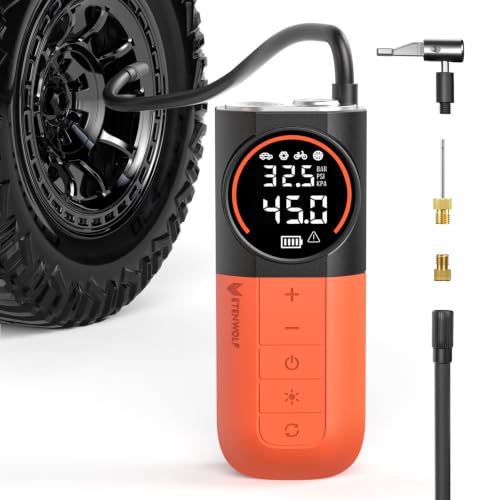
ETENWOLF S1 Cordless Tire Inflator 160PSI
The Details Behind The Selections
The RIMiQ INFLATiQ shapes up as a small-format tire inflator for drivers who want a true grab-and-go unit, not a shop-bound brick. The body sits comfortably in a trunk side-pocket or under a seat, and the dual power options, an 11.1V rechargeable pack plus a 12V lighter plug, mean you’re covered whether the unit is sitting on a shelf at home or riding along on a long road trip.
Where it differs from the workshop-bound Makita further down this list is intent. That compressor wants to run a brad nailer. This one wants to top off a low tire before a Monday commute or pump up a flat basketball before Saturday’s pickup game. The faster inflation flow shortens the wait for a sedan tire refill, which is the moment most people actually reach for an inflator.
Standout Benefits
- Dual power input lets the unit shift from cordless mode to plugged-in mode for longer sessions without swapping devices.
- Compact vertical form keeps trunk and cargo storage honest, unlike wider 12V units that hog cubbies.
- Multi-purpose nozzle setup covers cars, motorcycles, and inflatables, so one tool handles several weekend chores.
- Higher flow than entry-level inflators trims time off a top-up, useful before work on cold mornings.
Points To Keep In Mind
- Battery stamina depends on tire size; for heavy pickups, expect more frequent top-ups than the S6-class cordless models deliver.
- Owners commonly report a small learning curve on switching between nozzle types until the fittings become second nature.
Who Will Love This
Sedan and small SUV owners who want a portable inflator that lives in the car and handles occasional low-tire fixes without dragging out shop equipment.
Reach For A Different Pick When
Drivers of full-size pickups and overland rigs with 35-inch tires get more headroom from the ETENWOLF VORTEX S6, which moves far more air per minute on larger rubber.
The Makita MAC2400 trades the portability of a RIMiQ inflator for raw durability. A cast-iron pump with a Big Bore cylinder and piston sits at the core, built for the long recovery cycles that framing nailers, impact wrenches, and roofing staplers demand. The roll-cage frame wraps the whole assembly in a steel skeleton that takes a beating on trailer hauls and cluttered job sites.
Setup is straightforward for anyone who has wheeled a compressor to a job before, though the unit weighs enough that you’ll want a dolly or a fixed spot in the shop. The 4-pole motor is tuned for lower amp draw, so it tends to play nicely with standard 15-amp circuits rather than tripping breakers the moment it kicks on. Compared to the PORTER-CABLE pancake on this list, the Makita sacrifices the low-silhouette tank footprint for higher airflow, which matters once you start running tools that gulp air.
Everyday Perks
- Cast-iron pump construction extends service life for contractors and serious DIYers running tools daily.
- Lower amp draw reduces tripped breakers in older shops with limited circuits.
- Roll-cage frame protects gauges, hoses, and the pump from drops and trailer rattles.
- Higher CFM output supports continuous-use tools without the constant cycling the PORTER-CABLE exhibits on heavy nailer runs.
Trade-Offs To Consider
- Weight and size make this a stationary or cart-bound unit, not a trunk-friendly inflator like the RIMiQ INFLATiQ.
- Oil-maintenance routine adds a step before first use and periodic check-ins, unlike the oil-free PORTER-CABLE.
Key Specs
Best Suited To
Contractors, remodelers, and serious home-shop users who run framing or roofing nailers on a regular basis and want a tank that keeps up.
Skip It When
Light hobbyists handling trim and craft work will find the PORTER-CABLE 6-Gallon Pancake plenty, with easier storage and zero oil fuss.
The VORTEX S6 is the inflator you reach for when tire size goes up and patience goes down. With airflow rated at 1.5 CFM at 0 PSI (around 42 liters per minute), it pushes a 31-inch tire from flat to roughly 35 PSI in about a minute, a noticeable difference compared to slim handheld units that take five times longer on the same task. The 160 PSI ceiling covers everything from off-road rubber to pool inflatables, though the brand notes it’s not built for stand-up paddleboards.
Unlike the small RIMiQ INFLATiQ at the top of this list, the S6 leans into a beefier 19,200 mAh battery and a cordless format aimed at truck, SUV, and overland owners. You can run it off the integrated pack or, depending on configuration, top it off in the truck. Compared to the more compact ETENWOLF S1, you trade some pocket-friendliness for higher flow that handles bigger tires without overheating the motor.
A Strong Showing
- High airflow rate slashes wait times on larger tires that choke smaller inflators.
- Large internal battery pack handles multiple tire fills before needing a recharge on trail runs.
- 160 PSI ceiling covers trucks, SUVs, off-road rigs, and most inflatables with one tool.
- Gauge accuracy within a tight tolerance means less guesswork on pressure targets.
Where It May Fall Short
- Heavier than pocket inflators, so it tends to live in the cab or cargo area rather than a glove box.
- Not designed for stand-up paddleboards, which limits its appeal for water-sports households.
Right Fit For
Pickup, SUV, and overlanding owners who need a battery-powered inflator that can take on 33- to 35-inch tires without babysitting the trigger.
Look Elsewhere When
Commuters driving small cars should consider the more compact ETENWOLF S1, which is plenty for sedan tires and easier to stash.
The S6SE sits one step over the VORTEX S6 in ETENWOLF’s lineup, and the headline difference is a dual-cylinder design. That extra cylinder bumps the airflow to 1.5 CFM at 0 PSI and shaves time off a 31-inch fill, getting it done in roughly a minute from 0 to 35 PSI. The 160 PSI ceiling and tight gauge tolerance stay the same, so the upgrade is mostly about speed and smoother continuous output rather than top pressure.
For overlanders and road-trippers, the appeal is straightforward: less time standing beside a rig on a remote trail waiting for a tire to top up. Compared to the workshop-bound Makita, the S6SE sacrifices any shop-tool use entirely in favor of pure cordless convenience, and the dual-cylinder design runs cooler than single-cylinder inflators under back-to-back fills.
Real-World Strengths
- Dual-cylinder architecture delivers faster fills on 31-inch and larger tires.
- Cooler operation during back-to-back fills protects motor life on trail repair sessions.
- Cordless design removes the need for a 12V socket or shore power at remote campsites.
- Precise gauge reading avoids the under- and over-fill dance that plagues cheaper inflators.
Worth Bearing In Mind
- Dual-cylinder complexity adds a bit of bulk versus the single-cylinder S1, so storage planning matters in smaller vehicles.
- Owners commonly recommend a top-up charge before long trips rather than relying on memory for last use.
Quick Facts
Made For
Overlanders, road-trippers, and off-roaders who need a tough cordless inflator that handles 33-inch-plus tires and runs cool across multiple fills.
Swap It Out When
Sedan and small-SUV owners rarely need dual-cylinder output, so the lighter ETENWOLF S1 serves them better at a lower entry point.
The PORTER-CABLE C2002 takes the classic pancake silhouette and refines it for the home shop. The 6-gallon tank rides low and wide, so the center of gravity stays planted on rubber feet, even when the hose yanks sideways during trim work. The 150 PSI max tank pressure lets the unit store more air than smaller pancake compressors, which translates to longer runtimes between motor cycles.
Compared to the Makita MAC2400 on this list, the PORTER-CABLE is oil-free, so the maintenance story is essentially zero beyond draining the tank occasionally. That’s a meaningful difference for casual users who don’t want to track pump oil levels. Where the RIMiQ inflator is a tire tool, this is a workshop tool, more useful for finish nailers, staplers, and blowing out dust than for topping off a low tire.
A Favorable Mix
- Wide pancake footprint resists tipping on uneven shop floors and crowded workbenches.
- Oil-free pump eliminates the maintenance routine that oil-lubricated compressors require.
- Higher tank pressure stores more usable air for longer continuous runs on trim nailers.
- Low-amp motor stays friendly to standard household circuits in garages and basements.
Honest Caveats
- Recovery time stretches on tools that gulp air, so heavy framing nailer runs may have you waiting between cycles.
- Pancake shape, while stable, takes up a wider shelf footprint than the upright Makita on this list.
Whose Shelf It Belongs On
Home garage hobbyists and DIYers who run finish nailers, brad nailers, and air-driven cleaning tools and want a low-maintenance workhorse.
Where A Sibling Pick Shines
Contractors running framing nailers through a full workday get more uptime from the Makita MAC2400’s cast-iron pump and higher CFM output.
The ETENWOLF S1 is the smallest member of this brand’s inflator trio, sized for the daily-driver crowd rather than truck and trail. The 20 L/min airflow and 160 PSI ceiling are tuned for cars, SUVs under standard tire sizes, motorcycles, bicycles, and sports balls, with a 5200 mAh battery that handles several top-ups before a recharge. A 195/65R15 tire moves from 30 to 35 PSI in roughly 60 seconds, a useful speed for a commuter checking tires before work.
Where it differs from the S6 and S6SE on this list is scale and target use. Those two tackle heavy-duty truck and off-road fills, while the S1 trims weight and cost for users who rarely deal with rubber larger than 17 inches. It’s the more natural fit for a sedan glove box or a hatchback cargo tray, and it pairs well with the RIMiQ INFLATiQ as a household backup unit.
Useful Strengths
- Lightweight chassis stashes in glove boxes, door pockets, and small cargo areas without bulk complaints.
- Fast top-up cycle for commuter tires means you’re not standing in a parking lot for minutes on end.
- Multi-mode inflation covers cars, motorcycles, bikes, and balls with one device.
- Lower entry point makes it approachable for first-time cordless inflator owners.
Some Limits To Know
- Smaller battery means fewer large-tire fills per charge, so truck and SUV owners may want the S6 instead.
- Owners commonly report a break-in period to nail down the auto-shutoff pressures for different tire types.
Perfect Match For
Sedan, compact SUV, and motorcycle riders who want a quick cordless top-up tool that disappears into a trunk or cargo bin until needed.
Not Your Match When
Truck and overlanding drivers with 33-inch-plus tires get more reliable fills from the dual-cylinder ETENWOLF S6SE, which moves more air without overheating.
What Matters Most Before Choosing Vertical Air Compressors
Tank shape and footprint matter first. Vertical tanks free up floor space, but their tall stance can wobble on uneven garage floors, so a wide base or low-slung variant like the pancake design has its own stability advantages. Wheel kits and rubber feet are worth checking before you commit to a layout.
Airflow ratings, measured in CFM at a specific PSI, tell you whether the compressor can sustain a tool without constant cycling. Tools like finish nailers sip air, while framing nailers and impact wrenches gulp it. Matching CFM to your most demanding tool avoids the frustrating pump-on, pump-off loop on every pull of the trigger.
Portability splits the category into two camps. Cordless inflators like the ETENWOLF and RIMiQ models trade raw power for grab-and-go convenience, ideal for tire work and emergency top-ups. Workshop compressors like the Makita and PORTER-CABLE trade mobility for higher airflow, oil-lubricated durability (Makita), or low-maintenance operation (PORTER-CABLE).
Duty cycle and pump type shape long-term ownership. Oil-lubricated pumps run quieter and cooler but need oil checks. Oil-free pumps skip that step but tend to wear faster under heavy use. For a home shop running tools a few times a month, oil-free is a sensible trade. For daily contractor work, oil-lubricated cast-iron pumps repay the maintenance with longer service life.
Key Considerations Across These Picks
Wrong Turns To Avoid
Buying strictly on tank size often backfires. A 6-gallon pancake with high CFM outperforms a 10-gallon tank with low airflow on most trim and finish work. The honest read is that CFM and recovery matter more than raw tank volume for typical DIY and contractor scenarios. Overbuying on either axis leaves you with a heavier, louder unit that doesn’t actually do more useful work.
Ignoring noise output is a common slip. Vertical pancake tanks and oil-lubricated pumps tend to run quieter than older splash-lubricated cast-iron designs, which matters in attached garages and basement shops. Check published dB ratings before you commit, especially if you work early mornings or late nights.
What The Higher Tier Buys
Premium compressors earn their cost through longer pump life, faster recovery, and quieter operation. Cast-iron cylinders, oil-lubricated pumps, and 4-pole motors all add up to a machine that runs cooler under load and lasts more years before needing service. For contractors using the tool daily, that longevity quickly justifies the higher entry cost compared to budget consumer units. For casual users running a brad nailer twice a year, the premium tier is often overkill and a mid-range oil-free unit serves the same needs at a lower price.
Frequently Asked Questions
How much CFM do I need for a finish nailer?
Most 18-gauge finish nailers need 0.3 to 0.5 CFM at 90 PSI, which any compressor on this list with a tank can deliver in short bursts. The Makita and PORTER-CABLE handle continuous use, while the cordless inflators are best for tire work rather than running nailers.
Are vertical air compressors louder than pancake models?
Not necessarily. Noise depends on the motor and pump type, not tank orientation. Oil-lubricated pumps with 4-pole motors, like the Makita MAC2400, tend to run quieter than typical splash-lubricated designs, while pancake compressors vary widely by model.
Can a cordless tire inflator replace a shop compressor?
For tire inflation, sports equipment, and small inflatables, yes. For running nailers, staplers, or impact wrenches, no. Cordless inflators deliver pressure but not the sustained airflow that pneumatic tools require for continuous use.
How often should I drain a vertical air compressor tank?
Drain the tank after every few uses, or weekly if the compressor sees regular action. Moisture collects at the bottom, and leaving it there accelerates internal rust and shortens tank life. The PORTER-CABLE includes a dedicated drain valve for this exact reason.
Is oil-free really maintenance-free?
Almost. Oil-free pumps skip oil changes but still need tank draining, air filter cleaning, and occasional valve inspection. The trade-off is convenience, not total zero maintenance, and oil-lubricated pumps still outlast oil-free ones in heavy daily use.




