


A wobbly drill press turns careful work into guesswork. The vise matters more than the drill itself, because it locks the part in place while the bit does its job. Choosing well means matching the vise to the kind of work you actually do, whether that’s small precision jobs on a hobby bench or serious fabrication on a shop table. The seven picks below cover the common shapes you will see: low-profile, tilting, cross-slide, and bench-top, so you can match a tool to a task instead of forcing the work to fit the vise.
The Main Contenders

ZTUKOMN Precision 4-Inch Heavy Duty Drill Press Vise

findmall 6-Inch Low Profile Drill Press Vise with Stationary Base

Forward CR60A 6.5-Inch Bench Vise with Anvil and Swivel Base

findmall 3-Inch Accuracy Mill Vise Without Base

findmall 4-Inch Angle Drill Press Vise 0-90 Degrees
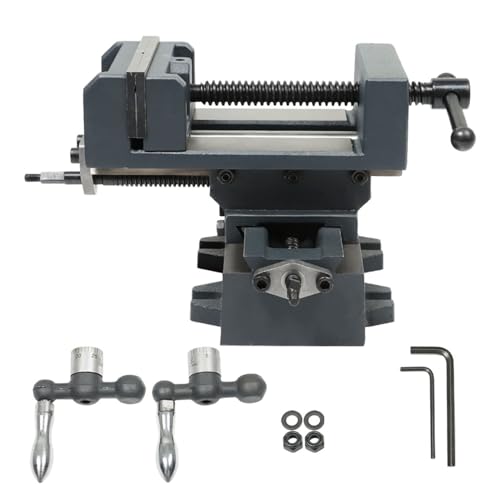
findmall 4-Inch Cross Slide Drill Press Vise

findmall 5-Inch Cross Slide Drill Press Vise X-Y
Inside Each Recommended Option
For drilling small parts where a hair of slop ruins the result, the ZTUKOMN 4-inch vise makes a sensible first stop. The body is compact enough to sit on a bench-top drill press without crowding the column, and the roughly 4.25-inch jaw opening covers most hobby-scale stock you will run through it. Compared with the wider findmall 6-inch low-profile vise later in this list, this one trades capacity for tighter geometry, which matters when your work is measured in thousandths rather than inches.
Setup is straightforward: bolt it to a sacrificial backer board or directly to the drill press table, square the jaws, and you are drilling. For most home workshops, the 4-inch jaw width handles square tubing, short lengths of flat bar, and small fabrication blocks without complaint.
Useful Strengths
- Compact 4-inch jaw width suits small parts where larger vises simply get in the way
- About 4.25 inches of jaw opening covers most hobby-scale stock
- Geometry built for repeatability, helping keep hole positions accurate across batches
- Light enough at roughly 12 lb to move between benches without much fuss
- Simple mounting footprint works on a wide range of drill press tables
Worth Noting
- Not built for tall workpieces; the low body limits how high stock can sit
- Smaller jaw surface means longer parts need extra support to stay level
Feature Card
Whose Bench It Belongs On
Hobbyists and small-shop fabricators doing precision work on compact parts, where repeatability matters more than reach.
Look Elsewhere When
You regularly drill tall or wide stock and need more clearance, in which case the findmall 6-Inch Low Profile Drill Press Vise gives you the headroom.
Tall workpieces and fixtures need headroom, and the findmall 6-inch low profile vise is built for exactly that. The “low profile” label means the body sits close to the table, so the jaws reach up rather than out, which gives you extra usable height under the spindle. If you have tried squeezing tall parts under the ZTUKOMN covered above, the difference in clearance is the main reason to step up.
The stationary base bolts straight to a drill press bench, and once it is set, it stays put. Owners commonly use this style for tapping and reaming in addition to drilling, since the solid mount helps absorb the side loads those operations create.
Well-Handled Touches
- Hardened steel jaws resist wear under regular drilling, tapping, and reaming cycles
- Replaceable jaw design lets you swap worn faces instead of scrapping the whole vise
- Horizontal and vertical V-grooves in the stationary jaw grip round stock securely
- Wide 6-inch capacity takes larger bar stock and fixtures that smaller vises cannot hold
Trade Offs
- Heavier and bulkier than compact 3 or 4-inch vises, so smaller benches feel crowded
- Once bolted down, repositioning takes planning, which slows quick job swaps
Feature Card
Made For
Shops drilling, tapping, or reaming taller workpieces where the ZTUKOMN’s lower profile would cramp the setup.
Skip It When
You mainly do small precision parts and want a lighter bench footprint, since the findmall 3-Inch Accuracy Mill Vise fits that role more cleanly.
The Forward CR60A is a full bench vise, not a low-profile drill press vise, and that distinction shapes how you use it. With a 6.5-inch jaw width and a 6-inch opening, it handles work that smaller drill vises refuse, while the 210-degree swivel base lets you angle the body without unmounting it. A small ductile iron anvil on the tail end absorbs light forming taps without damaging the table.
For a busy shop that wants one vise to do a bit of everything, this sits between the dedicated drill press vises above and a fabrication-grade tool. Mount it to a workbench near the drill press, and you have a place to hold stock for sawing, filing, and assembly as well as drilling.
Noteworthy Benefits
- Built from ductile iron at roughly 60,000 PSI tensile strength, which is tougher than cast iron in impact situations
- 210-degree swivel base repositions the jaws without loosening the bench mount
- Two sets of replaceable jaws included, covering flat and pipe work
- Integrated pipe jaws handle round stock from about 1/2 inch to 3-1/2 inches
Honest Caveats
- Body sits high off the bench, so it is not the cleanest fit for tall stock under a drill press spindle
- Heavier than drill-press-specific vises, so it really wants a dedicated bench
- Some owners report the swivel lock takes a few uses to settle in
Feature Card
Right Fit For
Workshops that want a single heavy vise on a bench to support the drill press, not replace it, with a mix of drilling, assembly, and light fabrication work.
Reach For A Different Pick When
Your work stays under a drill press spindle all day, because the findmall 6-Inch Low Profile Drill Press Vise gives you better vertical clearance for that scenario.
The findmall 3-inch mill vise is intentionally bare. There is no base, no swivel, and no frills, which is exactly the point: it bolts straight to a drill press table or mill bed and becomes part of the machine. With a roughly 3.19-inch jaw width and a 3.03-inch opening, it is sized for the kind of small stock that larger drill vises handle awkwardly.
You mount it once and leave it, which is what most people who own a mill-style vise want. It also suits a drill press that doubles as a light milling machine, where you need the vise to sit flat and predictable on the table.
Why It Works Well
- Compact 3-inch jaw width keeps small parts centered under the spindle
- About 9.84 inches overall length balances clamping reach and table footprint
- Low body height of roughly 2.6 inches leaves vertical room for taller setups
- Direct-mount design removes the flex that some add-on bases introduce
Points To Note
- No included base means you need to plan your mounting before the vise arrives
- Small jaw capacity is a real limit for anyone holding long or wide bar stock
Who Should Grab It
Machinists and serious hobbyists who already have a mill table or drill press table ready to accept a fixed mount, and who work on small precision parts.
Not Your Match When
You want a quick, freestanding setup, because the ZTUKOMN 4-inch vise with its bench-friendly footprint is a more flexible starting point.
When the hole you need is not square to any face of the stock, a regular vise makes you improvise with shims. The findmall 4-inch angle vise solves that by tilting the whole jaw assembly from 0 to 90 degrees in a cradle, so you set the angle once and the work stays put. Compared with the ZTUKOMN 4-inch vise earlier in the list, the body is taller and the cradle is the main feature, trading compactness for adjustability.
For bracket work, angled fasteners, and compound drilling, this is the kind of vise that turns a five-minute setup into a one-minute setup. The cast iron body is heavy enough to resist flex under sideways loads from larger bits.
Reasons It Performs
- 0 to 90 degree tilt range covers most angled drilling scenarios in one tool
- About 4 inches of jaw opening handles typical structural brackets and plates
- Cast iron body absorbs vibration from larger drill bits
- Cradle design keeps the workpiece oriented predictably through the full angle range
Factors To Consider
- Taller body reduces usable height under the spindle compared to a low-profile vise
- Angle adjustments require loosening, repositioning, and re-tightening, so quick swaps are slower than with a plain fixed vise
Feature Card
Best Suited To
Fabricators drilling angle holes in brackets, frames, and plates where shimming a regular vise would waste setup time.
Swap It Out When
You mostly drill straight holes and want a quicker clamp cycle, because the ZTUKOMN 4-inch vise is faster on repetitive square work.
Cross-slide vises change the way you use a drill press. Instead of cranking the table to move the workpiece, you turn two dials on the vise itself, one for X travel and one for Y travel. The findmall 4-inch cross slide vise gives you roughly 3.94 inches of travel on the X axis and 5.12 inches on the Y axis, so you can line up a pattern of holes without recentering the part by hand.
It is the kind of tool that pays for itself the first time you drill a four-hole pattern on a centerline. For a hobby machinist, it brings drill press work closer to real milling without buying a mill.
Everyday Advantages
- Two-axis X-Y travel lets you lay out hole patterns without moving the table
- Cast iron body keeps the slide stable under the cutting load
- About 3.94 inches of jaw capacity covers a wide range of small parts
- 1-3/8 inch jaw depth supports stock that other 4-inch vises would let bow
Some Limits To Know
- Cross-slide mechanisms need occasional cleaning to stay smooth, especially in dusty shops
- Heavier than a plain 4-inch vise, so the drill press table carries more weight
Feature Card
Perfect Match For
Makers drilling repeated hole patterns, indexing slots, or small layouts where dial-in accuracy saves time over edge-finding.
Consider Something Else When
You mostly do one-off holes and rarely repeat a pattern, because the ZTUKOMN 4-inch vise is faster to set up for single-shot work.
The 5-inch version of the findmall cross slide vise takes everything the 4-inch model does and adds room. A 4.92-inch jaw width and 4.84-inch opening stretch the capacity to longer flat stock and wider parts, while the larger base footprint of about 5.5 by 10.2 inches spreads the load across more of the drill press table. The base is what really sets it apart from its smaller sibling, because the wider footprint reduces tipping when the workpiece is near the edge of the jaws.
For shops running longer layouts, this is the cross slide vise that does not feel like it is about to slide off the table.
What Helps Most
- About 4.84 inches of jaw opening fits longer bar stock than most 4-inch vises
- 5.12-inch Y travel supports extended patterns along the workpiece length
- Cast iron body handles the heavier cuts that wider stock demands
- Wider base footprint improves stability when the part overhangs the jaws
Practical Considerations
- Wider base needs a drill press table with enough clear space, which smaller benches may not have
- Heavier than the 4-inch cross slide, so it is less convenient to swap in and out
Built With In Mind
Shops that already use a cross slide vise and need more travel and larger jaws for bigger layouts and longer workpieces.
A Better Fit Elsewhere
You mostly work on small parts, because the findmall 4-Inch Cross Slide Drill Press Vise handles that scale with less table real estate.
What To Weigh Before Choosing A Drill Press Vise
Jaw width and opening are the headline numbers, but the real decision comes down to how the vise sits on your table and how it handles your work. A vise that is too tall wastes spindle travel. A vise that is too short flexes on deep cuts. The right match feels invisible: you set it, you drill, and the tool does not get in the way.
Jaw Capacity Versus Workpiece Size
The 3-inch and 4-inch vises in this list cover most hobby work, while the 6-inch and 6.5-inch picks handle bigger stock and pipe. Match the jaw width to your largest regular part, not your largest possible part, because a vise that is oversized for daily work slows down small jobs.
Low Profile Versus Standard Body
Low-profile vises, like the findmall 6-inch model, sit closer to the table and leave more room above the jaws for tall work. Standard-height vises give you easier hand access for tightening and adjusting. Bench vises like the Forward CR60A are taller still, because they are meant for general shop work, not drill press clearance.
Cross Slide For Layouts, Fixed Vise For One-Offs
Cross slide vises earn their keep when you repeat hole patterns, slots, or grids. For a single hole in a single part, a plain fixed vise is faster to set up and easier to live with. The 4-inch cross slide is a good middle ground for hobby machinists, while the 5-inch version suits larger layouts.
Material, Mounting, And Long-Term Care
Cast iron and ductile iron bodies resist flex and dampen vibration, which keeps holes round and bits sharp. Hardened steel jaws hold up to repeated clamping cycles, and replaceable jaws mean you do not scrap the whole vise when the faces finally wear. Plan a quick wipe-down of the slide surfaces on cross slide models, especially in shops where sawdust and chips collect fast.
Key Considerations Across These Picks
Where Shoppers Go Wrong
The most common mistake is buying by jaw width alone. A 6-inch vise sounds better than a 4-inch vise on paper, but on a small bench-top drill press it can crowd the column and limit how close you can bring the spindle. Measure your drill press table, check the column-to-table clearance, and then choose the largest vise that still leaves room to work.
Another slip is ignoring mounting. Some vises include bases, others do not, and a vise without a base is not a problem on a mill table but a real one on a bare drill press. Plan your mounting before the box arrives.
What The Higher Tier Buys
The premium tier in drill press vises adds features you do not need until you do: replaceable hardened jaws, integrated V-grooves for round stock, and dual-axis cross slides that turn layout work into dial turns. The upgrade pays off when you start repeating the same setup across multiple parts, or when the workpiece gets heavy enough that flex becomes a real problem. For one-off hobby projects, the basic tier is honest work. For production-style repetition, the extra capability is worth the cost.




