


Hanging something on a brick wall looks simple until the anchor spins, crumbles, or pulls right out. Most drywall plugs marketed for brick underdeliver the moment you load them up with a heavy shelf, a handrail bracket, or an exterior light. The picks below are the ones worth reaching for when you need a real bite into masonry, hollow doors, or mixed-material walls, sorted by the situation you’re actually facing.
The Leading Options At A Glance

TOGGLER Toggle TA Hollow Door Anchors, 100 Pack

Wensilon #8×3/4″ 410 Stainless Steel Truss Head Screws, 300 pcs

Wensilon #8×3/4″ 410 Black Stainless Steel Truss Head Screws, 300 pcs

TOGGLER Alligator AF8 Wall Anchors 5/16 in, 100 Pack

fischer DuoPower 8 x 65 Universal Wall Plugs, 50 Pack

fischer 555006 DuoPower Wall Plugs 6×30, 100 Pack

Wensilon #8×3/4″ Hex Washer Head Self-Drilling Screws, 300 pcs
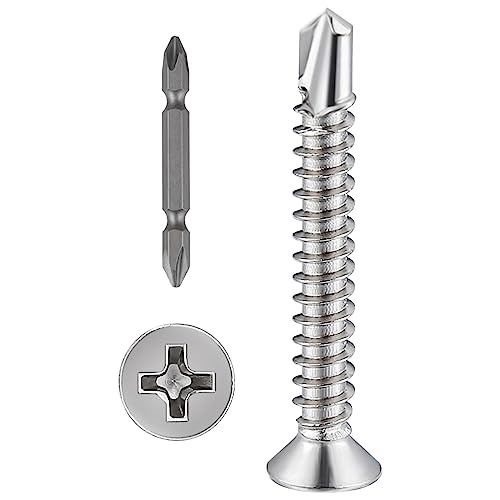
Wensilon #8×1-1/4″ 410 Stainless Steel Flat Head Screws, 250 pcs
The Strengths Of Each Pick
Anchor work in solid brick is one thing, but hollow-core doors punish the wrong plug instantly. The TOGGLER Toggle TA is a spring-loaded anchor built for that exact job, designed to grip behind thin panels and hollow doors where a standard plastic sleeve would simply pull through.
You pre-position the toggle, drive your bolt, and the wings seat themselves against the back of the wall. For anyone mounting a robe hook, mirror, or over-the-door organizer in a hollow slab, this design feels more like fastening into a real wall than into cardboard.
Useful Highlights
- Engineered for hollow doors and panels roughly 1/8″ to 1/4″ thick, where most generic plugs fail.
- Spring-wing design spreads load across the back of the wall instead of relying on friction alone.
- One-piece construction means no separate bolts to lose mid-project.
- A 100-count pack covers a full closet, bathroom, or entryway refresh in a single buy.
- Installs with a standard drill bit, no specialty tools required.
Things To Consider
- Screws ship separately, so budget for matched fasteners or pull them from an existing drawer.
- Not a fit for solid masonry like brick or poured concrete, where the toggle has nothing to spread behind.
- Requires a drilled hole slightly larger than a typical drywall plug, so measure before committing.
Who It Suits Best
Anyone outfitting hollow-core bedroom doors, bathroom partitions, or thin cabinet backs where a standard plastic anchor would just spin and crumble.
Skip It When
You need a real brick-friendly solution like the TOGGLER Alligator AF8, which expands into solid masonry rather than relying on a hollow cavity.
The Wensilon #8×3/4″ pack is the supporting cast, not the star, of a brick project. These are 410 stainless steel self-tapping screws, a magnetic grade of stainless that’s notably harder than softer copper-coated fasteners, which means they hold their threads under repeated driver torque.
For homeowners, the more practical question is what role they play. Pair them with a wall plug in brick, or use them to fasten brackets, strapping, or thin metal flashing where rust would otherwise show up in a season. The truss head gives a wider bearing surface, which helps avoid the “screw sinking into soft wood” problem on cedar fences.
The Good Stuff
- 410 stainless resists corrosion and rust far better than standard zinc-plated screws in damp or outdoor settings.
- Truss head spreads load across a broader surface, which helps on softer woods and thinner metals.
- Self-tapping tip cuts its own pilot hole in light-gauge sheet metal, saving a step on small bracket jobs.
- 300-piece count suits multi-room projects without a mid-job trip to the hardware store.
Worth Noting
- 410 stainless is magnetic, so it behaves differently around certain fasteners and isn’t a 1:1 swap for 304 in highly corrosive coastal settings.
- Short 3/4″ length limits use to thin materials, not deep brick anchoring on its own.
Key Specs
Right Fit For
Garage and outdoor projects where rust is the bigger worry than depth, paired with a separate brick-rated wall plug.
A Better Fit Elsewhere
Reach for the fischer DuoPower 8 x 65 when the goal is a single, brick-rated plug-and-screw system rather than mixing components.
Same head style and size as the silver Wensilon screws above, but finished in black to disappear against dark-painted brick, matte-black hardware, or stained wood fencing. The black coating also helps the screws blend in on visible mounts where a shiny zinc fastener would be an eyesore.
Functionally, the 410 stainless steel under the coating delivers the same corrosion resistance and hardness that the silver version does. For projects where the screw is on display, the cosmetic match is the entire point.
Reasons It Performs
- Black finish hides the screw head on dark hardware, fences, and exterior fixtures.
- 410 stainless core offers the same rust resistance and torque tolerance as the silver version.
- Truss head distributes load on softer wood without biting in too deeply.
- Bulk 300-count pack covers whole-fence runs without running short.
Trade Offs
- Black coating can wear at high-friction points, exposing the silver steel beneath over years of outdoor exposure.
- Short length means these aren’t a standalone brick anchor, just a finishing fastener.
Made For
Decks, fences, and dark hardware where matching the finish matters as much as the hold.
Consider Something Else When
You need a single-component masonry anchor; the TOGGLER Alligator AF8 handles brick without a separate screw.
The TOGGLER Alligator AF8 is the most versatile anchor in this list, and for good reason. The polypropylene body (a tough, chemical-resistant plastic) is engineered to behave differently depending on what it’s screwed into. In solid brick or concrete, it expands and elongates, spreading force across a wider area. In a hollow wall, it opens up like a pair of jaws behind the surface.
For mixed-material interiors, where one wall might be brick and the next is drywall, that flexibility is genuinely useful. Homeowners often buy one pack and use it across an entire renovation without swapping systems halfway through.
Where It Helps
- Works in solid substrates (concrete, brick, stone) and in hollow drywall without needing two different anchor types.
- Corrosion-resistant polypropylene body holds up in basements, garages, and exterior-facing walls.
- Flanged head sits flush against the wall surface for a cleaner finish on visible mounts.
- 100-pack covers a full room of mixed walls without running out mid-project.
Room For Improvement
- Requires a 5/16″ pilot hole, which is larger than a standard plastic plug, so the drill bit matters.
- Screws are not included, so matching the fastener length to the load is on you.
At A Glance
Who Should Grab It
Anyone renovating a space with mixed walls who wants one reliable anchor across brick, drywall, and concrete rather than stocking three different types.
Look Elsewhere When
You’re fastening into old, crumbly brick or mortar joints, where the fischer DuoPower’s two-component grip handles soft masonry more confidently.
The fischer DuoPower 8 x 65 is the closest thing in this list to a “smart” wall plug. The two-component body (a red nylon core and a grey outer sleeve) reacts to whatever substrate you drive it into. In solid brick or concrete, it spreads. In hollow brick or panel materials, it folds or knots. You don’t have to pick a different plug for a different wall; the plug adapts for you.
For a heavy shelf, a kitchen rail, or an exterior fixture mounted into brick, the 8 mm × 65 mm size gives enough body in the wall to handle real load. It’s the plug you’d grab if the failure cost of an anchor pulling out is a damaged wall.
A Few Highlights
- Two-component design auto-selects between spreading, folding, and knotting based on the substrate.
- Long 65 mm body gives deep engagement in solid brick for higher load ratings.
- Narrow rim at the collar keeps the plug from sliding deeper into the drilled hole on insertion.
- Anti-rotation fins stop the plug from spinning in the hole as the screw is driven.
Honest Caveats
- 8 mm drill bit is required, which is one size up from a typical plastic anchor, so a masonry bit on hand is essential.
- 50-pack is smaller than most other picks, suited to one project rather than a whole-house stockpile.
Feature Snapshot
Best Suited To
Heavier fixtures, kitchen rails, and exterior mounts where deep brick engagement and a confident hold matter more than a budget price.
Not Your Match When
You need a high-volume bulk pack; the fischer 555006 100-piece DuoPower is the same plug in a bigger count.
The fischer 555006 is the smaller sibling of the DuoPower 8 x 65, sized at 6 mm × 30 mm. That shorter body trades load capacity for flexibility on lighter jobs: picture hooks, smoke alarms, small bathroom hardware, switch plates, and trim-mounted accessories.
For a homeowner doing an entire room of light-duty mounts, the 100-pack is the right shape. You get the same two-component intelligence as the heavier plug, just in a body that won’t blow out a thin wall.
Practical Advantages
- Compact 6 × 30 mm size fits tight spaces, shallow walls, and small fixtures without excess drilling depth.
- Same two-component red/grey nylon body as the larger DuoPower, so behavior adapts to the substrate.
- 100-piece count suits whole-room renovations and small commercial jobs alike.
- Anti-rotation feature keeps the plug seated as the screw drives in.
Points To Note
- Lower load rating than the 8 x 65, so it’s not the right pick for heavy shelves or grab bars.
- Screws ship separately, so matching fastener diameter to plug spec matters.
Feature Card
Who Will Love This
DIYers running a full-room refresh of light fixtures, hooks, and small mounts who want one plug to do it all.
Reach For A Different Pick When
The job calls for real load bearing in solid brick; the fischer DuoPower 8 x 65 gives you the deeper engagement and higher rating for that work.
Wensilon’s hex washer head self-drilling screws (sometimes called TEK screws for their drill-bit-like tip) earn their place here by skipping a step. The integrated tip cuts through thin metal on its own, which means no separate pilot hole when you’re fastening brackets, flashing, or aluminum trim to a backing surface.
The 410 stainless body carries the same corrosion-resistant and hard-as-copper-free character as the truss head versions. The hex washer head gives you a no-strip drive surface that handles the higher torque that self-drilling demands.
The Upside
- Self-drilling tip removes the need for a pilot hole in light-gauge metal up to a reasonable thickness.
- Hex washer head resists cam-out (slipping) under high driver torque.
- 410 stainless resists rust in damp or partially exposed locations.
- 300-piece count supports multi-step metal fastening without mid-project resupply.
Points To Keep In Mind
- Not a substitute for a true masonry anchor in brick; these are a finishing screw, not a brick plug.
- Shorter 3/4″ length caps you to thin material, so longer runs of thick metal call for a different screw.
Perfect Match For
Mounting metal brackets, flashing, or aluminum trim where you want one tool and one step instead of pilot hole plus fastener.
Swap It Out When
You need a flush, countersunk finish on wood; the Wensilon flat head #8×1-1/4″ gives a cleaner look on trim and cabinetry.
Closing out the list is the Wensilon flat head screw, sized at #8×1-1/4″, a longer reach than the truss and hex versions. Flat heads are designed to sit flush (or slightly recessed when paired with a countersink bit) in wood and trim, which makes them the right pick for cabinet work, door hardware, and visible mounting where a proud screw head would look unfinished.
Like the rest of the Wensilon 410 stainless line, the body holds up to outdoor and damp conditions without bleeding rust streaks across a finished surface. For projects where both corrosion resistance and a clean cosmetic finish matter, this is the finishing touch.
What Works In Its Favor
- Flat head profile sits flush or countersunk for a clean, snag-free finish on trim and cabinetry.
- Longer 1-1/4″ reach handles thicker wood, door hardware, and stacked trim without bottoming out.
- 410 stainless body resists rust in kitchens, bathrooms, and exterior trim.
- 250-piece count covers a cabinet install or door hardware refresh with spares to spare.
A Few Limitations
- Like the other Wensilon screws, it isn’t a standalone brick anchor, so you’ll pair it with a separate plug for masonry work.
- Flat heads need a countersink or pilot hole to seat properly in hardwoods.
Built With In Mind
Finish carpenters, cabinet installers, and trim work where the fastener has to disappear into the surface, not stick out from it.
Another Choice May Suit
You need a real brick anchor to start with; the fischer DuoPower 8 x 65 brings the masonry-rated plug, and you can finish it with a flat head screw on top.
What Matters Most Before Choosing Wall Anchors For Brick
Brick behaves differently from drywall, and the anchor that works on one will spin uselessly on the other. The first thing to confirm is whether the wall is solid brick, hollow brick, or brick veneer over a framed cavity, because each substrate changes which plug makes sense.
Load matters more than most people expect. A picture hook is one thing, but a handrail bracket, a heavy shelf, or an exterior light fixture multiplies the force on each anchor dramatically. For heavier loads, the fischer DuoPower 8 x 65 is a confident pick. For light or medium fixtures, the 6 x 30 version gives you the same two-component grip in a smaller body.
Material and corrosion also deserve a beat. Standard zinc screws and basic plastic plugs work fine indoors, but exterior brick walls, basements, and bathrooms all push fasteners toward rust. Stainless or polypropylene bodies hold up longer in those environments, and most manufacturers publish which materials are best for which conditions. Match the plug to the wall first, then match the screw to the plug, and the assembly usually works without surprises.
Pick a Plug First, a Screw Second
The plug does the structural work; the screw just expands it. Buying a great screw and a wrong-size plug is one of the most common ways anchors fail. Check the recommended screw diameter on the plug packaging (the fischer DuoPower line calls out 4.5–6 mm screws for the 8 mm plug) and stick to that range.
Match the Plug Body to the Substrate
Hollow-core doors and thin panels need a toggle or spring-wing design like the TOGGLER Toggle TA, which grips behind the wall. Solid brick and concrete want an expanding or knotting plug like the fischer DuoPower or TOGGLER Alligator AF8. Using a drywall plug in brick is the fastest path to a spinning anchor and a chipped hole.
Size the Drill Bit to the Plug, Not the Screw
The drill bit almost always matches the plug body, not the screw. An 8 mm plug needs an 8 mm masonry bit, regardless of the screw you intend to drive. Going up a size loosens the grip; going down a size cracks the substrate or splits the plug.
Key Considerations Across These Picks
Common Shopping Slip Ups
The single biggest mistake is buying a drywall plug and expecting it to work in brick. Plastic expansion sleeves need a substrate they can push against, and old, crumbly mortar or soft brick will simply compress and let the plug spin. For masonry, look for plugs that explicitly call out brick, concrete, or stone, the fischer DuoPower and TOGGLER Alligator lines both do.
The second misstep is mismatched screws. A 6 mm screw in an 8 mm plug will not expand the body enough to grip, and an oversized screw can crack the plug or split the brick face. Manufacturers publish the right screw range for each plug; the three minutes it takes to read the package is worth avoiding a re-drill.
Where The Extra Money Goes
Spending more on a wall anchor usually buys you one of three things: a longer body for deeper engagement, a two-component design that adapts to the substrate, or a more corrosion-resistant material for outdoor and damp use. The fischer DuoPower line is the clearest example, where the price difference between the 6 × 30 and 8 × 65 sizes tracks directly with how much load the plug can carry. For a single heavy fixture, the upgrade is worth it. For a room full of light hooks, the smaller plug is the smarter buy.
Frequently Asked Questions
Do wall anchors for brick work in concrete too?
Most brick-rated anchors, including the fischer DuoPower and TOGGLER Alligator AF8, also work in concrete, poured masonry, and stone. The expansion behavior is similar, though very old or crumbly concrete can feel looser than fresh brick and may need a longer plug for a confident hold.
How do I know which drill bit to use with a brick anchor?
The drill bit almost always matches the plug body, not the screw. An 8 mm plug needs an 8 mm masonry bit, regardless of the screw you intend to drive. For brick or concrete specifically, use a carbide-tipped masonry bit, since standard wood bits will dull quickly or burn out.
Can I reuse the same hole if an anchor pulls out?
In most cases, no. Once a brick hole is drilled and an anchor fails, the surrounding substrate is too damaged to hold a new plug of the same size. The honest fix is to shift the mount slightly and drill a fresh hole, then patch the old one with masonry filler if cosmetics matter.
Are plastic anchors strong enough for heavy shelves on brick?
For heavier loads, a two-component plug like the fischer DuoPower 8 x 65 is the safer pick over a basic plastic sleeve. The longer 65 mm body gives the plug more material to expand against, and the two-component design distributes force more evenly across the brick face than a single-material sleeve.
Do I need stainless steel screws for exterior brick walls?
Stainless is the safer call for any exterior brick or damp location, since standard zinc-plated screws can bleed rust streaks down the wall within a season. The Wensilon 410 stainless line is a reasonable middle ground, harder than copper-coated fasteners and corrosion-resistant in most climates.




