


A wobbly TV on a tilted bracket is one of those small household problems that can sour an entire living room. Hanging a screen on drywall, plaster, or a tricky stud layout demands the right hardware, and the wrong anchor turns a weekend project into a redo. This lineup covers five articulating wall mounts and four heavy-duty anchor kits built to keep televisions exactly where you left them.
The Choices Worth Comparing
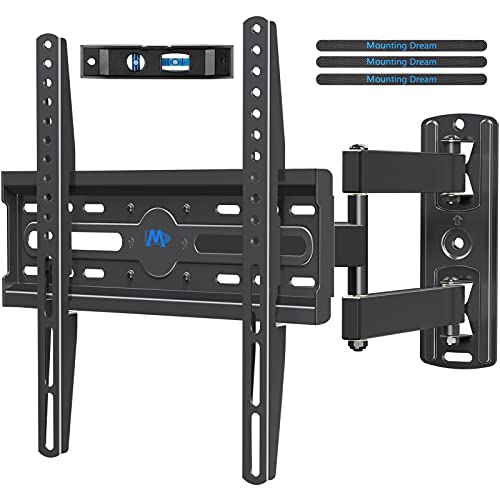
Mounting Dream TV Wall Mount Swivel and Tilt 26-55″
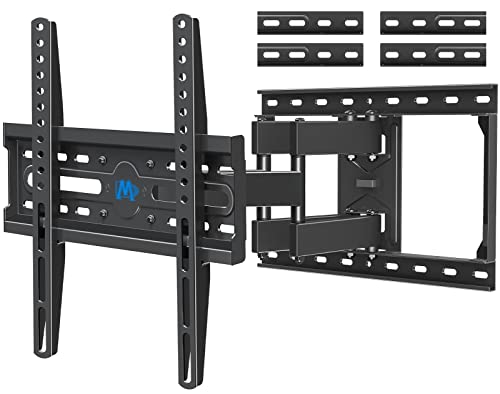
Mounting Dream TV Wall Mount for 32-70 Inch

Mounting Dream Full Motion TV Wall Mount 32-70″

Perlegear UL Listed Full Motion TV Wall Mount 42-90″

Mounting Dream UL Listed TV Wall Mount 42-84″

Mortice and Tenon Nylon 66 Drywall Anchors 25-Pack
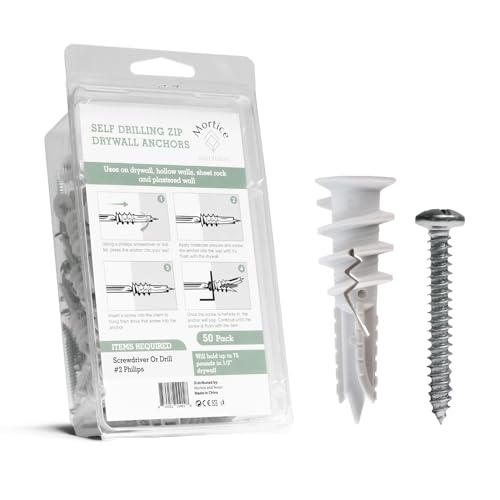
Mortice and Tenon Nylon 66 Heavy Duty Anchors 50-Pack

Mortice and Tenon Drywall Repair Anchors 100-Pack

Mortice and Tenon Drywall Repair Anchors 10-Pack
More On The Choices That Made The List
Bedroom TVs and small den setups tend to get overlooked when shopping for mounts, since most articulating brackets feel oversized for a 32-inch screen. The Mounting Dream TV Wall Mount Swivel and Tilt 26-55″ addresses that gap with a body rated for screens up to 60 pounds, sized to clear limited wall space without crowding a narrow media console.
The articulating arm lets you swing the panel out from the wall and tilt it downward, which helps when a ceiling fixture bounces glare across the screen. The mount’s maximum VESA pattern (the four-hole mounting standard on the back of your TV) of 400 x 400mm covers most televisions in its size range, so compatibility surprises are rare.
Useful Highlights
- Compact form factor suits smaller rooms where a bulky bracket would look out of scale.
- Full swivel and tilt range makes it easier to angle the screen away from window glare during the day.
- Low weight ceiling of 60 pounds keeps the bracket appropriate for lighter LED and OLED sets.
- Wide VESA support means most TVs between 26 and 55 inches attach without an adapter plate.
Worth Noting
- At 60 pounds of capacity, it cannot handle heavier mid-range TVs approaching the top of the 55-inch bracket.
- Hardware for masonry walls is often a separate purchase for renters facing concrete construction.
Made For
Apartment dwellers mounting a bedroom or kitchen TV between 26 and 50 inches where wall space and weight tolerance both matter.
Look Elsewhere When
Your screen exceeds 55 inches or weighs more than 60 pounds, in which case the Mounting Dream UL Listed TV Wall Mount 42-84″ provides a meaningful capacity upgrade.
Mounting a television for the first time is rarely a smooth afternoon, and the Mounting Dream TV Wall Mount for Most 32-70 Inch simplifies that learning curve. The brand frames the install as a three-step process, and the package includes a paper template, a small bubble level, and three cable ties for managing the HDMI and power cords once the bracket is on the wall.
Compared with the smaller Mounting Dream TV Wall Mount Swivel and Tilt 26-55″ that opens this list, this version reaches further up the size range, covering most 32 to 70-inch flat panels. The bubble level alone removes the need to hunt for a separate tool, and the included cable ties help keep the install visually clean.
The Case For It
- Paper template lets you mark screw positions without measuring twice, a small touch that saves real time.
- Bubble level ships in the box, so you can square the bracket without buying extra hardware.
- Cable ties included in the package help route wires along the arm after mounting.
- Wide 32 to 70-inch range covers the most common living room screen sizes in a single bracket.
Trade Offs
- Concrete anchors ship separately and require reaching out to the brand for the correct spec.
- The simplified install assumes standard 16-inch stud spacing, which can complicate older homes.
Who It Suits Best
First-time installers hanging a mid-size living room TV on a standard drywall-and-stud wall.
Where Another Pick Suits Better
Older homes with masonry walls fare better with the Perlegear UL Listed Full Motion TV Wall Mount 42-90″, which is rated for concrete and brick out of the box.
Glare is the most common reason people return to a wall mount after installation, and the Mounting Dream Full Motion TV Wall Mount 32-70″ tilts up 5 degrees and down 15 degrees to address exactly that problem. The articulating arm pulls the screen away from the wall, giving you a real range of motion rather than a fixed flat position.
Where the previous Mounting Dream TV Wall Mount for Most 32-70 Inch emphasized a simplified install, this full-motion model focuses on range of motion. The 99-pound capacity covers most mid-size panels, and the standard 16-inch stud spacing assumption matches typical North American framing.
Real-World Strengths
- Tilt range up and down noticeably reduces daytime glare from side windows.
- Articulating arm pulls the screen outward for cable access behind the panel without unmounting.
- 99-pound capacity covers most TVs in the 50 to 65-inch range comfortably.
Honest Caveats
- Stud spacing beyond 16 inches requires a separate bracket from the brand, an easy-to-miss detail.
- Full-motion arms extend several inches from the wall, which can look bulky in narrow hallways.
Right Fit For
Living rooms with off-center seating or window glare that demand real screen-angle adjustment.
Skip It When
You want a low-profile flush look in a small room, where the Mounting Dream TV Wall Mount for Most 32-70 Inch sits closer to the wall.
Large-format televisions above 75 inches have outpaced most home wall mounts, leaving shoppers with brackets that sag over time. The Perlegear UL Listed Full Motion TV Wall Mount 42-90″ reaches a 132-pound weight ceiling and accepts VESA patterns up to 600 x 400mm, covering the back panels of most flagship screens.
The mount installs on 8, 12, and 16-inch wood stud spacing, as well as concrete and brick walls, which makes it one of the more flexible picks on the list for non-standard construction. Owners mounting a 65-inch or larger screen in a basement with masonry walls find this combination particularly useful.
Useful Touches
- Masonry compatibility removes the need for separate concrete anchors in most basement or condo installs.
- 132-pound capacity handles the heaviest flagship TVs without stress on the arm.
- VESA support up to 600 x 400mm fits nearly every large-screen pattern on the market.
Points To Keep In Mind
- Stud spacing of 24 inches requires a separate extension bracket that must be requested from the brand.
- Confirming VESA, stud spacing, and wall type before purchase takes more planning than a basic mount.
Who Should Grab It
Anyone mounting a 75-inch or larger screen on a concrete, brick, or wide-stud wall where smaller brackets fall short.
Another Choice May Suit
Smaller 50 to 60-inch screens on standard drywall are well-served by the Mounting Dream Full Motion TV Wall Mount 32-70″ at a lower tier.
Family room centerpieces tend to live on dual-arm articulating mounts, and the Mounting Dream UL Listed TV Wall Mount 42-84″ uses six articulating arms to distribute weight across the bracket. That extra arm structure is the difference between a flat-panel feel that wobbles when the door slams and one that stays still.
Compared with the Perlegear UL Listed Full Motion TV Wall Mount 42-90″ reviewed just above, this Mounting Dream focuses on a slightly smaller 84-inch ceiling but extends the articulating structure with dual arms. The 16-inch wood stud spacing assumption fits most modern framing.
Reasons It Performs
- Six articulating arms hold larger screens steady even when bumped or nudged.
- Maximum VESA of 600 x 400mm covers the mounting pattern on most flagship TVs.
- UL Listed safety certification is a meaningful signal for households mounting heavy panels overhead.
- Compatible with Mounting Dream’s wider accessory ecosystem for cable management.
Things To Weigh
- Wood stud spacing of 16 inches is the working assumption, which complicates older framing layouts.
- At the upper end of its size range, the arm reach can be more than shallow consoles can accommodate.
Best Suited To
Households hanging a 65 to 80-inch screen in a primary living space where stability and arm reach matter more than flush mounting.
Reach For A Different Pick When
You want masonry compatibility right out of the box, in which case the Perlegear UL Listed Full Motion TV Wall Mount 42-90″ is the better match.
Self-drilling drywall anchors have changed the way renters and weekend renovators hang heavier items, since the anchor point cuts its own hole without a pilot bit. The Mortice and Tenon Reinforced Nylon 66 Drywall Anchors 25-pack pairs 25 plastic anchors with 25 sheetrock screws, rated for a 90-pound load limit per anchor in standard drywall.
The pack sits in the middle of the brand’s drywall anchor family, between the smaller 10-pack repair kit and the larger 50-pack remodel bundle reviewed later. For a single-room gallery wall or a mid-size TV mount, the 25-anchor count tends to land in the right zone without leaving a half-used jar in the toolbox.
The Good Stuff
- Self-drilling tip removes the need to pre-drill pilot holes, saving real time on larger installs.
- 90-pound rated capacity per anchor handles heavier shelves and mid-size TV brackets in standard drywall.
- Reinforced Nylon 66 material holds its shape better than generic plastic when under load.
Where It Is Less Suited
- Plaster walls and masonry require a different anchor type, and these self-drilling points are not built for that surface.
- Count of 25 anchors may leave a few leftover if your project is smaller, or run short on multi-room jobs.
Whose Shelf It Belongs On
Shelf builders and gallery-wall planners running a single mid-size project in standard drywall.
Consider Something Else When
You are tackling a whole-home remodel where the Mortice and Tenon Nylon 66 Heavy Duty Anchors 50-pack covers more ground per trip to the toolbox.
Remodel projects tend to burn through anchors faster than expected, and the Mortice and Tenon Reinforced Nylon 66 Heavy Duty Anchors 50-pack provides the buffer that smaller packs lack. With 50 wall anchors and 50 drywall screws, this kit is sized for multi-room work where a mid-pack would leave you stopping at the store before the final wall.
The 90-pound rated load per anchor matches the smaller 25-pack covered above, and the Nylon 66 formulation is the same family of plastic. The difference is purely about quantity, which matters most for whole-home projects and not at all for single-shelf installs.
Strengths Worth Knowing
- Count of 50 anchors supports a multi-room remodel without repeat shopping trips.
- Same 90-pound rated capacity as the smaller pack, so no compromise on per-anchor strength.
- Useful for TV mounts, wall decor, and furniture mounting in the same project.
Small Caveats
- Storage becomes a real consideration, since 50 anchors and 50 screws need a dedicated bin in the workshop.
- Overkill for a single shelf or towel rack job, where a smaller pack is the more practical pick.
Built With In Mind
Remodelers and contractors working across multiple rooms who want one anchor type consistent across every wall.
A Better Fit Elsewhere
For a single towel rack or quick fix, the Mortice and Tenon Drywall Repair Anchors 10-Pack is the more appropriately sized pick.
Fix-it kits for apartment dwellers walk a fine line between too few anchors and too many, and the Mortice and Tenon Reinforced Nylon 66 Drywall Repair Anchors 100-pack lands firmly on the high-count side. With 100 anchors and 100 carbon steel screws, the pack is sized for property managers and renters who patch holes repeatedly.
The 90-pound rated load matches the rest of the brand’s drywall anchor family, including the 50-pack and 25-pack covered above. The carbon steel screws offer a slightly harder driving feel than the standard screws in the smaller 25-pack, which helps when re-anchoring into patched drywall.
Features That Help
- Count of 100 covers repeated patch jobs in rental units without restocking.
- Carbon steel screws drive more cleanly into repaired drywall than standard zinc options.
- Same 90-pound rated load as the smaller packs, so strength is not compromised for quantity.
A Few Limitations
- 100 anchors is far more than a single renter apartment typically needs, and surplus anchors tend to clutter a small toolbox.
- Carbon steel screws are more prone to surface corrosion in humid bathrooms over time.
Perfect Match For
Landlords, property managers, and serial renters who anchor and re-anchor the same walls across multiple tenants.
Where A Sibling Pick Shines
A single renter in a small apartment will find the Mortice and Tenon Drywall Repair Anchors 10-Pack a more practical scale.
Small towel rack installs and one-off repairs rarely justify a 50-count bulk pack, and the Mortice and Tenon Reinforced Nylon 66 Drywall Repair Anchors 10-pack keeps the project to a manageable scale. With 10 anchors and 10 Phillips flat head wood screws, the kit covers a single weekend job without leaving surplus hardware in a junk drawer.
The 90-pound rated load per anchor matches the larger kits in this brand family, including the 25-pack and 50-pack. The Phillips flat head screws differ slightly from the carbon steel screws in the 100-pack version, leaning more toward general-purpose wood and drywall use than high-torque driving.
Good Reasons To Consider
- Count of 10 anchors suits a small towel rack or single gallery wall without waste.
- Compact packaging fits a kitchen drawer, not a workshop shelf.
- Same 90-pound rated load as the larger bulk kits in the family.
Practical Considerations
- Only 10 anchors means even a modest project may run short, sending you back to the store for more.
- Phillips flat head screws strip more easily than Torx or hex heads when driven with a worn bit.
Who Will Love This
DIYers hanging a towel rack, a small floating shelf, or a single wall-mounted hook in a rental apartment.
Swap It Out When
Your project spans more than one wall or includes a mid-size TV mount, where the Mortice and Tenon Nylon 66 Drywall Anchors 25-Pack is the right next step up.
What To Weigh Before Choosing Wall Anchors For Tv Mounting
Knowing your wall type comes first, since drywall, plaster, concrete, and brick each demand a different anchor category. Stud spacing is the second checkpoint, and 16 inches on center is the most common framing assumption, though older homes often run 12 or 24 inches. VESA compatibility, the four-hole pattern measured in millimeters on the back of your TV, has to match the bracket or you’ll be buying an adapter plate.
Weight capacity deserves a buffer rather than a match, since a 60-pound TV on a 60-pound mount leaves no margin for vibration and dynamic load. For a 50-inch screen in a busy living room, a 99-pound or higher ceiling is a more comfortable target. Cable access is a smaller but real consideration, since some brackets fold flush while articulating arms sit several inches off the wall.
Key Considerations Across These Picks
Traps First Timers Fall Into
The most common mistake is treating the included hardware as universal, since most mounts ship with wood-stud screws and not concrete anchors. Older homes and basement installs hit a wall when the bag of screws runs out halfway through the project. Confirming wall material before opening the box saves a return trip and a half-finished bracket.
A second slip is ignoring stud spacing, since 24-inch spacing is common in mid-century construction and the standard 16-inch assumption does not apply. For TVs over 55 inches, missing a stud can mean a bracket that pulls away from the wall over months, not hours.
When Paying More Pays Off
Spending more on a mount typically buys heavier-gauge steel, additional articulating arms, and safety certifications like UL Listing. For screens above 65 inches, the upgrade is often the difference between a wobble-free install and a panel that drifts every time the door closes.
Premium anchor kits tend to include Nylon 66 material, higher load ratings, and matched screw counts that prevent mid-project shortages. For remodelers and landlords running multiple installs, the higher upfront cost per anchor usually returns as time saved and fewer repeat trips to the hardware aisle.
Frequently Asked Questions
How do I know if my wall can support a TV mount?
Drywall with wood studs is the most common support surface, and 16-inch stud spacing covers most modern construction. Concrete and brick walls also work, but they require a mount rated for masonry along with the correct drill bit and sleeve anchors.
What is VESA and why does it matter?
VESA is the four-hole pattern on the back of your TV, measured in millimeters, that the wall mount attaches to. Mismatched VESA patterns mean the bracket screws will not line up with the holes on your screen, and you will need an adapter plate or a different mount.
Can I mount a TV without hitting a stud?
You can use heavy-duty drywall anchors rated for the weight of your screen, though this approach is generally less secure than stud mounting. For most mid-size TVs, hitting at least one stud is strongly recommended, and many brackets allow for a two-stud installation across the wall.
How much weight do drywall anchors actually hold?
Self-drilling nylon anchors in standard half-inch drywall are typically rated between 50 and 90 pounds per anchor, depending on the brand and material. The real-world figure is usually lower, and the rating assumes the drywall itself is in good condition without water damage or prior patching.
Do I need a special drill bit for concrete walls?
Yes, a masonry or concrete bit matched to the anchor diameter is required, and a standard wood or metal bit will dull quickly against concrete. A hammer drill makes the work significantly faster, though a regular drill can handle a few small holes for a single TV mount.




