
A bad tile saw turns a Saturday bath remodel into a string of chipped edges and slow, dusty work. Anyone tiling a backsplash, a shower surround, or a patio knows the blade matters as much as the saw, and matching the right tool to the right material saves hours of frustration. This roundup covers seven solid options across full-size saws, handheld cutters, and replacement diamond blades that slot neatly into a sub-$500 tool budget.
The Main Contenders
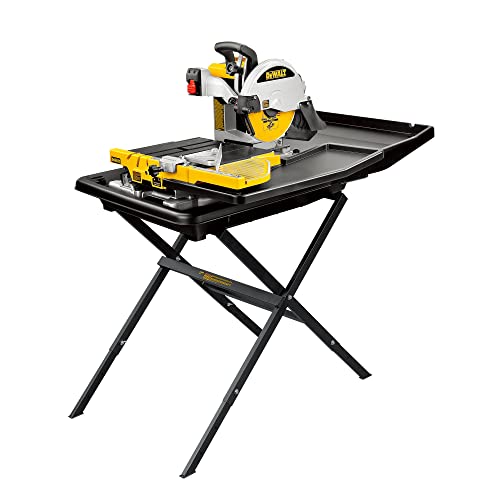
DEWALT Wet Tile Saw with Stand 10-Inch (D24000S)

DEWALT Wet Tile Saw with Stand 10-Inch 15-Amp (D36000S)

DEWALT DWC860W 4-3/8-Inch Wet/Dry Masonry Saw

FACHLICH 10-Inch Diamond Wet Saw Blade

FACHLICH 4-Inch Diamond Tile Saw Blades 2-Pack

FACHLICH 4-1/2-Inch Diamond Tile Saw Blade 115mm

FACHLICH 12-Inch Metal Cutting Diamond Blade 300mm
Taking A Closer Look At The Options
The DEWALT D24000S has earned a long track record on job sites, and the included rolling stand turns it into a true workstation rather than a benchtop tool. The 10-inch blade handles ceramic, porcelain, and stone without complaint, and the integrated water pan keeps slurry contained during long sessions.
It weighs 69 pounds and runs on a standard 120V outlet, so it fits a garage or basement shop without dedicated wiring. Compared with the larger D36000S later in this list, the D24000S is the friendlier pick for most homeowners who still want pro-grade results.
The Good Stuff
- 10-inch blade with a 1.5 HP motor tackles porcelain, ceramic, and stone
- Plumbing-grade water pan with submersible pump recirculates cleanly
- Side and rear water trays catch overspray, keeping the work area drier
- Rip guide and angle guide support accurate straight and miter cuts
- Rolling stand folds for storage and saves your back during setup
Things To Consider
- At 69 pounds, it takes two people to move comfortably
- Rip capacity is smaller than the D36000S, so very large format tile will not fit
Key Product Details
Who It Suits Best
Renovators and serious DIYers who want a full-size saw that can handle multiple rooms of tile work without feeling like a toy.
Where Another Pick Suits Better
Anyone cutting very large 36-inch porcelain slabs should reach for the DEWALT D36000S, which offers a far longer rip capacity.
Step up to the D36000S and the difference shows up in capacity, not in quirks. The 15-amp motor and high-capacity table let you rip a 37-inch cut or split a 36-inch tile in half, which is a real headache-saver when large-format porcelain is on the order.
The 18 inches of left-of-blade clearance means you can position big pieces without constant rebalancing. The trade-off is a heavier footprint, so it lands best in shops with dedicated floor space rather than a folding laundry-room setup.
Features That Help
- 37-inch rip capacity handles wide tile and plank layouts
- 18 inches of cutting clearance left of the blade supports large pieces
- 15-amp motor rated at 1,220 MWO delivers sustained cutting power
- 8-1/2 inch crosscut capacity suits sill and notch work
- Plumbing-grade water management keeps the cut line cool and clear
Worth Noting
- Substantial size, so it wants permanent shop space rather than a foldaway corner
- More saw than a weekend backsplash really calls for
Feature Snapshot
Made For
Pro tile installers and ambitious remodelers who regularly work with large-format porcelain and need the reach to cut it in one pass.
Skip It When
For small bathroom floors and one-off mosaics, the DEWALT D24000S offers the same DEWALT build in a friendlier package.
Not every cut needs a bench saw, and the DWC860W is built for the spots a 10-inch cannot reach. The 4-3/8-inch diamond blade trims stone, porcelain, and concrete up to about 3 centimeters deep, and the 10.8-amp motor pushes through granite without bogging.
Run it wet for clean, chip-free cuts on finished tile, or dry for rough framing cuts on the deck. The continuous-rim blade is a clear upgrade from segmented designs when you care about the visible edge.
Where It Excels
- 10.8-amp motor handles granite, porcelain, and concrete
- 4-3/8-inch continuous-rim blade delivers chip-free edges on finished tile
- Up to 3 cm cutting depth in a single pass
- Wet and dry capability adapts to jobsite conditions
Points To Note
- Small blade limits the size of tile you can slice in one go
- Requires water supply setup when running wet, which adds prep time
Right Fit For
Detail-oriented remodelers and masons who need a portable cutter for notches, outlet openings, and small slab work where a bench saw cannot reach.
Not Your Match When
Anyone doing a full-room floor installation will want the DEWALT D24000S or D36000S for faster, more accurate straight cuts across whole tiles.
Sometimes the existing saw is fine, and the blade is just tired. This FACHLICH 10-inch diamond blade is a hot-pressed sintered design aimed at refreshing an aging saw without a big outlay.
At 250mm diameter with a 10mm segment height and #60/70 grit, it cuts ceramic, porcelain, marble, and granite either wet or dry. The reinforced ring core adds stability so the cut stays straight on longer passes.
What Earns Its Place
- 10-inch diameter fits most 250mm wet saw arbors
- 10mm segment height extends working life on dense tile
- Works wet or dry depending on the jobsite setup
- Reinforced ring core helps keep the cut straight and stable
Honest Caveats
- A 1.8mm thickness is on the thinner side, so hard drops can chip a segment
- No bundled arbor adapter, so verify your saw’s bore size before ordering
Quick Facts
Best Suited To
Anyone with a working 10-inch wet saw who needs a fresh blade for a single project and wants to keep the spend modest.
Look Elsewhere When
If the saw itself is showing its age or you need the rolling stand and pump out of the box, the DEWALT D24000S bundles everything in one package.
Two 4-inch diamond discs in one pack is a smart way to keep a small project moving. The 105mm size pairs with compact wet saws and angle grinders, and the 10mm segment height is generous for the diameter.
Cutting ceramic, porcelain, marble, and granite at #60/70 grit gives a balanced cut speed and edge quality. The reinforced ring core keeps the wheel from wandering on longer passes.
Useful Strengths
- Two-pack format means a spare is always on hand
- 105mm diameter fits compact wet saws and grinders
- Works dry or wet depending on the tool setup
- Reinforced core keeps the cut stable on extended runs
Small Caveats
- 1.2mm thickness is delicate, so handle with care during swaps
- Small diameter limits the size of tile you can trim in a single pass
Who Should Grab It
Homeowners running a compact wet saw for trim, mosaic, and small-format tile work who want a backup blade ready when the first one dulls.
A Better Fit Elsewhere
For larger format tile, the FACHLICH 10-Inch Diamond Wet Saw Blade covers the cuts this 4-inch disc simply cannot reach.
The 4-1/2-inch size is the most common angle grinder wheel in the shop, and this FACHLICH disc turns that grinder into a tile and stone cutter. The 25mm segment height is unusually tall for the size, which usually means a longer working life.
A 22.23mm bore with a reducer washer covers both standard grinder and 15.875mm mini-saw arbors. The 1.7mm thickness is thick enough to stay rigid while still leaving a clean edge.
Why It Works Well
- 22.23mm bore with reducer washer fits both grinder and small saw arbors
- 25mm segment height extends blade life well past typical 4-1/2-inch discs
- Works dry or wet across ceramic, porcelain, marble, and artificial stone
- Cuts and grinds edges, reducing the need to swap accessories
Trade Offs
- 1.7mm thickness is on the thicker side, so the cut kerf removes a bit more material
- Dry cutting produces more airborne dust than a true wet saw setup
Whose Shelf It Belongs On
Anyone who already owns an angle grinder and wants one accessory that handles both trimming tile and smoothing edges on the same jobsite.
Reach For A Different Pick When
For full-room tile installation, the DEWALT DWC860W provides a purpose-built wet cutting experience in a similar handheld form factor.
Most tile blades refuse to touch metal, but this 12-inch all-purpose diamond wheel leans the other way and aims to cut both stone and steel. A 1-inch arbor and 3mm thickness give it the rigidity to chew through rebar, sheet metal, and ductile iron pipe at up to 5,100 RPM.
It earns its place on jobsites where tile, masonry, and metal framing all show up in the same day. For pure ceramic and porcelain cuts, a purpose-built tile blade will leave a cleaner edge, so the use case matters.
What Works In Its Favor
- 12-inch diameter covers deep cuts in masonry and thick metal
- 3mm thickness adds rigidity for heavy stock and rebar
- 1-inch arbor suits hand-held power cutters and masonry saws
- 5,100 RPM max rating matches most 12-inch cut-off machines
Points To Keep In Mind
- All-purpose design leaves a rougher edge on glazed tile than a dedicated tile blade
- 3mm kerf removes more material per cut than thinner specialty wheels
Perfect Match For
Contractors who bounce between tile, concrete, and metal cutting on the same day and want one wheel in the truck instead of three.
Swap It Out When
For clean, finished tile edges on a visible backsplash or shower wall, the FACHLICH 10-Inch Diamond Wet Saw Blade gives a noticeably smoother cut.
What Matters Most Before Choosing Wet Tile Saws Under 500
Blade Size And The Tile You Cut
A 10-inch blade is the workhorse for ceramic and porcelain. Larger 12-inch blades add reach but typically only earn their keep on masonry or metal cutting rigs. Smaller 4 to 4-1/2-inch discs shine on detail work, notches, and grinder-based trimming. Match the diameter to the largest single tile you expect to slice in one pass, and you avoid awkward partial cuts.
Wet Vs Dry Cutting
Wet cutting uses a constant water flow to cool the blade and suppress dust, and it produces noticeably cleaner edges on glazed tile. Dry cutting is faster to set up and works in tight spaces, but it generates more airborne dust and heat, which shortens blade life. For indoor remodeling, wet cutting is the cleaner, healthier routine.
Power And Motor Draw
A 1.5 to 1.6 HP motor handles most homeowner tile projects without strain. Models rated at 15 amps and 1,200+ MWO give contractors sustained power through dense porcelain. Lighter saws and grinders run smaller motors, which work fine on small jobs but slow down on thick stone.
Stand, Water System, And Setup Time
Rolling stands and integrated water pans transform a bench saw into a workstation. Without them, you spend setup time propping up the tool and routing a water source. If you plan to work in one spot for a long session, the stand and pump setup pays back quickly.
Picking The Right Wet Tile Saw Setup
Traps First Timers Fall Into
The most common mistake is grabbing a metal-cutting diamond blade for a porcelain backsplash. The cut looks rough, and the edge chips at the glaze. Another slip is underestimating water management. Without a proper pan and pump, slurry ends up on the floor and the blade runs hot, shortening its life. A third is buying a blade without checking the arbor size, which turns a great deal into a return trip.
When Paying More Pays Off
Stepping up from a handheld grinder to a full-size bench saw usually costs more but pays back in cut accuracy and reduced chipping on visible edges. Higher-tier saws add rolling stands, larger water pans, and longer rip capacity, all of which matter on multi-day projects. For a single small backsplash, a good blade on a portable saw is plenty. For a full bathroom, the upgrade saves hours and a few broken tiles along the way.
Frequently Asked Questions
What size wet tile saw do most homeowners need?
A 10-inch wet tile saw covers the vast majority of ceramic and porcelain tile under 24 inches. Larger blades earn their place mainly on commercial or large-format work.
Can a wet tile saw cut porcelain without chipping?
Yes, with a continuous-rim diamond blade and steady water flow, most porcelain tile cuts cleanly. Pushing too fast or using a segmented blade is the usual cause of chipping.
Do I need water for every cut?
Wet cutting extends blade life and reduces dust, but many diamond blades are rated for dry cutting in short bursts. For indoor projects, a water hookup is worth the setup.
How long does a diamond tile saw blade last?
Diamond blade life depends on material hardness, cut frequency, and cooling. For typical homeowner use on ceramic and porcelain, a good blade handles several rooms of tile before needing replacement.
Can a wet tile saw also cut metal or wood?
Specialty all-purpose diamond blades can cut both, but a standard tile blade is not designed for metal or wood. Using the wrong blade risks damage to the blade and poor cut quality.