A tangled bundle of low-voltage cable behind a rack, a mystery run through drywall, an alarm loop that drops out once a week: those are the moments a good wire toner earns its keep. The picks below cover the span from a quick non-contact voltage check to full network-cable tracing, so the right tool matches the job instead of forcing you to overbuy.
A Fast Comparison Of The Options

Fluke 117 Digital Multimeter, Non-Contact AC Voltage Detection

Fluke 323 Clamp Meter for Commercial/Residential Electricians

Fluke 1AC II VoltAlert Non-Contact Voltage Tester

TEMPO 620K-G Security and Alarm Tone and Probe Kit
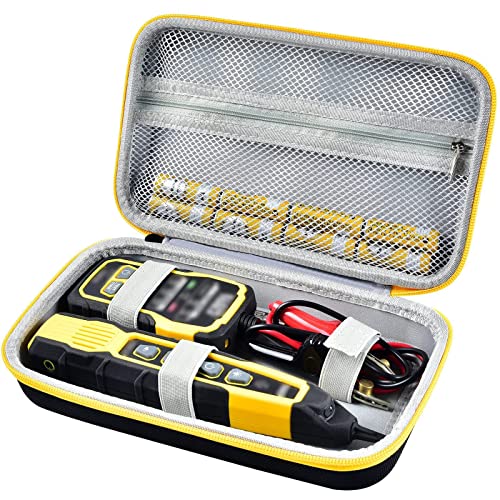
Case for Klein Tools VDV500 Wire Tracer Tone Generator

TEMPO Communications 701K-G Wire Tracer Tone and Probe Kit

Network Cable Tester, RJ45 Wire Tracer Kit, Ethernet Cable Toner

NOYAFA Network Cable Tester with Optical Power Meter & VFL
The Picks, Examined More Closely
You reach for the Fluke 117 when a job outgrows a non-contact voltage tester but does not call for a full clamp meter. Its non-contact AC voltage detection (the same VoltAlert-style sensing the pocket Fluke uses) lets you check a wire or outlet before you commit a probe to it. AutoVolt picks AC or DC automatically, so you spend less time dialing the dial and more time reading the screen.
For a residential electrician or a serious DIYer pulling a circuit apart at the panel, the 117 covers the everyday measurements that matter: resistance, continuity, frequency, capacitance, and min/max/average tracking. Low-impedance mode is the quiet hero here, helping suppress false readings from ghost voltage on long cable runs. Compared to the dedicated clamp and toner picks further down, the 117 is more of a generalist, but the build, the backlight, and the True RMS (a sensing method that reads distorted waveforms accurately) read-out make it the meter you trust when the reading actually has to be right.
A Strong Showing
- Non-contact voltage detection adds a safety pass before probes touch a conductor
- AutoVolt removes the AC versus DC toggle step on most readings
- Low-impedance input helps silence false readings from ghost voltage on long runs
- White LED backlight keeps the screen readable in dim panels and junction boxes
- True RMS keeps non-linear loads (like dimmers and LED drivers) from skewing readings
Things To Consider
- Not a clamp meter, so you cannot read current around a conductor without breaking the circuit
- Runs on a battery that owners commonly replace annually with regular field use
Feature Snapshot
Who It Suits Best
Residential electricians and serious DIYers who want a single meter for live checks, panel work, and general troubleshooting without stepping up to a full clamp meter.
Where Another Pick Suits Better
The Fluke 323 Clamp Meter is a better match for anyone measuring current around a live conductor without breaking the circuit.
When the question is “how much current is this actually pulling right now,” the Fluke 323 answers it without breaking the circuit. The clamp jaw slides around a single conductor and reads AC current up to 400 amps, which covers everything from a residential subpanel feeder to a light commercial HVAC line. The unit is part of Fluke’s general-purpose clamp family, sitting in that grab-and-go slot between a basic multimeter and a more advanced power-quality tool.
For a working electrician pulling a panel cover, the 323’s True RMS sensing keeps readings honest on the dimmer and LED loads that throw cheap meters off. AC and DC voltage up to 600 V, plus resistance and continuity, round it out as a one-tool answer on a service call. The 2-year warranty and included soft carrying case are practical touches on a tool that lives in a truck. Compared to the Fluke 117 reviewed above, the 323 trades probe-based precision for the ability to read current around a live conductor, which is a different job entirely.
Points In Its Favor
- Clamp jaw reads AC current up to 400 A without breaking the circuit
- True RMS keeps readings accurate on dimmer and LED loads
- Soft carrying case included for daily truck-and-van use
- 2-year warranty backing the purchase
Worth Noting
- Does not measure DC current, so DC solar and battery work needs a different tool
- Jaw size can feel tight in crowded panels with bundled conductors
- No non-contact voltage detection, so you still need a separate tester for quick live checks
Built With In Mind
Commercial and residential electricians who need fast, accurate current readings on live circuits without powering anything down.
Look Elsewhere When
The Fluke 1AC II VoltAlert is a better fit for someone who just needs a quick “is this wire live” check before swapping an outlet.
The 1AC II is the size of a thick marker and the kind of tool you forget is in your shirt pocket until you need it. Hold the tip near an outlet, a wire, or a breaker, and it lights up red and chirps when AC voltage sits in the 90 to 1000 V range. It is a sanity check, not a measurement tool, and that narrow focus is exactly why it earns a slot in any electrician’s or homeowner’s kit.
The continuous self-test is the underrated feature: the device checks itself on startup so you actually trust the silence when nothing beeps. The CAT IV 1000 V safety rating means it is rated for the kind of outdoor and service-entrance work that cheaper pens are not. For an outlet swap, a tripped-breaker investigation, or a quick pass across a panel, the 1AC II is faster than dragging out the Fluke 117. It does not replace a multimeter for actual readings, but as a first-touch safety step, it is hard to beat.
What Pays Off
- Tip glows red and the beeper sounds within the 90 to 1000 V AC range
- Continuous self-test on startup so silence actually means safe
- CAT IV 1000 V rating covers service-entrance and outdoor work
- Pocket-sized body clips onto a shirt pocket or tool pouch
Trade Offs
- No numeric readout, so it confirms presence of voltage but not the level
- Pen-style form factor does not stand on its own for hands-free testing
- Not a substitute for a proper multimeter when you need measured values
Made For
Homeowners, HVAC techs, and electricians who want a fast first-pass safety check before touching any conductor.
Skip It When
The Fluke 117 is a smarter call if you need measured values like resistance, capacitance, or frequency, not just a yes-or-no voltage check.
Security and fire-alarm loops are their own troubleshooting world, and the TEMPO 620K-G is purpose-built for it. The kit pairs a tone generator with an inductive probe so a single technician can send a signal down an alarm wire and follow it through walls, ceilings, and conduit without a second person on the other end. The high-volume audible indicator is loud enough to hear in a mechanical room or a noisy job site, which matters when you are tracing a fault alone.
Where the 620K-G separates itself from a general wire toner is its targeting of intermittent alarm faults, the kind that pass a basic continuity check and then trip again at 2 a.m. The signal injection helps you find a marginal conductor or a corroded splice that a continuity buzzer would miss. For low-voltage data and telecom runs, the TEMPO 701K-G covered below is the more general-purpose pick, but for alarm and security work, the 620K-G is the kit designed for that specific workflow.
Positive Takeaways
- Tuned for security and alarm circuit diagnostics, not generic telecom runs
- High-volume probe enables one-person tracing through walls and ceilings
- Designed to surface intermittent faults that pass a basic continuity check
- US-based quality control on the kit
Room For Improvement
- Narrower use case than general-purpose toners, so it is overkill for a one-off home project
- Two-piece kit takes up more pouch space than a single pen-style tester
Best Suited To
Security and alarm installers who troubleshoot intermittent loops on customer sites and need a kit that can drive and chase a signal through real building construction.
Another Choice May Suit
The TEMPO 701K-G Wire Tracer is a better match for voice, data, and video cabling where the focus is identifying lines in a bundle rather than chasing alarm faults.
This is the only pick on the list that is not a tester. The casmilee case is a soft organizer built around the Klein Tools VDV500 series tracer, with elastic bands to hold the toner and probe in place and a mesh pocket for AA batteries, adapters, and the small accessories that always end up loose in a tool bag. If you already own the matching Klein tracer, the case is the missing piece that keeps the kit from rattling around in a truck drawer.
Storage is the whole job here, so the honest read is that you should not buy it on its own without a Klein VDV500 in hand. For a field tech who pulls this kit out of the truck two or three times a week, the case extends the life of the tracer by keeping the probe tip and the toner jack from getting crushed. Compared to the actual testers in this list, this one is a complement, not a competitor. Anyone shopping for a tracer itself should be looking at the TEMPO kits or the multi-function AOBOTESKPRO and NOYAFA units reviewed below.
What Makes Sense
- Custom-shaped pockets for the Klein VDV500-705, VDV500-820, and VDV500-063 tracer modules
- Mesh pocket for AA batteries, adapters, and small accessories
- Elastic bands hold the toner and probe in place during transport
Worth Bearing In Mind
- Bag only, the toner, probe, and accessories are not included
- Limited usefulness without the matching Klein tracer it is built around
The Right Fit
Klein Tools VDV500 tracer owners who want a dedicated, organized case rather than a loose kit in a truck drawer.
Swap It Out When
The TEMPO 701K-G Wire Tracer is a better match for someone who still needs to buy a tracer and probe kit, since the Klein case ships empty.
The TEMPO 701K-G is the wire tracer most low-voltage techs reach for when they need to sort a bundle of unidentified cables. The tone generator drives a signal onto a conductor, and the inductive probe picks it up at the other end so you can identify a specific line in a mess of similar ones. It also tracks live voltage on the line, checks for opens, and follows a cable through non-conductive material like drywall or wood, which covers the bulk of residential and small commercial work.
The LED tone proximity indicator speeds up the search by lighting up as you get closer to the energized conductor, which is a real time-saver in a crowded telecom closet. For voice, data, and video cabling, the 701K-G is the kind of tool that has been the trade standard long enough that you will see it in many technicians’ hands. The TEMPO 620K-G above leans toward security and alarm work, while the 701K-G leans toward telecom and data, so the choice between the two really comes down to which system you spend more time tracing.
A Favorable Mix
- Built specifically for voice, data, and video wire tracing
- LED tone proximity indicator narrows the search as you get closer to the conductor
- Monitors line voltage and checks for open circuits during tracing
- Traces through non-conductive material like drywall and wood
Honest Caveats
- Not designed for live AC power tracing the way a clamp meter is
- Two-piece kit is bulkier than a single pen-style tester
- Specialty tool, so casual DIYers may not use it often enough to justify it
Whose Shelf It Belongs On
Low-voltage, telecom, and structured-cable installers who need a reliable workhorse for tracing and identifying lines in real job-site conditions.
Where A Sibling Pick Shines
The TEMPO 620K-G is the better choice for security and alarm work where the priority is chasing intermittent faults rather than sorting telecom bundles.
The AOBOTESKPRO kit leans into the “one box, many tests” idea of a modern network tool. It pairs a toner and probe with cable length measurement, a PoE (Power over Ethernet, meaning voltage delivered to a device through the data cable) check, port flash, a visual fault locator (VFL, a red laser that shows breaks and bends in fiber), an optical power meter (OPM, which measures light strength on a fiber run), and NCV detection. For an IT field tech or a network admin who drives to a different site every day, the consolidation is the appeal.
The RJ45 (the standard eight-pin Ethernet jack) focus and CAT5 through CAT8 support mean it covers the cabling you actually find in modern offices, including shielded runs. NCV detection adds a quick live-wire check before you touch a panel. Compared to the dedicated TEMPO tracers, this kit trades a single-discipline refinement for breadth. If you want one tool that handles copper tracing, fiber continuity, and live-cable identification, this is the one. The NOYAFA unit reviewed next is a close cousin with a similar feature list, so the choice there often comes down to the specific cable job in front of you.
Where It Excels
- Nine diagnostic functions in a single kit, including length test and PoE check
- CAT5 through CAT8 UTP (unshielded twisted pair) and STP (shielded twisted pair) coverage for modern Ethernet runs
- Visual fault locator and optical power meter cover fiber alongside copper
- Port flashing helps identify the switch side of a live cable
Points To Note
- Many functions in one box means a steeper learning curve than a single-purpose toner
- Some owners report the menu navigation takes patience on a small screen
Quick Facts
Perfect Match For
Network admins, IT field techs, and pros who handle both copper and fiber runs and want one consolidated tool rather than a drawer of single-purpose testers.
Consider Something Else When
The NOYAFA Network Cable Tester is a smarter pick if you mainly work fiber and want a slightly different feature balance with an optical power meter in the kit.
NOYAFA has built a name in budget-friendly cable testers, and this model leans into the side of the job that involves fiber. The optical power meter and visual fault locator cover the two most common field checks on a fiber run, while the toner and probe handle the copper side. For a tech who walks into a mixed-cable environment and does not want to carry two separate tools, that combination is the entire value proposition.
The kit also covers continuity, length measurement, PoE, port flash, and NCV detection, so the feature list closely shadows the AOBOTESKPRO reviewed above. In practice, the choice between the two often comes down to brand familiarity and the specific cable types in your daily work. Both are aimed at IT professionals and serious home-network DIYers rather than casual users. If fiber comes up even occasionally, the OPM and VFL pair earns its place in the kit, and the rest of the functions make sure the copper side is covered too.
Advantages To Know
- Optical power meter and visual fault locator cover both common fiber field checks
- Toner and probe handle copper runs in the same kit
- NCV detection adds a live-wire safety step before probe contact
- Port flashing and PoE check round out the network-admin use cases
Practical Considerations
- Multi-function interface takes practice to navigate quickly on a small screen
- Not a replacement for a dedicated fiber fusion splicer or OTDR (optical time-domain reflectometer) for advanced fiber troubleshooting
Who Should Grab It
IT pros and home-network tinkerers who deal with both copper and fiber cabling and want one tool that handles the common checks on both.
Not Your Match When
The TEMPO 701K-G Wire Tracer is a better fit for someone focused on telecom and structured cabling rather than mixed copper-and-fiber work.
What To Weigh Before Buying a Wire Toner
The right tool depends entirely on what kind of wire you trace and how often. A homeowner swapping an outlet has no business carrying a multi-function fiber tester, and a telecom tech would be slowed down by a pen-style voltage checker that only does presence detection. Matching the tool to the job keeps the kit lean and the troubleshooting fast.
Safety ratings and measurement range. Look for a CAT rating (a safety category describing the maximum voltage and energy the tool can survive) that matches the environment you work in, and a voltage range that covers the lines you actually touch. A 90 to 1000 V AC window covers nearly every residential and light commercial scenario, and CAT III or CAT IV is the right tier for panel and service-entrance work.
Tracing capability versus single-point detection. A non-contact voltage tester like the Fluke 1AC II confirms presence but does not identify a wire in a bundle. A toner and probe pair, like the TEMPO kits, drives a signal and chases it, which is what you need for cable identification. Multi-function network testers add length, PoE, and fiber checks, which is more than most people need but invaluable for IT work.
Form factor and daily carry. Pocket-sized pens disappear into a shirt pocket, clamp meters slide into a tool bag, and two-piece kits with a probe and generator take a dedicated slot in a truck drawer. Weight and battery type (most of these run on AA cells, with some using coin cells) shape how often you actually reach for the tool. If the kit is awkward, it stays in the truck, and the job gets done with a guess.
Common Shopping Slip Ups and Where The Extra Money Goes
Where Shoppers Go Wrong
The most common mistake is buying a tester that only does presence detection when the actual job is cable identification. A non-contact voltage tester tells you a wire is live, but it cannot tell you which wire in a bundle of twelve is the one you need to cut. For tracing through walls or sorting bundled low-voltage lines, you need a toner and probe, not just a voltage pen.
The flip side is overspending on a multi-function network tester for occasional home use. The AOBOTESKPRO and NOYAFA units carry nine functions in one box, but most of those features only earn their keep for IT pros who use them every week. A homeowner wiring a new thermostat or a sound system will not open the PoE check or the optical power meter often enough to justify the extra cost.
The Upgrade Payoff
Higher-tier models earn their price through build quality, narrower tolerances, and brand-specific reputations for accuracy. A Fluke meter or a TEMPO tracer commands more because the reading is reliably right the first time, and that saves labor on a paid service call. For a working pro, that saved hour pays for the tool in a handful of jobs. For a hobbyist, the upgrade is harder to justify, and a solid mid-tier unit is often the smarter spend.
Frequently Asked Questions
What is a wire toner used for? A wire toner drives a signal onto a cable so a paired probe can identify it inside a bundle or behind a wall. It is the tool of choice for sorting unknown low-voltage lines.
Do I still need a multimeter if I have a toner? Yes, a toner identifies cables, while a multimeter measures voltage, resistance, and continuity on the identified line. The two tools cover different parts of the same job.
Can a wire toner trace live AC power lines? Most toners are designed for de-energized low-voltage lines. For live AC work, a clamp meter or a non-contact voltage tester is the safer pick.
What is the difference between a toner and a tracer? The terms are often used interchangeably. Strictly speaking, the toner is the generator that injects the signal, and the tracer is the probe that follows it.
Are multi-function network testers worth the cost? For IT professionals who use them weekly, the breadth of features pays for itself. For occasional residential work, a dedicated toner or multimeter is usually the better value.