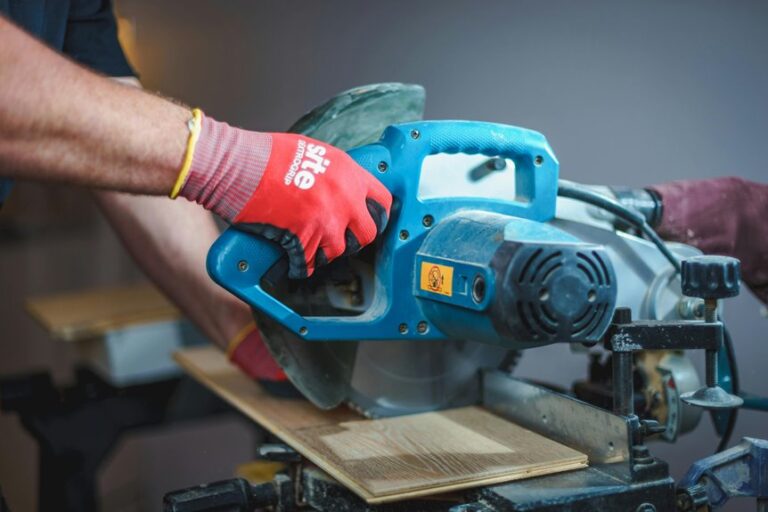
If you cut trim, crown, or framing often, a double bevel miter saw can feel like a real time saver. You won’t need to flip boards as much, and that can keep your cuts cleaner and your day less frustrating. But the extra cost and size can make you pause, especially if your projects are small. The real question is whether those smooth, fast cuts matter enough for the work you do next.
What Is a Double Bevel Miter Saw?
You get a bevel mechanism that lets you make angled cuts without flipping your board over every time. That means you stay in your groove and keep your work moving smoothly.
With this setup, you can cut crown, trim, and framing pieces with less fuss and fewer chances to lose your mark.
Good safety features also matter, because they help you work with more control while you handle angled cuts.
When you want cleaner results and less hassle, this saw gives you a confident, friendly way to tackle projects that ask for flexibility on both sides.
Double Bevel Miter Saw vs. Single Bevel
When you compare a double bevel miter saw with a single bevel model, the biggest difference is how much work you save on angled cuts. With a double bevel saw, you tilt both ways, so you keep your groove and stay in control. With a single bevel saw, you flip the board for opposite cuts, which can throw off your flow. That’s where bevel symmetry really helps, because your cuts match more naturally on both sides.
You also get steadier blade calibration since you’re not constantly resetting the workpiece. If you like clean trim, shared focus, and fewer “wait, which way now?” moments, the double bevel feels friendlier. The single bevel still works well, but the double bevel gives you smoother motion and a more confident fit.
When a Double Bevel Miter Saw Saves Time
Because a double bevel miter saw tilts both left and right, it saves you real time the moment your project needs cuts in opposite directions. You don’t stop to flip boards, so your workflow optimization stays smooth and your rhythm stays intact.
That matters when you’re working with long trim or matching angles across a room, because each reset adds delays and small mistakes. With one setup, you make the next cut and keep moving with the crew or your own pace.
It also helps with safety considerations, since fewer lifts and flips mean less chance of slipping or nicking an edge. You’ll feel the difference fast: less hassle, cleaner cuts, and more confidence when the job keeps changing direction.
Best Projects for a Double Bevel Miter Saw
You’ll get the most out of a double bevel miter saw on trim and crown work, where you need clean angled cuts that match on both sides.
It also shines in framing and other angled cuts because you can tilt the saw either way without flipping the board. That means you can work faster, stay more accurate, and keep those tricky cuts from turning into a guessing game.
Trim and Crown Work
- You flip the saw, not the board.
- You save time on long trim runs.
- You reduce little setup mistakes.
- You handle crown stacking with more control.
- You can rely on coping techniques for tighter inside corners.
Because the saw tilts both ways, you keep your flow and your confidence.
Framing and Angled Cuts
Framing work is where a double bevel miter saw really starts to earn its keep, especially when your cuts need to land fast and stay accurate on both sides of a project.
You can move through framing techniques with less stopping and less flipping, so your rhythm stays smooth. That matters when you’re building wall sections, roof parts, or odd corners that call for clean angled joinery.
Because the saw tilts both ways, you set the cut once and keep moving with confidence. You also save your back and your patience, which helps more than you’d think on a long day.
If you like tight fits and fewer do-overs, this tool fits right in with the crew, even if the crew is just you and a coffee.
Where a Double Bevel Miter Saw Falls Short
Even a double bevel miter saw can hit its limits when you need a wider cutting range than the blade and fence allow.
You may also spend extra time fine-tuning angle settings, especially when the cut has to be exact and the math isn’t forgiving.
And while the added features are handy, they can also raise the price enough that you start wondering if your project really needs all that muscle.
Limited Cutting Range
A double bevel miter saw gives you a lot of freedom, but its cutting range still has limits you should know about. You may feel ready for any trim job, yet blade limitations can still slow you down on thicker stock or extra wide boards. That’s where workspace constraints show up too, because the saw needs room to tilt and swing without crowding your wall or bench.
- You can’t make every cut in one pass.
- Wide pieces may need extra support.
- Tight shops can block smooth movement.
- Some stock still needs another tool.
- You’ll want clear space to stay steady.
Complex Angle Adjustments
When you start working with complex angle adjustments, you may notice that a double bevel miter saw still has one clear weak spot: it only helps with bevel changes, not with every tricky angle combo you can dream up.
You still need careful angle calibration before each cut, especially when trim meets an odd corner or a slanted ceiling. The saw can tilt both ways, but it won’t magically solve every layout puzzle for you. That’s where your measuring tape and patience step in.
Bevel interpolation can help you think through the cut path, yet you still have to map each setting yourself.
If you’re joining a crew of DIYers chasing clean fits, that extra setup can feel a little fussy, even when the tool itself stays reliable.
Higher Tool Cost
Still, the higher price tag can make you pause, and that’s fair because a double bevel miter saw asks for more money up front than a single bevel model.
You’re not just buying cuts; you’re making an initial investment in speed, ease, and fewer flips. That can feel like a stretch when your budget is tight, and nobody likes a tool aisle gut check.
- You pay more before the first cut.
- You may not use both bevel directions often.
- You need space for a bigger saw.
- You could recover some resale value later.
- You may save time on future jobs.
Is a Double Bevel Miter Saw Worth It for DIYers?
For many DIYers, a double bevel miter saw is worth it because it makes tricky cuts feel a lot less frustrating. You can tilt left or right without flipping the board, so your project stays smoother and your hands stay calmer. That matters when you’re cutting trim, baseboards, or angled pieces that need to match cleanly.
If you’re checking budget considerations, the higher price can feel steep at first. Still, the time you save and the mistakes you avoid often help balance it out. There’s a learning curve, but it’s usually friendly, and you’ll feel at home fast. If you like growing your skills and want tools that fit your pace, this saw can make you feel like part of a capable DIY crew.
Is a Double Bevel Miter Saw Worth It for Pros?
Pros usually get the clearest payoff from a double bevel miter saw because it keeps the job moving fast and keeps mistakes low. You cut with more confidence, and your crew feels the flow too. For you, that means better workflow efficiency and smoother skill progression on busy days.
- You flip the saw, not the board.
- You keep trim in place longer.
- You make matching bevels faster.
- You reduce small setup errors.
- You stay in rhythm on long runs.
That matters when you handle baseboards, crown, or compound cuts all day. A single bevel saw can work, but it asks more from you each time you switch sides. If you value speed, consistency, and less friction with every cut, the double bevel design fits the way you already work.
What To Check Before You Buy
Before you buy a double bevel miter saw, check the things that actually affect how it feels in real use, not just the sales pitch. Look for smooth bevel locks, a readable scale, and a fence that keeps trim steady when you work with your crew. A saw that switches sides without fuss saves you from awkward flips and small mistakes.
| Check | Why It Matters | What You Feel |
|---|---|---|
| Bevel action | Faster cuts | Less strain |
| Dust control | Cleaner line | Easier sight |
| Grip and weight | Better control | More comfort |
Also ask about maintenance tips, because simple care keeps the saw ready and can protect resale value later. When the controls feel solid and the setup feels natural, you’ll fit right in on busy project days.
How To Choose the Right Miter Saw
Picking the right miter saw starts with matching the tool to the work you actually do, not the one that just sounds impressive on the box. You want a saw that fits your projects, your space, and your comfort level. If you cut trim, baseboards, or angled joints often, a double bevel model can save you from constant flipping.
- Check bevel range for both directions.
- Match blade selection to the material you cut.
- Look for safety features that feel easy to use.
- Choose a clear fence and scale.
- Pick a saw that feels steady in your hands.
When you compare these details, you’ll find a saw that supports your pace and helps you feel at home in the shop.
Frequently Asked Questions
How Much Extra Does a Double Bevel Miter Saw Usually Cost?
You’ll usually pay about $100 to $300 more for a double bevel miter saw, and many users find the added convenience and better resale value worth that difference. Isn’t it easier to cut once than twice?
Does Double Bevel Affect Cut Accuracy Compared With Single Bevel?
No. Double bevel usually does not reduce cut accuracy, and it can help you cut more consistently because you do not need to flip the stock. Keep blade tension steady and maintain the bevel carefully so each cut stays predictable.
Can a Double Bevel Saw Cut Crown Molding Effectively?
Yes, a double bevel saw can cut crown molding effectively when you set the correct spring angle and use crown cutting techniques. It lets you make accurate cuts without flipping the material, and using coping methods and a backer board can improve the fit and finish.
Is a Sliding Double Bevel Miter Saw Better for Thick Lumber?
Yes, a sliding double bevel miter saw is usually the better choice for thick lumber because the sliding action lets you cut wider boards, and the right blade makes dense wood cut more cleanly.
How Much Workshop Space Does a Double Bevel Miter Saw Need?
You’ll need a sturdy workbench with enough clearance for the blade to swing fully and for long boards to sit supported on both sides. Make sure there is space around the saw for dust collection and comfortable movement while you cut.