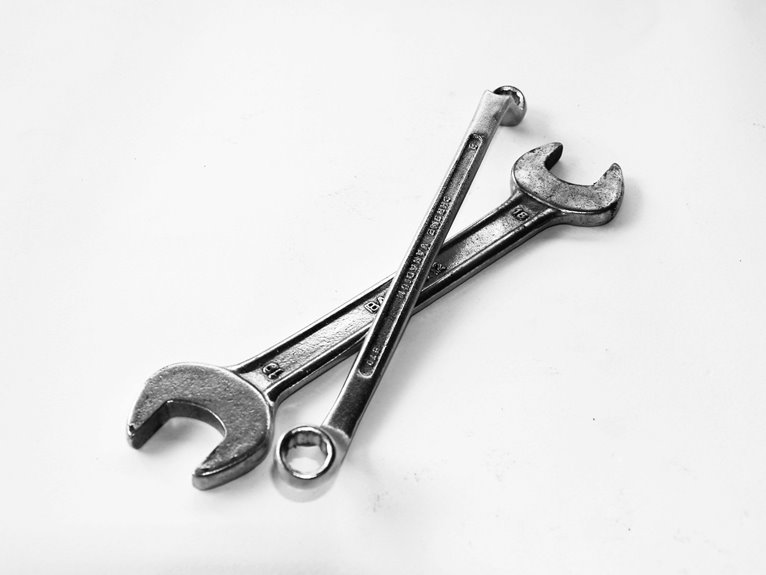
You might think all torque wrenches stay equally true, but that’s not quite how it works. Split beam models often hold their setting better over time because they use a simpler design, while click wrenches can slip if the spring wears or you use them wrong. If you want steady results, the real difference hides in how each tool keeps its accuracy, and that’s where things get interesting.
Which Torque Wrench Is More Accurate?
When you compare torque wrench accuracy, the split beam torque wrench usually comes out ahead. You get steady results because its design keeps tension constant, so your readings stay dependable from job to job.
In busy shops, that consistency helps you feel like part of a team that gets things right the first time. You also avoid extra error from calibration drift, which can happen more easily with other styles.
Good material selection matters too, since strong parts hold accuracy longer. Environmental effects like heat, dust, and storage conditions can still influence any tool, but split beam models handle them well.
If you need repeatable torque and calm confidence, this wrench gives you a reliable edge.
How Split Beam Torque Wrenches Work
A split beam torque wrench works by using a simple spring-and-beam system to measure force with steady control. You set the target, and the tool keeps spring tension constant as you work. When you pull, the beam flexes, and visual deflection shows you how close you are. That clear movement helps you stay confident, especially when you want repeatable results with your crew or your own garage routine.
- You read the scale as the beam bends.
- You watch the pointer, not guess.
- You apply force smoothly, not in jerks.
- You trust the fixed spring tension for consistency.
- You stop at the marked value for accuracy.
Because the design stays simple, you get a tool that feels dependable, easy to learn, and ready for long sessions.
How Click Torque Wrenches Work
Click torque wrenches work by using an internal spring and release mechanism that lets you know, with both a sound and a small hand jolt, that you’ve reached the set torque. You set the handle first, then tighten until the tool signals you.
That clear click gives you tactile feedback, so you can trust the moment without second guessing. Because the wrench feels familiar and compact in your hand, user comfort stays high during garage jobs or repair work.
You don’t need to watch the fastener nonstop, which helps you stay relaxed and focused. The design supports beginners and seasoned users alike, since the signal is simple and direct.
In a busy shop, that easy response can make your work feel smoother and more connected.
Why Their Accuracy Differs
You’ll see accuracy differ because calibration can stay steady in one wrench but drift in another over time.
You’ll also notice that some designs are less sensitive to wear and small mechanism changes, which helps them hold torque better.
And even a great wrench can miss the mark if your grip, storage, or reset habits aren’t consistent.
Calibration Stability
Split beam torque wrenches usually stay more stable over time because their design fights calibration drift from the start. You get that steady feel because the beam keeps its spring tension steady, while click tools can shift after storage or rough handling. That matters when you want the same result every time, and you’re part of a crew that counts on trust.
- Fewer moving parts help lock in accuracy.
- Environmental effects, like heat and moisture, can nudge click tools off target.
- Material ageing can slowly change spring behavior.
- Split beam tools need less reset drama after use.
- Your routine stays cleaner when the wrench holds its setting.
Mechanism Sensitivity
That steady calibration you just read about comes from how each wrench’s mechanism handles force, and that’s where the real difference shows up.
You feel it in the way a split beam keeps constant spring pressure, so its reading stays calm and predictable. A click wrench, by contrast, depends on a loaded spring and release point, so spring hysteresis can nudge its trigger a bit over time. Add thermal drift from heat or cold, and its internal parts may move slightly again. That doesn’t make it bad, just more sensitive.
You get a tool that can stay accurate, but it asks for tighter mechanical control. So when you want a wrench that behaves like a steady teammate, mechanism design matters more than the label.
User Technique Impact
Even the best torque wrench can miss the mark if your technique gets sloppy, because how you hold, pull, and read the tool changes the result. You’re not alone if that feels tricky; a steady grip technique and clean arm positioning help you match the setting more closely.
- Keep your wrist straight, so you don’t add side force.
- Pull smoothly, not with a jerk.
- Hold the handle in the same spot each time.
- Read the scale at eye level.
- Stop when the click or beam tells you to stop.
With a split beam, you can feel small shifts better. With a click wrench, a rushed pull can hide the moment it trips. When you use the same motion each time, you build trust in your work and your crew notices that consistency too.
Split Beam Accuracy in Real Use
In real use, you can count on a split beam wrench to stay steady because its spring tension stays constant over time.
That means your torque stays more consistent from one job to the next, even when you use it again and again.
And since you don’t have to reset it to zero after each use, you also cut down on small mistakes that can sneak in when you’re working fast.
Calibration Stability Over Time
When you use a split beam torque wrench in real work, its calibration tends to stay steady for a long time because the tool keeps constant spring tension and has fewer parts that can drift out of spec.
That means you’re less likely to see long term drift, even when environmental effects like humidity or storage changes show up.
You can trust the wrench to hold its setting through repeated jobs, which helps you feel part of a crew that values clean, repeatable work.
- You avoid constant resets.
- You cut down on wear points.
- You keep your confidence high.
- You reduce surprise error.
- You get steadier performance over time.
Consistent Torque Delivery
A split beam torque wrench often delivers the same torque with steady, repeatable force, so you can trust each fastener to land where you set it. When you work beside your team, that steady feel helps everyone stay in sync and builds shared confidence. Its constant spring tension supports dependable results, while material selection keeps the beam stable under regular use. | Factor | Real use |
| — | — |
|---|---|
| Spring tension | Stays steady |
| Material selection | Supports stability |
| Environmental effects | Can shift performance |
| Repeated cycles | Keep output even |
| Team workflow | Feels reliable |
Even so, environmental effects like heat or damp air can nudge performance a little, so you’ll want to store it well. In busy shops, that consistency matters because your hands can move through the same task with the same result, shift after shift.
Reduced User Error
Because the split beam design keeps the torque setting stable, it helps you make fewer mistakes during real work. You don’t have to reset it after every use, so you stay focused and your team moves with less fuss.
With clear scale marks, ergonomic grips, and steady resistance, the tool feels natural in your hand. That comfort matters when you’re working fast and want to belong to a crew that trusts its gear.
- You read the setting once and keep going.
- You avoid extra steps that invite slips.
- You feel the torque change without guessing.
- You need less user training to stay accurate.
- You build confidence on repeat jobs.
Click Torque Wrench Accuracy in Real Use
In real use, a click torque wrench can be very accurate, but only if you treat it with a little care and respect. You feel the click, and that clear signal helps you stop at the right torque without guessing. Your user perceptions matter too, because confidence changes how steadily you work.
If you rush, lean sideways, or read the scale poorly, the tool can seem less precise than it is. Environmental effects also play a role. Cold rooms, heat, dirt, and rough storage can nudge performance off course. So you get the best results when you use smooth pressure, steady hands, and the right setting for the job. That way, you fit in with the pros who trust feedback and consistency.
Keeping Your Torque Wrench Accurate
To keep your torque wrench accurate, you need to check its calibration on a regular schedule, especially if you use it often or rely on it for important work.
You should also store it in a clean, dry place and keep the setting where the maker recommends, so the spring or beam doesn’t drift.
A little care now can save you from a loose bolt, a damaged part, and that sinking feeling when the job goes sideways.
Calibration Frequency
A torque wrench doesn’t stay accurate forever, so calibration needs your attention on a steady schedule. You build trust in every fastener when you treat calibration scheduling like part of the job, not an afterthought. If you use the wrench often, after a hard drop, or before critical work, send it for lab verification sooner.
- Check the maker’s interval first.
- Calibrate after rough handling.
- Calibrate before safety-critical tasks.
- Log each service date.
- Match checks to use level.
When you stay on top of this, you protect your work and fit right in with people who value careful, consistent results. That habit keeps your readings steady and your team confident, even when the day gets busy.
Proper Storage Methods
Calibration gets your torque wrench back on track, and good storage helps it stay there between uses. You can protect that accuracy by giving your tool a clean, dry storage environment, away from heat, damp air, and heavy vibration.
After each job, wipe off grime and moisture, then return the wrench to its case so the scale and internal parts don’t get knocked around. If you own a click wrench, release the spring setting before you store it, because that eases stress on the mechanism.
For either style, use protective sleeves or padded holders when space gets tight in your box. When you treat your wrench like part of the team, it’s ready to perform with you next time.
Which Wrench Fits Your Use Case?
How do you choose the right wrench for the job? You match the tool to your pace, the kind of work you do, and how much feedback you want. If you spend hours on repeat fasteners, a split beam can support workflow optimization because it stays ready without extra setup. Its steady feel and ergonomic design also help when your hands need comfort through long shifts.
- Pick split beam for repetitive assembly.
- Pick click for mixed repair tasks.
- Choose split beam for steady accuracy.
- Choose click when audible feedback helps.
- Match the grip to your hand size.
If you work in a garage or shop team, you’ll fit in fast with either choice when the wrench matches your routine. That’s the real win: less strain, better flow, and work that feels smoother.
Common Mistakes That Hurt Accuracy
If you want good torque readings, small mistakes can throw things off fast, and that can be frustrating when you’re just trying to do the job right.
You can lose accuracy by using the wrong material selection for the fastener, because soft metal may crush before the wrench reaches target torque. You can also ignore environmental effects, like cold, heat, or grime, and those shifts change how parts feel and move.
Next, if you set the wrench too fast or pull at an odd angle, you invite error and make the tool work harder than it should. So, stay steady, match the tool to the job, and keep your grip calm. That’s how you stay in the group that gets clean, reliable results.
How to Test Your Torque Wrench
Before you trust a torque wrench on real work, it’s smart to test it so you know it’s still giving honest results. You can do this with a known weight, a torque tester, or a trusted shop gauge. Set the tool, pull smoothly, and compare the reading. If it’s off, recalibrate or retire it. That simple check builds confidence, and you’re not guessing alone.
- Use periodic verification after heavy use.
- Check at the setting you use most.
- Watch for environmental effects like heat and moisture.
- Store it clean and dry.
- Note any drift in a log.
When you test often, you protect your team, your parts, and your own peace of mind.
Frequently Asked Questions
Do Split Beam Wrenches Need Zeroing Before Each Use?
No, split beam wrenches do not need to be zeroed before each use. Set the desired torque once, and the wrench keeps that setting. Many users prefer this because it is simple and consistent, even when the temperature changes.
How Often Should a Click Wrench Be Recalibrated?
Recalibrate a click wrench every 12 months, or sooner if it is dropped, overloaded, or starts to lose accuracy. If it is used in hot, damp, or high use conditions, check it more often.
Can Improper Storage Damage Torque Wrench Accuracy?
Yes, improper storage can throw off a torque wrench’s accuracy. Humidity can corrode internal parts, and drops or knocks can affect calibration. Store it in a dry case and protect it from impact to keep measurements reliable.
Are Split Beam Wrenches Better for Repetitive Assembly Work?
Yes, split beam wrenches are often a better fit for repetitive assembly work because they provide steady torque, help reduce fatigue, and let you keep moving with fewer pauses for resetting. That makes long assembly tasks easier to repeat with consistent results.
Do Warranties Differ Much Between Split Beam and Click Models?
Yes, warranties can vary quite a bit. Split beam models often include longer coverage, sometimes even lifetime coverage, while click models may have shorter warranty periods. Check whether the warranty can be transferred and review any manufacturer exclusions before buying.